

Morgan-E
-
Posts
249 -
Joined
-
Last visited
Content Type
Profiles
Forums
Events
Gallery
Store
Everything posted by Morgan-E
-
 Mark your calendars to attend the annual open to the public Salmon River Fish Hatchery Meeting. It is scheduled for October 21st and starts at 7PM. Come meet the new Hatchery manager, find out about the egg take, health of the fish entering the hatchery, news on studies, numbers of fish, hatchery goals, etc... There will be a very short ELOSTA meeting proceeding the biologists presenting and answering questions. This has always been a great and very informative meeting. Looking forward to seeing many of you there - bring friends and family! Phil
 -
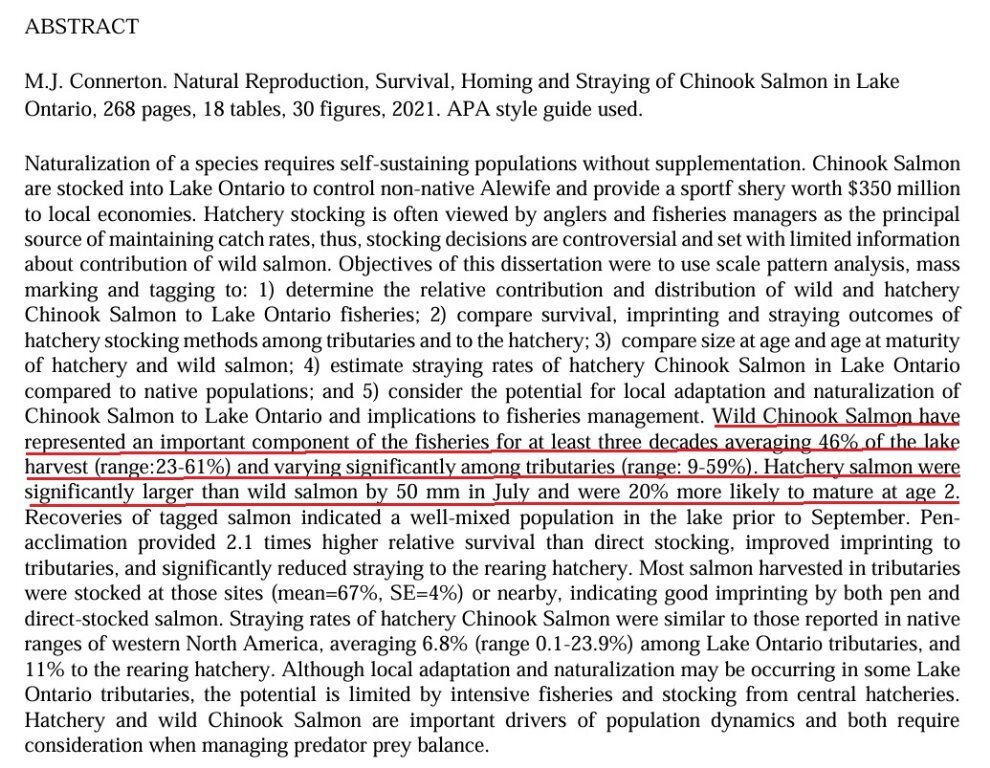 I wrote this some years ago concerning the size of the chinook salmon and have spoken with some of the DEC and Great Lakes personnel about the genetics and the slide in the size of the salmon. I have edited a few things to bring it up to date. Not looking for a back and forth, just my thoughts based on this study, biology, and observations. From the beginning of the fishery, the hatchery, directed by outside biologists, was instructed to take the salmon as they entered the hatchery and that they would be representative of the population entering the river. Since a discussion with them last year I think that they see and understand that this has been a false premise since the larger fish have been removed by anglers at a much higher rate than the smaller fish entering the river and this has skewed the egg take in favor of smaller fish for decades now ( If 100 fish enter the river and 9 of the top ten are harvested before spawning, but the ten smallest fish are able to spawn over the course of decades, the genetics are artificially selected to favor smaller fish). This is just for thought and I do not claim to know for sure or have access to data to fully support or refute what is written below. It will take a little bit of time to read and digest. Something to chew on. Also note that the DEC biologists have read this and are looking at data relative to the thoughts below - thank you to them. The Scientific Answer / Cause of Reduced Chinook Size in Lake Ontario? Background: A study was concluded and published by the University of Helsinki and published in Sustainability News, “Salmon are Shrinking and it Shows in Their Genes” on November 14, 2018. This study was conducted on Atlantic salmon using 40 years of genetic material and concluded that the “gene version that tells salmon to mature at a later age and thus grow bigger is becoming less common, while the version that urges them to hurry up and get on with it is getting more prevalent.” Two alleles have been identified and the one that urges the salmon to mature earlier has become overwhelmingly dominant in the population while the allele that has been dominant in the past has become increasingly scarce. The theory behind the age and size shift is “that the salmon today are more likely to die during their time at sea either because of fishing or other reasons, and would thus benefit from returning to the rivers to spawn sooner rather then later”. A now prominent fish geneticist was asked the question about genetics and the relationship to large and small fish and he said in summary "you need to breed large fish to make large fish", "small fish don't make large fish" Genetic Ties: Many times other factors are thought to influence the size of fish and may in fact do so over a very short period of time such as temperature, hormones determined by photo period, food availability, illness, competition, and others. However, in Lake Ontario there has been a noticeable decline in size using the derbies and individual observations over the past three decades. It was probably occurring prior to this but there were still enough large fish to make it unnoticeable. If it is indeed linked to genetics as it has been shown to be in Atlantic salmon it is an evolutionary change and not an environmental phenomena, meaning it is here long term and would take a shift in the allele (gene version) frequency to shift the trend. Lake Ontario Trends: The Lake Ontario salmon have been getting smaller over the decades but not due to bait fish availability. If it was tied to baitfish availability the fish would resemble the emaciated salmon of Huron and Michigan, but the “plumpness” of the salmon has remained relatively constant since it was first used as an indicator of fish health. This has remained the same while the overall size of the average fish has declined in the lake and the upper size expectancy has continued to decline. In the 1980’s people would expect to catch salmon in the upper 30’s and hope to catch one over 40lbs. This declined to expecting to catch fish over 30 and hoping to catch one in the upper 30’s in the 90’s. This has continued to decline to the present day where people expect to catch salmon in the lower 20’s and are hopeful to get one around the 30lb mark. At the hatchery the age structure of the fish has also shifted over the years and the average size has shifted down but not by as much as shown in the creel census, angler observations, and the lake-wide derbies. The explanation for this may be due to the constant fishing pressure on the Salmon River since the inception of the fishery. This will be discussed further in the artificial selection and adaptive value of the smaller / earlier maturing allele phenotype. On the Canadian side they have also seen a shift in the salmon size, but it has been a slower decline than on the U.S. side, but seems to have caught up to, or shows no real significant difference in reported observations. This may be tied to the lower tributary fishing pressure their fish have experienced when compared to the Salmon River. Again, this will be discussed later. In more recent history there have been greater highs and lows in the fishery that would suggest a single year determination in terms of year class rather than a subtle shift if multiple year classes were available to compensate for a single age class failure. Selecting agents giving adaptive value to maturing earlier rather than later: Lake-wide angling pressure will select against the salmon that are in the system longer by giving anglers an extra year or two to catch and remove the fish prior to spawning. Early in the fishery anglers knew that fish of like size tended to school together so they would leave the “smaller 20lb fish” in search of schools of larger fish. Any fish in the 80’s and early 90’s under 20lbs was considered small. However, these small fish that were not targeted or in many cases released in pursuit of larger salmon to fill the creel limit were the two year old fish. In the first decades of the fishery the larger fish were genetically selected against and the smaller fish were genetically selected for, increasing the frequency of the smaller, early maturing salmon. This was and is true for the entire lake regardless of where the salmon was spawned and or stocked. Tributary angling pressure has always selected for the largest of the salmon on the U.S. side. Early in the fishery to the present the largest most visible salmon have had a skewed amount of fishing pressure when compared to the less visible and less desired smaller salmon. Again, the largest are targeted because it is human nature to want the largest fish to fill the creel limit for a number of reasons. This greatly reduces the percentage of the 4 and 3 year olds successfully spawning by natural means or making it into the hatchery system. Within the hatchery there is a much smaller percentage of large fish compared to the number in the lake and that enter the mouth of the Salmon River. This may also be an explanation of why anglers accuse the DEC of spawning only the “small” fish (that is mostly what has and continues to be available within the spawn house). The slower fall in size on the Canadian side may be due to less pressure to no pressure on the tributaries compared to the U.S. side. The Canadian fish are still exposed to the same lake pressures which have had them decline in size and age structure, but without the tributary pressure the allele shift has taken longer and they have not had the extreme shift in fishing quality until recent years that the U.S. side has experienced. The natural wandering (around 10% from natal waters) would also allow the influx of the early maturing allele into waters where the late to mature fish may have otherwise maintained a genetically isolated population (namely in the clean tributaries of Canada where there has been reports of natural reproduction occurring for quite some time). Chinook compared to Atlantic salmon: Atlantic salmon may have actually taken longer to get to the point where the salmon are maturing early compared to the Chinooks. Since Atlantics spawn multiple times and can live up to seven years on average the “older” alleles should persist longer when compared to a fish that spawns only once. An Atlantic that manages to have good behavior and high fitness that happens to mature at a later time could spawn multiple times with fish that may have spawned for the first time at age two. This would allow the alleles to persist in a higher frequency than those of chinooks where the fish dies after spawning and has only a two, three, or four year old spawning allele. The shorter life cycle of the chinook compared to the Atlantic salmon makes it a better candidate for evolution than the slightly longer lived and slower to mature Atlantic salmon. Those species with shorter life cycles and higher reproductive potential are able to evolve more quickly to changes in the environment or selecting agents. Additionally the fishing pressure on the lake is far more concentrated for the entire life of the chinook in the lake system compared to the open ocean environment of the Atlantic salmon. This is based on the simple size of the area available to forage and disperse and with the new technologies and information sharing on the internet of fish location within the lake system. If the fishing pressure of the modern day has indeed influenced the genetic shift of the Atlantic salmon, then the chinook salmon should respond in a similar and more rapid shift due to the more acute fishing pressure experienced. Chinook compared to coho salmon: Coho salmon spawn at age two consistently. The size of the coho has not varied much from their introduction to Lake Ontario on a decade to decade average basis. A big coho in the 80’s was in the teens and today a big coho is still in the teens with the average mature fish being in the upper single digits to lower double digits. The very large infrequent coho of the past may have been undocumented hybrids. Some very large verified hybrids are still being taken out of the lake on occasion. Coho have not had the heavy selecting pressures placed on them that the chinook have been exposed to. They are seldom targeted in the lake (mostly an incidental catch) and are overlooked in the river when swimming amongst chinooks. This may be why there has not been any “need” to change as a species. Chinook compared to brown trout: Brown trout have remained relatively consistent over the decades with expected above and below averages in numbers and size. The brood stock has not changed in decades and that has lead to survivability issues and genetic health related problems, but those are not associated with human pressures on the lake or tributaries. The browns that successfully spawn may have changed behaviors as well due to fishing pressure in the lake and especially in the tributaries. This may be why tributary anglers are not seeing the brown trout that they have in the past (they too have changed their behavior and regardless of regulations or stocking numbers they may not return to the tributaries the way they did in the past in number or duration). Fishing success on the lake is tied to weather conditions more than anything in the Spring. The number of brown trout is highly influenced by predation at stocking, health of the trout including their size at stocking, and in some parts of the state poaching of brown trout in small tributaries has been reported. ***This has recently changed with the introduction of the Rome-iskany strain that has more wild behavior that has allowed high survivability as we have seen with outstanding numbers of the cookie cutter size brown trout from two distinct age classes now.***** We will not know their size potential for a couple more years. Chinook of today compared to the chinook of the past: The chinooks of Lake Ontario have already been identified as likely being a new subspecies through evolution of the species in terms of behavior compared to the original population from which they came. The fish do not stage as they did back in the 70’s through the mid 90’s in front of the river mouth. Instead their behavior is so erratic that they cannot fit any known models used to predict salmon migrations and staging behavior. Once in the tributaries they no longer spend a lot of time pool hopping as they used to, but instead swim to the hatchery or upper parts of the river and its tributaries in quick fashion. The chinooks used to be in the rivers in high numbers around Labor Day weekend, but these fish would have been exposed to higher and longer fishing pressure while waiting for optimal spawning temperatures a month away (their alleles have too been likely removed). Instead there is a massive run that occurs later in September and closer to the time of which they are able to successfully spawn. In the lake, the salmon move in and out of Mexico Bay and have staged in water as deep as six hundred feet in recent years off of Oswego which was unheard of or unknown of in the past. The chinooks are spawning at an earlier / smaller size than they did in the past only by percentage. It is likely that there were some that did in the beginning, but no one noticed or cared because they made up such a small percent of the total population. It is also likely that some behaved as erratically as those of today, but again they represented a very small percent of the population. In both of these instances their relatives that behaved in a traditional and known way were exposed to far greater pressure and had a greater likelihood of being removed prior to spawning. What does age two chinooks mean to the future of the fishery: Smaller fish similar to what we have been catching over the past two years will become the new normal. There is no reason for the chinooks to be selected to go back to the larger, older size class in any large percentage without artificial selection at the hatchery, a trophy class limit on anglers, reduced pressure on the tributaries of spawning fish, or new genetics being introduced from their ocean cousins. Greater uncertainty of the fishery from year to year will occur because the majority of the fish available and targeted as mature salmon will be represented by a single year class. If the lake trout population goes up so does the predation of the salmon stocked or that are wildly produced and the number of available salmon will decrease. Also, natural spawn becomes that much more important as the stocking numbers at the hatchery have decreased. If there is a poor natural reproduction year class the fishing will be directly tied to it. The predatory biomass of the chinook may be represented by smaller fish that are removed from the system a year or two prior to the past. This may require the alteration of the models used to project alewife consumption and sustainable stocking target numbers for these fish. Some people have argued that the net pens are to blame for the decline in the size of the salmon due to them getting a head start and maturing faster, but this doe not make sense. If this was the case and half of the salmon were raised in net pens, then we would still have roughly half of the numbers of large chinooks being caught in the lake each year relative to the number prior to the net pen introduction, and we do not. It is a selecting agent at the point of maturity that is shifting the allele frequency of the kings. In conclusion: The study on Atlantic salmon may reveal an answer to a lot of the trends in the Lake Ontario fishery concerning the chinook salmon over the past three decades. It may also show where the fishery is heading. If there is a follow-up study to this on the lake or if data that has been collected at the hatchery and through the creel census supports this occurring in Lake Ontario, work will need to be done to correct many of the models used today that were developed around the “old” chinook. In addition a re-education of the anglers and the expectations of the angling community may need to occur. There may be numbers of large salmon from time to time, but it may be linked to less than ideal conditions not allowing the salmon to mature at age two as they would if they were healthy. The greatest indicator of the overall health of the salmon may continue to be the plumpness of the 36” fish rather than the overall average size of the fish as the genetics may not allow for this to increase again. More attention will have to be given to each year class of fish since there will not be a noticeable buffer class to make up for a failed year class as there has been in the past. For Review; Phil Lucason
 -
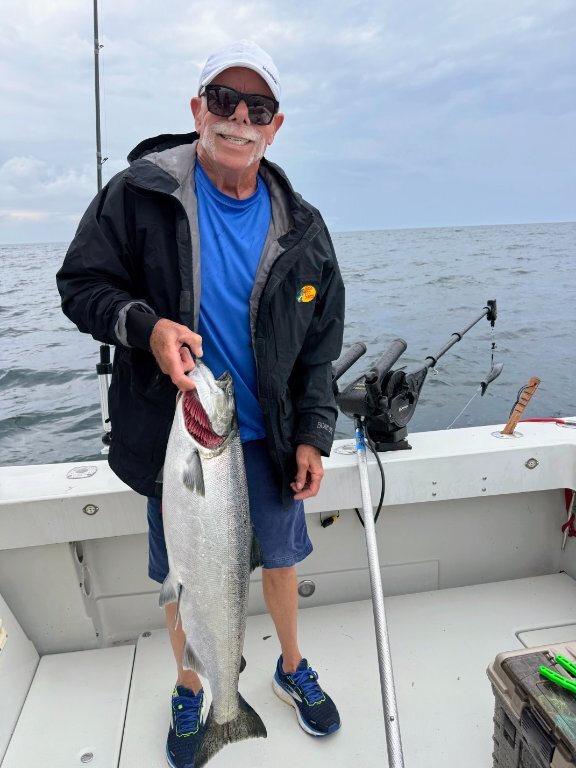 Thank you to everyone who registered for the Hospice Derby. You all help make this another successful event with a donation going to a very worthwhile organization. We had 26 teams registered and raised $1,100.00 for Hospice of Central New York. Although the fishing was not fast and furious there were many smiles and memories created. Congratulations to Gary Pfleegor (Knot Working) for catching the largest salmon at 19lb 7oz. Congratulations to Zach Chapman (Sandman) for catching the largest 3 fish box at 48lb even. Both of these first place finishers will each have a $550 check sent to hospice in their name or in memory of a loved one. The two port prizes for the largest king weighed in at each weigh station also are being awarded to Gary and Zach. Zach's largest King was 18 lb. 8 oz. Other honorable mentions go to Mike Conry at Woody's for an 18 lb. 2 oz King and two Jeff Waner for a 17 lb 7 oz King. Other honorable mentions go to Reese Scott and Rick Pica who both weighed in Kings 18 lb even. Two other big boxes worth mentioning go to Mike Conry with a box weighing in at 47 lb 4 oz and to Reese Scott with a box weighing in at 46 lb 8 oz. A huge thank you to the two tackle shops, Woody's and Screwy Louie's for helping throughout the event. Another huge thank you to Pro Troll Tackle, Jack Rosenswie, and Addya Hooks for their very generous donations to the top king and three king box. Also a huge thank you to both Woody's and Screwy Louie's for donating to a port prize for the largest king weighed in at each of the weigh stations. A thank you to to Sweets by Sarah Bakery, The Front Porch, and Main Street Emporium for donating to the Fair Haven Port prize. All of these organizations help make this a very successful event. Good luck with the rest of the season and looking forward to next year's event.
 -
Just a quick reminder that this Derby is coming up fast. Please consider signing up to help make this a great success. You will not find a better reason to fish. Over the past 3 years hospice has received over $6,000 from this Derby.
-
This has been posted on the calendar as well, but thought that it might get some more views here. The Fishing for Hospice Fun Fishing Derby is scheduled for July 4th and 5th with rule sheets and entry forms found at the two weigh stations (Woody's in Pulaski and Screwy Louie's in Fair Haven) . Anyone planning on fishing that weekend is encouraged to register. It is for a great cause with a nominal entry fee (additional donations are welcome) and is sponsored through ELOSTA. 100% of the money collected will be donated to Hospice of CNY which services the SE Shoreline of Lake Ontario. Prizes are being donated by Jack Rosenswie, ProTroll, Addya, Indy 500 Spoons, Dream Weaver, and Danco Pliers. We are aware that this coincides with one of the Pro-Ams as well as the LOC Derby and are hopeful that those who want to do both are able to. Please spread the word to other fishermen who might not know about this all around great event! If you have any questions, please reach out 315-709-99 five 8.
-
untilThe Fishing for Hospice Fun Fishing Derby is scheduled for July 4th and 5th with rule sheets and entry forms found at the two weigh stations (Woody's in Pulaski and Screwy Louie's in Fair Haven) . Anyone planning on fishing that weekend is encouraged to register. It is for a great cause with a nominal entry fee (additional donations are welcome) and is sponsored through ELOSTA. 100% of the money collected will be donated to Hospice of CNY which services the SE Shoreline of Lake Ontario. Prizes are being donated by Jack Rosenswie, ProTroll, Addya, Indy 500 Spoons, Dream Weaver, and Danco Pliers. We are aware that this event occasionally coincides with one of the Pro-Ams as well as the LOC Derby and are hopeful that those who want to do both are able to. Please spread the word to other fishermen who might not know about this all around great event! If you have any questions, please reach out 315-709-99 five 8.
-
On Wednesday the 20th at the VFW located in Mexico NY there will be a seminar on jigging for trout and salmon. This will immediately follow the ELOSTA meeting at 7PM. It is open to the public and is free of charge. The speaker is Dawson Barton who has developed his game enough to take people out on charters jigging for trout and salmon. ELOSTA's Bill Pingel was able to go out with Dawson last season and had a blast. Might be a fun way to spend some time learning a new technique. Hope to see you there.
-
ANNUAL ELOSTA FISHING FLEA MARKET March 14th
Morgan-E replied to Morgan-E's topic in Open Lake Discussion
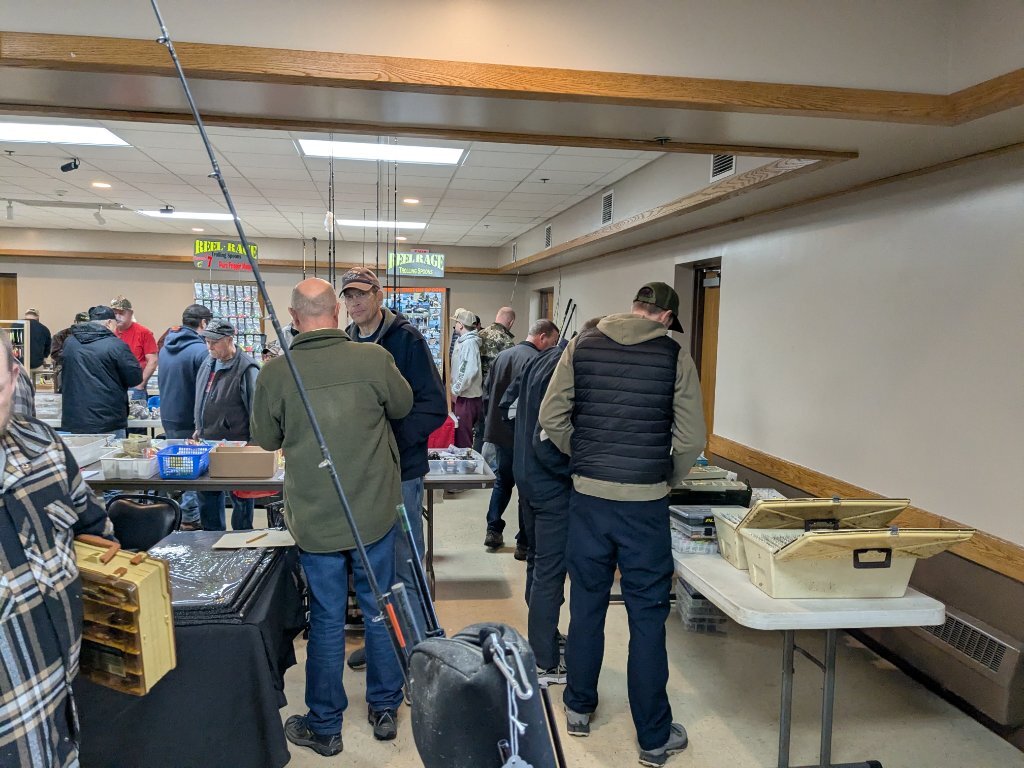 A big THANK YOU to Bill Pingel for another outstanding job coordinating and setting up the fishing flea market / tackle sale. Also, a big thank you to all who helped set-up, run, and tear down the venue. Also, thank you to Captain Matt French on one of the best seminars ever! Also, thank you to the Brewerton Fire Department for their continued support in this event. It looks like we had around 300 people come through the doors despite a terrible start to the weather and we were able to raise around $1800 for ELOSTA. A good portion of that money will be used to send some kids to DEC camp this summer. Once again there were bags and bags of stuff leaving the event and even though our number through the door was down by around 100, many of the vendors said that they were able to sell more stuff then in years past. Hopefully everyone picked up some stuff that will put more fish in the boat this coming season. We are already talking about how to make it better for next year's event. Our first meeting will be April 15th at the Mexico VFW at 7PM. Looking forward to seeing many of you there. We are working on a guest speaker to share how he jigs for trout and salmon.
 -
ANNUAL ELOSTA FISHING FLEA MARKET March 14th
Morgan-E replied to Morgan-E's topic in Open Lake Discussion
45 minutes from the seminar with Captain Matt French Lots of bargains available -
ANNUAL ELOSTA FISHING FLEA MARKET March 14th
Morgan-E replied to Morgan-E's topic in Open Lake Discussion
going to be packed with tables loaded with stuff looking for a new home / boat looking forward to seeing many of you tomorrow -
ANNUAL ELOSTA FISHING FLEA MARKET March 14th
Morgan-E replied to Morgan-E's topic in Open Lake Discussion
One week away and with the warm-up it is a good time to stock up on some great deals and listen to Matt for some tips to put more fish in the net. -
ANNUAL ELOSTA FISHING FLEA MARKET March 14th
Morgan-E replied to Morgan-E's topic in Open Lake Discussion
We are happy to post that Matt French of Class A Sportfishing will be our Speaker for the Flea Market. Matt will be discussion Spring and Summer Brown Trout Fishing. He was a prior guest speaker and had rave reviews by everyone who attended. He does a podcast during the season that is followed by many and is a highly respected Captain up and down the Lake. He will be starting his seminar at 10:45AM https://www.classasportfishing.com/ -
The Annual ELOSTA Fishing Flea Market scheduled for March 14th at the Brewerton Fire Hall, just off of Route 81. Doors open at 9AM and it will end at 1PM. We are presently trying to secure speakers at this time. Tables are available to anyone wanting to unload fishing items on a first come, first serve basis for a nominal fee until filled. The cost of entry is $2 per person 12 and older and is used to help cover the costs of sending kids to DEC camp. DON’T Miss Out on the huge bargains and opportunities. Food will also be available through the fire department for purchase. Call Bill Pingel at 315-515-8278 for table reservations or for more information.
-
Salmon River Fish Hatchery Public Meeting 10-15-2025
Morgan-E posted a topic in Open Lake Discussion
This coming Wednesday there is a open to the public meeting at the SRFH at 7PM, hosted by ELOSTA. DEC staff and biologists will be there to go through the egg take, challenges of the low water and how it might affect the egg take, size of fish making it into the hatchery, and natural reproduction, will more eggs be taken to compensate for a potentially lower than normal natural reproduction event, the general health of the salmon being handled, quality of the eggs being used, etc... There is also an open question and answer session. There is always a large amount of information shared at this meeting with the public. Thank you ahead of time to the DEC staff and biologists who are planning on being at the meeting to share information and answer questions. Looking forward to seeing many new and old faces Wednesday! Sincerely, Phil -
2025 Alewife Report and meeting information
Morgan-E replied to Lotalota's topic in Open Lake Discussion
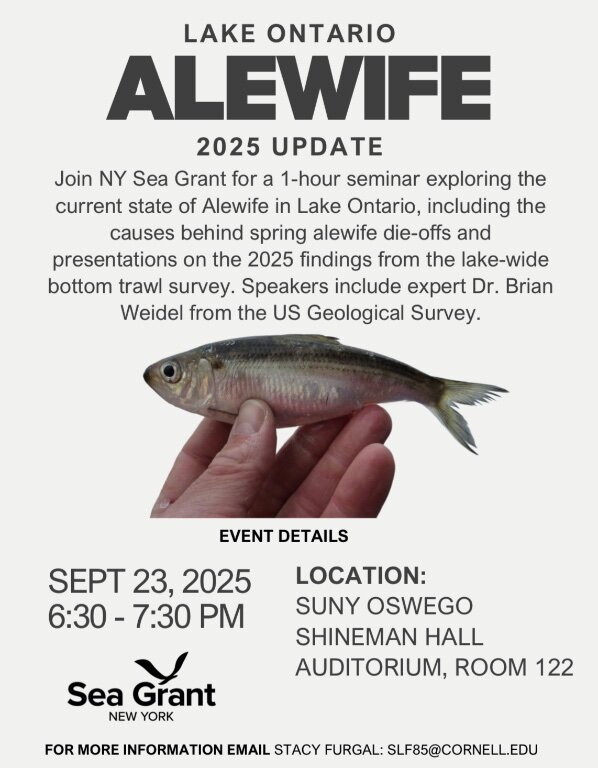 Should be a great presentation - looking forward to seeing many of you there!
 -
Just a reminder that we have the DEC and biologists at our public meeting this Wednesday at 7:00 p.m. at the Mexico VFW. Hope to see you and many friends of yours there. This is always a great meeting. Spread the word!
-
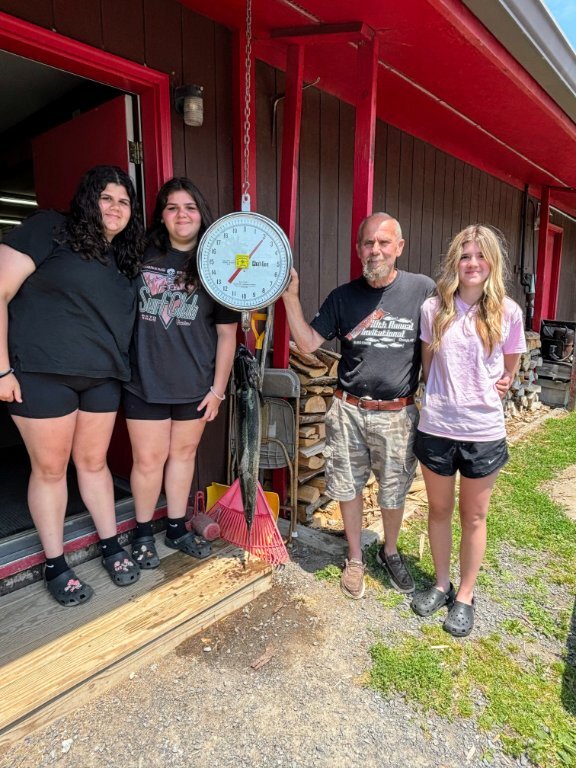 Thank you to everyone who registered for the Hospice Derby. We had 30 teams registered and raised $1,000.00 for Hospice of Central New York. Although the fishing was not fast and furious there were many smiles and memories created. Congratulations to Jeff Waner (Empty Hook) for catching the largest salmon at 22lb 4oz. Congratulations to Mike Schmidt (Break-A-Way) for catching the largest 3 fish box at 58lb 9oz. Both of these first place finishers will each have a $500 check sent to hospice in their name or in memory of a loved one. Other winners of prizes for single big fish were Jimmy Carpenter 22lb 2oz, Phil Lucason 21lb 12oz, and Mike Schmidt 21lb 4oz. Steven Connolly (Reel Cool Kids) picked up a prize for the second largest 3 fish box at 47lb 11oz. A huge thank you to the two tackle shops, Woody's and Screwy Louie's for helping throughout the event. Another huge thank you to Pro Troll Tackle and Danco pliers and knives for their very generous donations. Good luck with the rest of the season and looking forward to next year's event. IMG_20250706_204137.heic IMG_20250706_204135.heic
 -
Just another reminder to get signed up by this Friday. There are many generous prizes donations from the sponsors. Thank you
-
Just a reminder to get signed up. Many people have taken forms, just remember to get them back to the shops. Looking forward to a great turnout. Thank you
-
ELOSTA is hosting a meeting open to the public at the Mexico VFW at 7PM inside the building (not out back under the pavilion). Stacey Furgal will be discussing the Lake Trout study that was conducted and the movement findings will astound many of you. This should be a very informative meeting for everyone. Hope to see you there.
-
This has been posted on the calendar as well, but thought that it might get some more views here. The Fishing for Hospice Fun Fishing Derby is scheduled for July 5th and 6th with rule sheets and entry forms found at the two weigh stations (Woody's in Pulaski and Screwy Louie's in Fair Haven) . Anyone planning on fishing that weekend is encouraged to register. It is for a great cause with a nominal entry fee (additional donations are welcome) and is sponsored through ELOSTA. 100% of the money collected will be donated to Hospice of CNY which services the SE Shoreline of Lake Ontario. Prizes are being donated by Jack Rosenswie, ProTroll, Addya, Indy 500 Spoons, Dream Weaver, and Danco Pliers. We are aware that this coincides with one of the Pro-Ams as well as the LOC Derby and are hopeful that those who want to do both are able to. Please spread the word to other fishermen who might not know about this all around great event! If you have any questions, please reach out 315-709-99 five 8.
-
untilThe Fishing for Hospice Fun Fishing Derby is scheduled for July 5th and 6th with rule sheets and entry forms found at the two weigh stations (Woody's in Pulaski and Screwy Louie's in Fair Haven) and below if you are able to print them out . It is for a great cause with a nominal entry fee (additional donations are welcome) and is sponsored through ELOSTA. 100% of the money collected will be donated to Hospice of CNY which services the SE Shoreline of Lake Ontario. Prizes are being donated by Jack Rosenswie, ProTroll, Addya, Indy 500 Spoons, Dream Weaver, and Danco Pliers. We are aware that this coincides with one of the Pro-As as well as the summer LOC derby, and are hopeful that those who want to do both are able to. If you have any questions, please reach out 315-709-9958.
-
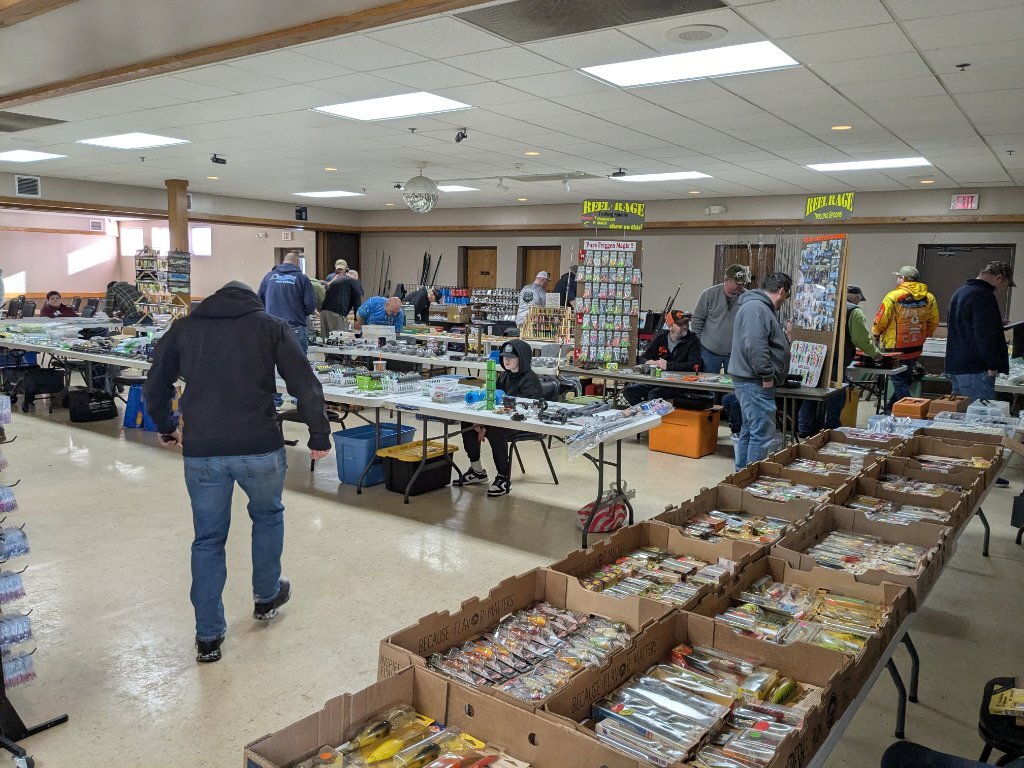 Thank you to everyone who helped put this together, especially Bill for all of the hours making sure it would run smoothly and the speakers who were willing to share their knowledge and experience to help others put more fish in the boat. Thank you to all who helped with the set up and tear down, the vendors, patrons, and fire department personnel as well. Looking forward to next year. March 14th 2026. Keep your eyes open on FB, LOU, and newsletters after Christmas for more information. We had over 300 people go through the door, not including vendors and fire department personnel.
 -
Ready to roll! So much stuff! Doors open at 9. Additional parking behind the hall.
-
Looks like Bill outdid himself - we have more tables than ever before which means more deals to be had. Also, two top notch seminars included with the $2 entry fee. Looking forward to seeing many of you there.