


GAMBLER
-
Posts
9,908 -
Joined
-
Last visited
Content Type
Profiles
Forums
Events
Gallery
Store
Everything posted by GAMBLER
-
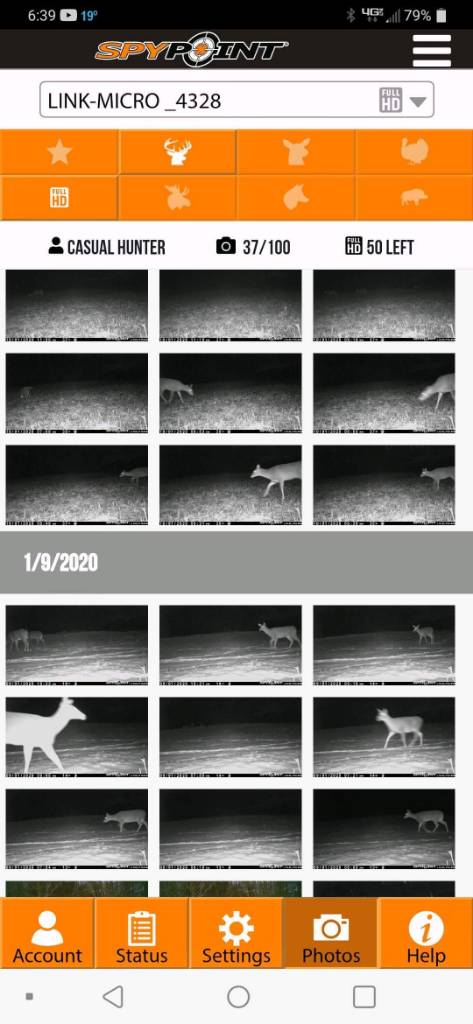 You too Billy! Last sit of the season for me! Sent from my iPhone using Lake Ontario United mobile app
 -
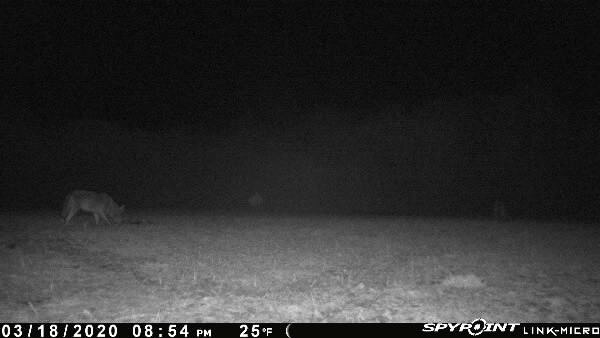 Had two coyotes push 11 deer to me yesterday. First time in my life I liked a coyote! If I could have gotten a good shot at either coyote, I would have taken a coyote over another deer! The one was blonde and the other was the normal gray color. Sent from my iPhone using Lake Ontario United mobile app
 -
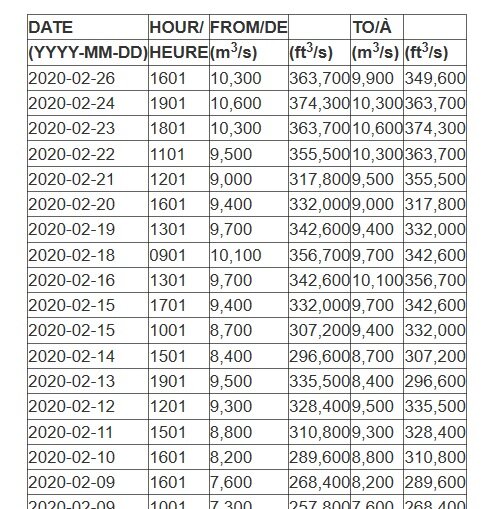 The flows were way higher in July and August. They cut back in September and October. Should have been safe in September and October. What is the reasoning for cutting back then? Sent from my iPhone using Lake Ontario United mobile app
 -
Fun sit with my son this evening. Three doe and a nice 8 point. Our streak has ended. Three seasons in a row I shot a deer with him with me. Four tries this year and zero harvested. We saw deer every time out and made some awesome memories! Sent from my iPhone using Lake Ontario United mobile app
-
They should have kept the flows higher in September and October when there was no ice. Sent from my iPhone using Lake Ontario United mobile app
-
Coyotes helped me out this morning. Doe down. Sent from my iPhone using Lake Ontario United mobile app
-
Very nice Joe! Sent from my iPhone using Lake Ontario United mobile app
-
Third deer in three years that was crippled from this same property. Last year it was a button with a destroyed leg and the year before a doe that had a backward leg from a car accident. Sent from my iPhone using Lake Ontario United mobile app
-
Shot a half racked buck this morning. He was chasing doe with a bad limp. Looks like he was shot in the hind quarters last night or yesterday morning. Would have been a small 8 if he had both sides. Sent from my iPhone using Lake Ontario United mobile app
-
Sent from my iPhone using Lake Ontario United mobile app
-
Knock one down Bill! Sent from my iPhone using Lake Ontario United mobile app
-
Read the syllabus. It is good if you don’t fill it during the regular season. You do have to have bow or muzzleloader privilege to hunt. Sent from my iPhone using Lake Ontario United mobile app
-
Good time to be in the woods. Less guys and second rut!
-
-
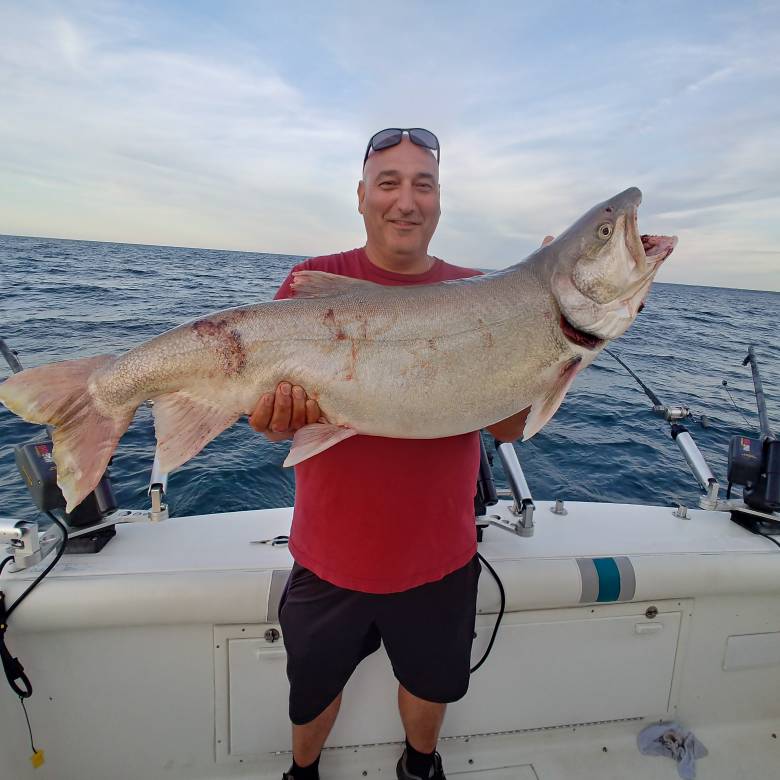
The DEC boosted my sales by cutting king stocking! I'm just asking for them to bring the stocking back to Monroe County. With king stocking cuts, the lakers are going to save the day for most charter captains and rec guys. Over the past couple of seasons, the numbers seem down from what they were 3 or so years ago. With the pressure off of them the past three seasons, they should be loaded up good. I used to be able to leave port on any given day all season, hit 120' and troll East and never run out of fish. Now I have to put more time in searching for concentrations of lakers.
-
You're dead to me Billy!
-
Congrats Dan!!!
-
For years, the Feds/DEC have not been stocking lake trout in Monroe County waters with Lake Trout. I am not sure of the reasoning. With the stocking cuts, and the possible steelhead creel cuts, the lake trout are going to become more important to the Charter Captains and Rec anglers that fish out of the ports of Monroe County. The last five or six years, laker fishing has been tougher and tougher. With great king fishing, they have been left alone and not beat up at all. I think it is time to make some noise and get the stocking of lake trout brought back.
-
https://www.clarionledger.com/story/sports/outdoors/2019/12/05/buck-msu-deer-lab-study-makes-13-mile-trek-winter-home-hunting-mississippi-state-university/2606178001/ Interesting read. Sent from my iPhone using Lake Ontario United mobile app
-
Congrats Dusty. Did you shoot it out of the climber I sold you?
-
Part of this is true. Once the river freezes over, the flows can be increased under the ice. This is right from the IJC webpage. High Outflows from Lake Ontario to Continue Over Winter; Lake St. Lawrence Levels to Fluctuate Widely in Coming Months Date December 03, 2019 While Lake Ontario remains above long-term average, regulated outflows will remain as high as feasible based on river conditions. As a result, residents around Lake St. Lawrence are being warned to expect both extreme high and low water levels this winter, as the Board implements a winter deviation strategy. The strategy aims to take full advantage of all opportunities to safely increase outflows and reduce the impact of future levels on Lake Ontario. High water levels are anticipated when ice begins forming at critical areas of the St. Lawrence River. When ice begins to form, the International Lake Ontario – St. Lawrence River Board must reduce outflows through Moses-Saunders Dam to help create a stable ice cover on the river. Flow management during ice formation helps to prevent ice jams in the St. Lawrence River that can restrict flows and cause local flooding. The reduced outflows cause levels of Lake St. Lawrence, immediately upstream of the dam, to rise temporarily. The largest and most rapid increases occur closest to the dam, in the area just west of Cornwall, ON and Massena, NY. These effects are reduced moving upstream and tend to be negligible beyond Iroquois, ON and Lisbon, NY. With Lake Ontario expected to remain well above average for at least the next several weeks, this will also contribute to higher levels of Lake St. Lawrence this winter. The Board is therefore advising residents of Lake St. Lawrence to prepare for the potential of unusually high levels this winter. As ice formation is completed, outflows can normally be safely increased under the ice. This causes Lake St. Lawrence levels to drop, and this drop is also expected to be greater than normal this winter, as the Board continues to investigate potential opportunities to deviate from Plan 2014 and release higher outflows over the next several months in an attempt to lower the risk of high Lake Ontario levels next spring. At present, the timing of ice formation remains uncertain, as it depends on both water and air temperatures, which are highly variable from year-to-year. The Board will continue to communicate with Lake St. Lawrence residents and communities as winter approaches and the timing and risk of fluctuating water levels become clear. Since construction of the St. Lawrence Seaway and Moses-Saunders Dam in the 1950s, it has been necessary to reduce Lake Ontario outflow as ice forms on the St. Lawrence River. This reduces the risk of ice jams by slowing down the current to reduce the forces acting on floating ice pans and any tiny ice particles (frazil ice) forming in the water column. Slower currents keeps ice at or near the surface, and with weather conditions permitting, facilitates them forming into large pans that accumulate, solidify and build a cover upriver. Once established, outflows can be safely increased to pass under the stable ice cover, allowing higher outflows later in winter and reducing – but not eliminating – the risk of high Lake Ontario levels in spring.
-
 I believe there was an offer to the DEC for another hatchery in Niagara County a couple years ago and it got shot down. Someone with more details of it please chime in. Sent from my iPhone using Lake Ontario United mobile app
 -
CVA Accura V2 with the nitride finish. Great gun! Sent from my iPhone using Lake Ontario United mobile app
-
Congrats Matt! Sent from my iPhone using Lake Ontario United mobile app
-
With the upper Great Lakes above average, they should be taking Ontario lower in the winter to account for more water coming into the lake. They could also hold back more water is the Ottawa was flooding and they needed relief for Montreal. It’s common sense. Sent from my iPhone using Lake Ontario United mobile app