


King Davy
-
Posts
481 -
Joined
-
Last visited
Content Type
Profiles
Forums
Events
Gallery
Store
Everything posted by King Davy
-
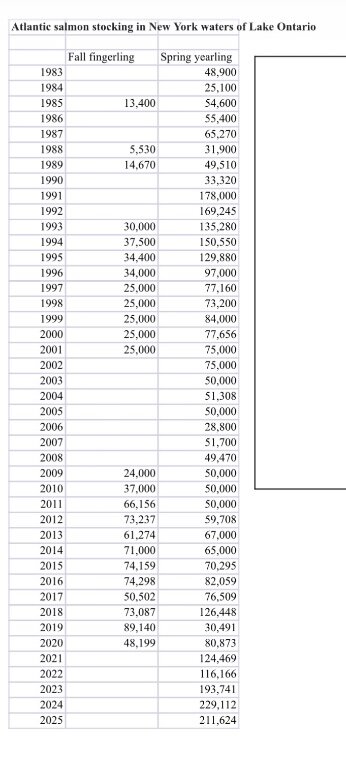 Brian while DEC isn’t stocking Irondequoit, power mill which you know is private will maintain their stocking program for the creek. DEC agreed to not try and stifle that because they do so many things for kids and families but they still release 1000’s of fish. So that program continues. LL the timing of delivering steelhead to the pens is pretty crucial. I can tell you as I’m sure other who have helped in various stages of this project (me on and off since 1998) that you can actually witness a steelhead imprint. After a few weeks they lose their par marking and become completely silver. It’s at that stage they are likely imprinting to the water they are currently in. we stock yearlings simply because hatchery’s don’t have the carrying capacity to hold fish longer due to the fact the next brood stock is due six months later. A yearling Atlantic salmon in the wild doesn’t go to sea. They live usually for two solid years and many times longer in a river before going out to sea. I catch those fish in Canadian rivers. If we have a river like Irondequoit where they can survive summers they may do the same and leave when they are ready. Stocking them in mouths of rivers that they couldn’t survive in for two to three years is the only way in LO you can get them in the system to hopefully grow big in the big lake. Canada stocked fry for years and said the program was a failure. My Buddy Peter Addison who is now in charge of most of the hatcheries in Ontario Canada used to dive with scuba gear off the Ganny and Duffins Wilmont looking for smolts or young salmon that survived par stage and entered the lake. You can imagine fry turned out to be bait and the program failed. Now they raise salmon to yearling stage and stock them both up the rivers in natel areas and have tried river mouth plantings. I know the Ganny gets a notable return. in my humble opinion we need to rein in all the different ways we do this. Pick a viable scientific process to see if we can find “A” river that could maintain a true Atlantic salmon life cycle. The word Grilse is the term for a salmon that has returned from one or two years at sea. But that fish is likely three to five years old.
 -
I know Gambler. Ain’t it crazy. All the best captain.
-
The ultimate solution for starting a hatchey raised fish to par status to hopefully introduce to a river of origin should they imprint is best to move them to the river you hope to have natural returns to. Par salmon are aggressive eaters just like their pacific cousins. In the wild rivers I’ve fished you drop a fly in the water a dozen par race to eat it. So they learn just like any fish what natural forage there is to eat. When we put steelhead in the net pens and there is a midge hatch they hit the surface as if swimming free in the river. If you are able to hold them until they truly smolt you have a decent chance to have them return as adults. The tough thing is the actual number of fish you have to work with. 5000 isn’t a very big number and to get a large enough return for scientists to declare success will take longer and lean on mother nature to provide for a smaller number of survivors to adult returning stages. And maybe success in spawning. our chinook fishery has been a world renowned success because we are dealing with millions of stocked fish and multi millions now of wild fish. we couldn’t get millions of Atlantic fry if we wanted to ….to think we’d end up with the same success as kings isn’t realistic but we can still try and find a success in trying to have a wild heritage fish find a home. It’s truly not much different than our wild Brook trout program. We only can be successful in a few locations in the Adirondacks and even fewer in the Catskills and a few places in tug hill that haven’t been industrialized. We have a couple in LO. Hopefully we can focus efforts in the best places. Anything else is Pi$$ing in the wind.
-
Fish farms in the ocean have created more problems to the areas 100’s of 1000’s of people have put their life’s work into restoring native wild salmon populations. Atlantic salmon born in a river stay for at least two years and some times longer in environments like the George River in Ungava Bay. It’s the natal river system that creates a healthy salmon. Fish farms are mostly used to raise salmon for consumption not to replenish stocks. And HB2 is correct the waste from those offshore farms do more damage than good to the ecosystem of those locations. Brian and I are on the same wave length here. Find a stream (and we only have a few) that can support wild reproduction. We are fortunate to have one in our back yard … Irondequoit. This would be a long term investment and experiment. Dedicate a space and partnership with Powder Mill and the state and raise fish there in the natural water the fish need to imprint on. There isn’t a ton of room there too bad you couldn’t hold more than 5k. However the latest success in direct stocking at both the Oak and Sandy had been direct stocking in the mouths of those creeks and have had decent returns. So raise 5k in the creek and if you can dedicate another 10 to 15k to this experiment direct stocking them at the mouth of the bay. One might say how about the mouth of the creek however the predators in the bay would slaughter those young fish even as yearlings. Much like our other dedicated programs pick a time frame to experiment and measure results. Example (the new Brook trout management plan is from now to 2040) For me you’d have to dedicate 10 years to this as long as you can do so without impacting the rest of the LO program. We were scheduled to electro fish Irondequoit today through Friday at four locations including powder mill. Got called off due to the storm this morning and forecasted 3/4 inch of rain over the next 24 hours. But DEC region 8 now has Irondequoit on their sampling schedule due to the finding of a solid population of wild brown trout. As I stated before if brown trout can successfully reproduce in the Irondequoit then the habit is certainly viable for Atlantic salmon. Now you have an environment that will work. The next hurdle is can Atlantic salmon this new hybrid strain of supposedly thiaminase resistant fish successfully reproduce. If the answer after a prolonged period is no then I’ll admit it’s probably not possible. But NYS unlike the other Great Lakes states including Ontario have not in my humble opinion put a true program together to do the science. Instead dumped a bunch of fish in front of some popular rivers and streams and hoped they would return so people can catch them. Which is great but to me that’s no more sustainable than making a living rolling dice at a table in a casino. Great discussion and thoughts from all of you folks. We have to encourage a dedicated program or quit all together. I hope as a love for heritage and wild fisheries we choose to create a dedicated program. But just tossing fish in and hoping they get big enough to get caught isn’t a true science program to restore a native species. Longline I just read a report of 200,000 chinook salmon have returned to the upper reaches of the Klamath system. If that’s true a pretty amazing status in such a short period of open upper river access. We can do this stuff if we are dedicated to it.
-
Likely down from Huron. Huron has a fishable population of Atlantic salmon in the lake and certainly in the St Mary’s River. I fished the st Mary’s for several years and caught many wonderful fish and lost a very big salmon that still haunts me today depicted in my first book in the chapter titled “The Haunting”. I’ve seen pink salmon on the Catt that obviously came down from Huron.
-
Nice find Longline. I think NY selected the Sabago’s because scientifically they look like a better fit. But since they became the strain of choice my experience has been the loss of the summer fishery we had on the Salmon. But then again we are in a much different climate pattern with years of drought unlike 15 years ago. I really think Irondequoit can be a gem for these fish. It has habitat and cooler summer water. And if we can leverage the many thermal relief sections of the salmon river for salmon refuge during summer months maybe we can recover that fishery. Hopefully all the agencies involved stay coordinated to keep moving forward. Good stuff thanks for sharing.
-
Longline yes the Klamath was a long project and the key is nobody was sure it would work. Now still in infant stages may be another decade before one could call it a success with regards to healthy trout and salmon returns. But the project still happened without any guaranteeing of returns. Years (2018-2019) ago US F&W along with USGS started two studies on the salmon river. One was a float from up top to below town looking for thermal relief sections of river. They found many. The next step would be looking at opportunities to do stream rehab to create pools and runs in those thermal relief areas to where summer run salmon would congregate until conditions changed to continue to migrate. The second one Tom Hoffman from US F&W was studying thermal relief layers in the lower Rez and could Brookfield along with Feds tap into that water to release it below the dam to cool the water. And then all that work stopped. I have no knowledge of why. I heard a rumor that these studies were starting up again but again don’t know if it’s true. But since we shifted to Sabago’s our summer runs haven’t materialized. we had a few years where it was exciting. I had a day on July 3 behind the schoolhouse before it became the tailwater where I caught four large pure silver rockets where the spring is located across the river. Another time caught two beautiful salmon right below the 2A bridge in mid August on consecutive casts. And many evenings fishing the upper fly zone with dozens of fish showing.
-
Well Brian look at us. I 100% agree with you my friend. Do the science do the work to find a viable strain, more importantly find a body or bodies of water that might meet their habitat needs to include restoration focus the population to only those waters and not waste the resources in streams where any A Salmon scientist would never pick. But the DEC LO management group is looking for improving the catching on the lake which can translate to solid catch rates in our rivers. in the 80’s they did try Irondequoit and we did get some fish back not great numbers but they gave up on it way too soon. If you look at the world is trying to do for sea run fish it’s a giant hurdle. But then again after 100 years removing dams on the Klamath they have chinook, sockeye and steelhead as far up as they can go. In that system for the first time in 100 years. so it’s not impossible but it’s not an overnight stock them and two three years later the river or stream is full. Right now it’s not charging.
-
I don’t disagree with you on putting the resources where they have the best chance of returning to a river where they might have spawning success. And why I fought for Irondequoit for years. Our Great Lakes DEC team is focused on creating and maintaining a sport fishery. I’d love to see the Atlantic salmon program be with the same folks who are focused on sturgeon and other native species. Professor Jacque (I have to find his last name in my email) at SUNY Brockport had a long talk with him last winter said as was mentioned someplace else in this string that all our salmonids are B1 deficient. All have thiaminase issues except according to him Brown Trout. I asked him if it might be that they have a bigger Goby diet these days and he told me Goby’s have thiaminase as well . All species stocked are treated including Atlantics as well as now this new hybrid Atlantic that is supposed to be resistant to thiaminase. But unless we focus these fish in streams that can actually produce wild fish how will we ever know if it works. We used to stock Grand Lake Stream Maine salmon and I can tell you in the 90’s we had 20 pound salmon returning from the lake to South Sandy in June and July. My two salmon crazy friends would sleep in their car to get on the water early to catch them. In the early to about 2013 2000’s before we switched to the Sabago strain we had wonderful summer fishing for Atlantic Salmon in the summer on the salmon river. Days you could hook a half dozen bright fish in July. Besides the habitat and forage issues I believe the Sabago’s don’t like to find our rivers in the summer. Soon as we switched our summer fishing up on the salmon ended. Last year they were very present on the lake fishery. I got a call from Ron at Orleans Tackke and Lodge last year that in an August lake inversion dozens of Atlantic salmon living near shore (which they do) ran the oak and died once out of 40 degree water into near 80 degree water in the oak estruary. He sent DEC pictures as well. I saw them… marvelous fish. So I immediately went up to the upper creek to see if any made it up there to a little cooler water. I didn’t see any and only caught two dozen smallmouth which wasn’t a bad thing. So you and I are absolutely on the same page don’t waste these fish where they have no chance to see if they can find natel habitat and focus on the very few places we do have. The other thing we have to understand about this fish. They may take five even six years to become spawning adults. They don’t show up three years later. As hard as I fish for them these days I’m not foolish enough to think I’ll find large surviving populations of these fish. I’m not just a fisherman I’m a conservationist and have always been focused on native heritage species everywhere in the world not just here. I’ve been fishing Northern Labrador the past five years to maybe the last great population of wild sea run salmon in North America. And in Newfoundland and Labrador they are purely focused on retaining that linage and then on sport fishing. They are getting it right. As I stated above I don’t think a species like Atlantic salmon science should be within the “Sport Fishey” department of the DEC but rather a group solely focused on Native Heritage species like they do have for eastern Brook trout . Again personally I’m not delusional in thinking we’ll have a super sport fishery for Atlantic salmon in the Lake Ontario watershed that at one time was the greatest in land fishery on the planet. But Brian we did once about 15 years ago have a fishable fishery for them in the salmon. You could go up there and know you would be fishing to fish which is what we all want. I know right now I have Atlantics present in the fall in the oak. Candidly I’ve probably caught more of them the last six or seven years in the dead of winter the month of February being my best. But the oak and Sandy aren’t the answer from a heritage native revitalization conservation focus. But the DEC team managing this are purely focused on creating a viable sport fishery. You and I can easily agree that’s a target I don’t think they can hit
-
You see the difference you are looking at this as a sport fishery while many in the scientific community are looking at this as a revitalization of a native species. Just like sturgeon. I’m going to see the shocking crew next week as we are studying the wild browns of Irondequoit. Mike and his crew I know had a couple good nights on Sandy and the Oak because they sent me pictures and were happy with the results. the only New York State hatchery that are raising Atlantic salmon from egg stage is Adirondack. Which they do for the entire state. To your point according to what Steve Hurst told me in 2024 the deal with getting federal fish was coming to an end this year due to cost which should make you happy the state isn’t spending extra on getting Atlantic salmon South Sandy, Salmon River and Irondequoit creek are the only streams on our south shore that could produce wild fish according to the studies they’ve done on suitable habitat. When I was on the advisory board with DEC I urged them to stock salmon there to see if we could foster a wild strain of fish. DEC was focused on creating a sport fishery which to both our points on survival to adult stage requires lots more fish which they don’t and never will have. But they went ahead and did so anyway by continuing the stocking at the oak and now Sandy. Mike our region 8 biologist told me the creel number for the fall winter spring count of A Salmon caught was 1200 I think in 2023. I bet it was even greater in 2025. However as much as I fish that stream I never talked to a creel agent but I caught plenty Atlantics as did many around me.especially in October before the pacific salmon took over which they do. Today DEC has finally started a program in Irondequoit which I believe is the result of the solid wild population that was discovered of brown trout in the creek and yes I will pat our Seth Green TU group on the back especially our conservation chair who urged Mike and his shocking crew to try it and they were blown away with how many wild browns they found. in conjunction with the powder mill hatchery DEC provides 5000 salmon par. They received the first batch of fish in 2025. Held them for a full year and this spring released them down lower in the stream to hopefully help them find Lake Ontario. We don’t expect to see any of these fish as adults for up to five years from now. Maybe some grilse will come in sooner. But Irondequoit has water quality (cool summer water and loads of spawning habitat and since brown trout are having great success reproducing and Atlantic salmon have the same temperature tolerance as browns thus could be a stream that could be that niche fishery. My good friend Stacy F from the USGS offices in Oswego is the point person for the Feds and is monitoring the program with DEC. Are we going to have a major sport fishery for A salmon in Lake Ontario …. Not unless we stock 10’s of thousands to millions of more fish. Could we have success of possibly revitalizing a native species in a few stream or rivers. Maybe. Is this effort truly pushing aside the stocking of all other salmonids in Lake Ontario…. Nope.
-
And you solidify my comments. Take your 2017 number. 127k fish stocked. Standard scientific estimate 10% survival to adult stage to be in the sport fishery equals 12,700 catchable adult salmon in a lake the size of LO. So you might say then what’s the use and I can get that. That’s a reasonable observation. But the state is also putting tons of energy into the same revitalization of Brook trout in the Adirondacks and Catskills. A project to connect dozens of miles of the moose river by fixing culverts to allow these trout to get up to top spawning habitat that is taking years, and may be several more years to finish. Heritage fish species to our state waters are always going to get attention these days. Atlantic Salmon, Brook trout, lake trout, sturgeon, even Cisco’s. Actually no skin off of any other program.
-
Yeah you have the targets not the actuals. The Fed fish came from Champlain and they couldn’t meet the targets. DEC ended their relationship with Tunison and Cornell once they signed on with the Feds. So couldn’t back fill from there. Now back to just Adirondack and we’ll see what they can come up with besides stocking all the finger lakes. Brian I truly don’t understand the hard feeling against an iconic legendary sport fish especially when it’s not interfering with any other species stocked and to where most of the study is with Federal environmental groups in partnership with DEC. Mike Connerton at Cape Vincent is the catalyst on the DEC side and the one collecting tissue and scale samples we are sending. Our region 8 biologist Mike D has with the region 8 crew electrofishing the estuaries at Sandy and the Oak all the way up to the road hole and have shocked lots of salmon last October. I wish I would have kept the pictures they sent us. My experience last fall in early to mid Oct more ASalmon were being caught in the oak than brown trout. I had a day where I landed half a dozen up to 10 pounds. As you know we struggled with low water the past couple years which is critical especially for Atlantic Salmon so you’ll get trickles instead of large runs. No different than sea run fish. Low water poor returns. Get a rain event the river gets flush with fish. So tell us what are you missing out on because the Feds and DEC are working on this.
-
Imagine holding kings at Altmar for a year. Is everyone’s moving their boats up there since all the fish would have smolted on the salmon and at least the stocked survivors highly likely would return there. As crazy as it is these days up there I couldn’t imagine that scene.
-
Longline is 100% correct. The target was 250 K. This is the last year we were to get federal fish which had been a partnership for three years. We are out of that partnership because the Feds wants $2.50 per fish and DEC doesn’t have the capital to buy them, our fish have always come from the Adirondack hatchey and Tunisian labs at Cornell. We’ve never hit any targets for max Think how fast chinooks grow. In a year they are 12 to 16 inches sometimes larger. We’d need a huge hatchery to house 1.5 M kings on top of everything else and what do you think the budget would be to feed and the utilities to keep that population alive for a year that many fish that are destined to reach those sizes. I’ll say it again this is a group of scientists trying to figure out if Atlantic salmon can be revitalized in our fisheries since they are a heritage species and like everywhere in the world that Salar have once been the top predator is this same effort going on. I love how you guys shoot from the hip but don’t have the actual facts of what’s really happening. I’m involved in it 12 months a year working with these scientists. Next time you want to make a statement drop me a DM and I’ll get you the actual facts.
-
Gambler NY has not ever stocked more than 150k Atlantic’s. For years Canada stocked a million - fry not yearlings. Up until four years ago NY stocked less than 100K. And only in three locations now four. imagine back before successful natural reproduction prior to the salmon river base flow changes we only stocked 150K kings in the 70’s 80’s and 90’s. Do you really think we would have had 20 plus years of very good salmon fishing before the wild explosion. Many scientists believe less than 10% of stocked fish survive to adult spawner status. If that’s true 150K reaching adult returning fish is minuscule. And up until four years ago that number was 60k and for many years not even that many. We are Not going to see an explosion of Wild Atlantic salmon in Lake Ontario like pacific salmon ever. The hurdle is way too high to ever meet habitat requirements to foster a wild sport fishery in Lake Ontario. But scientists within DEC and mainly with Sea Grant USGS and US F&W are going to forever work on native species. The best it may ever be is a niche fishery and it has never replaced the stocking targets for all other species. In the past 10 years I’ve caught over 150 adult Atlantic salmon in the Great Lakes, Ontario. Michigan and Huron. Mostly in tributaries. They have been marvelous fish. The struggle for Atlantic salmon restoration is worldwide. Nobody is giving up despite years and years of frustration and failure. Just as we have restoration continuing for Sturgeon in the Genny, Niagara, and St Lawrence rivers. And you can’t even actually fish for them legally. If you catch one can’t remove it from the water and it must be released immediately. Yet scientists will continue to try and find some success restoring Heritage native species. Right now efforts on this program is causing no harm to any other salmonid programs in Lake Ontario. The pacific salmon fishing in Lake Ontario is at the greatest catch rates ever. Not to mention you can catch as many brown trout, Steelhead and lake trout you could ever want. These are the new Hay Days. So enjoy what we have and don’t get wrapped around the axel on something that has no impact on the fish every one is trying to catch. Those of us who care about it, are helping with studies, and catching some of these magnificent fish and understand the mountain this is to climb.
-
Well HB2 some watersheds just aren’t habitat wise viable especially for species that require cold water for 12 to 24 months. Maybe more research up near the east and west braid of Sandy might open up some opportunities for rehabilitation to promote colder water. On the Credit River in Canada which runs through the GTA the CRA group planted over 250,000 trees up in potential spawning areas and ran a program that had over 50K homes near that area divert their rain water across their lawns instead of in the sewer system that ultimately silted over spawning gravel in the upper reaches. They lowered the summer water temps by nearly 7 degrees and today have successfully found wild steelhead and Atlantic salmon up there. Two groups I was involved with planted over 60,000 trees mostly stream bank erosion resistant willows up in the higher natel areas of the Salmon River and today with the base flows in place from the FERC license has promoted wild success for king salmon in the multimillions. But in the annual seining events by DEC lead by Dan Bishop they find wild Atlantic, steelhead, and coho salmon as well as find lots of those fish in Orwell and trout brook with their spring fed habitat.
-
Interesting discussion. There has been several studies on south shore streams since the 70’s to determine what if any have habitat to support natural reproduction of trout and salmon. Just about any south shore trib can and does produce wild king salmon simply because they hatch and smolt by the following spring early summer, can and do make it to Lake Ontario before high stream temps can kill them. Steelhead. Coho salmon and Atlantic salmon hatched fry live in their natel stream for up to two years. Atlantic salmon many times spend four years in their natel river before smolting and running to the sea or in our case Lake Ontario. Sandy creek has little to no spring influx except way up on the west branch of the stream. There truly isn’t nearly enough canopy throughout Sandy to lower summer stream temperatures. With most of it running through agriculture runoff of pesticides fertilizers, and silt along with its high content of shale bottom simply doesn’t add up to high productivity for the species that must survive in the creek for a year or two. Right now DEC is working with powder mill hatchery on an Atlantic salmon program. Irondequoit creek is one of the few south shore streams that has wild reproductive capabilities. We (TU) have been working with region 8 on finding and documenting the budding wild brown trout population. In fact we will be helping them electro fish several Irondequoit creek locations next week Sept 1-3. With the success of wild browns it’s entirely possible to foster a wild population of Atlantic salmon program.
-
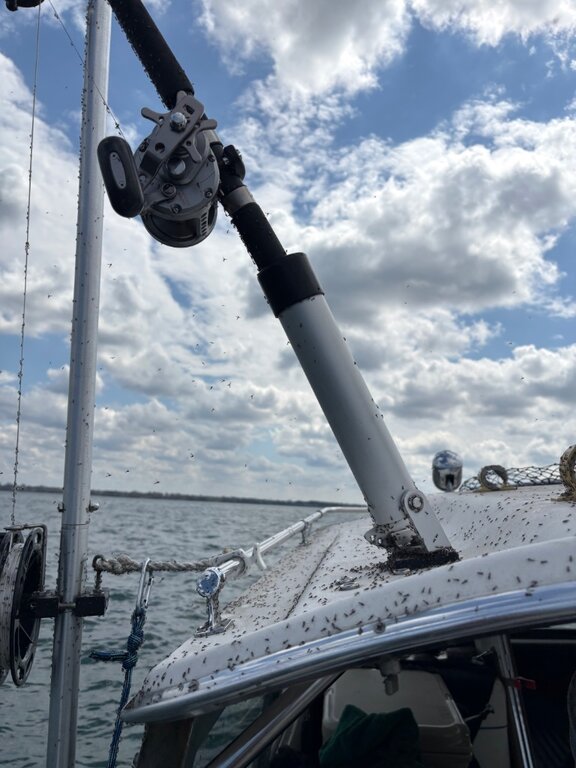 Gator I used to live at 7 Bayview Dr a couple doors away from Vic Mason. And I’ve enjoyed many a delicious cocktail on your bar at Skinners back in the day. Ran my charter boat out of there until it got too frustrating to deal with the channel and moved to Sandy Creek At Jim Pascerella’s Marina. Had a lot of great memories with my dad after trolling the lake and getting a cold beer at Skinners.
 -
Yes there is a big exciting beautiful world out there and while I don’t find fishing the open waters of Lake Ontario necessarily boring. To have the stick in your hand when you unleash the primal instinct of a top line predator to come kill a prey fish while you are the presenter instead of the boat and trolling gear for me these days…… is why I fish.
-
I still love it all. I’ve fished every ESLO or LOC derby, and chartered a boat for 22 years plus a ton of recreational fishing on LO since 1971. And then in 1998 I took my first trip to Alaska. I remember waiting for my small plane flight from king salmon back to Anchorage a guy who I helped duck tape his trophy moose rack to his duffel bag asked is this your first time. I said yes. He said nobody comes to Alaska just once. From fishing all over the Kenai peninsula down through Bristol Bay including a camping tent trip on the Sandy River in the Aleutians catching Bering sea steelhead while waking up each morning finding the wolf, moose and brown bear tracks all around our camp I decided I wanted to go to all the places I read about in Sports Afield, and Outdoor life. I sold my charter boat and passed my clients to other captains and headed out on a 25 year journey of fishing both salt and fresh water destinations. All with a rod in my hand experiencing the power and excitement of the “Take, Grab, Pull, Tug of the greatest game fish on the planet. From GT’s and Tarpon to 50 pound king salmon, 20 pound steelhead and 30 pound sea run Atlantic salmon. And dozens of other species you can’t catch here. From Africa to the arctic circle. While I still love Lake Ontario and its tributaries I don’t regret for a minute to make trolling my least style of fishing.
-
Typically I’ve never seen the road crews up there Mexico Pulaski Altmar up to the Tug use salt but rather sand. My friends up there are constantly dealing with sand ruining their break pads and wheel bearings.
-
Hopefully it’s not a VB issue like last time. There hasn’t been too many days above freezing up there this winter so this could also be gills freezing if removed from the water and that for sure will suffocate them. I have a saying that I pose to the gear guys and fly guys who don’t think they’ve had a good day until they reach double digit numbers of fish. if you can’t tell me something unique about fish number 1, # 5 # 11 #16 # 22, just maybe you’ve overstayed your welcome.
-
Genny fish have been good. Last time I river fished was first two weeks of January. Didn’t see any signs of stressed fish. As tough as our winter has been in the western end they’ve had a ridiculous polar vortex up on the salmon river and tug hill. Friends like captain John Kopy have been catching fish out of his drift boat on the salmon the last several weeks but he hasn’t mentioned seeing any of this. Our rivers around here are just opening up after several weeks under ice. They had all been frozen solid and unfishable. Except for right at dams like the oak that stayed open. But just below the dam the river was locked up. It will be an interesting spring and I imagine we’ll all be eager to hear what the bait fish trawls turn up.
-
We’ve had gill lice in our steelhead for a long time. Some years are worse than others. Gill lice are common everywhere. We had tons of gill lice in Bering Sea steelhead in Alaska. we’ll have to see what transpires. Hopefully not a massive die off of adults. Last time the smaller fish survived and the bigger fish were impacted. thanks for reporting this Brian.
-
Still low vitamin B levels in core low temp water saps there energy just like the stress of spawning will. Generally late Feb the fish will start to pair up. With 7 to 8 foot of snow on the ground up there and the trails from impossible to very difficult to traverse my friends who live and fish there haven’t seen nearly the pressure as usual from bank anglers. when this happened last time caught fish and fish that weren’t hooked succumbed to vitamin B deficiencies . Time will tell.