


Sk8man
-
Posts
13,929 -
Joined
-
Last visited
Content Type
Profiles
Forums
Events
Gallery
Store
Everything posted by Sk8man
-
FYI - Reel Filler Chart (Excel spreadsheet) Great Lakes Angler
Sk8man replied to Sk8man's topic in Open Lake Discussion
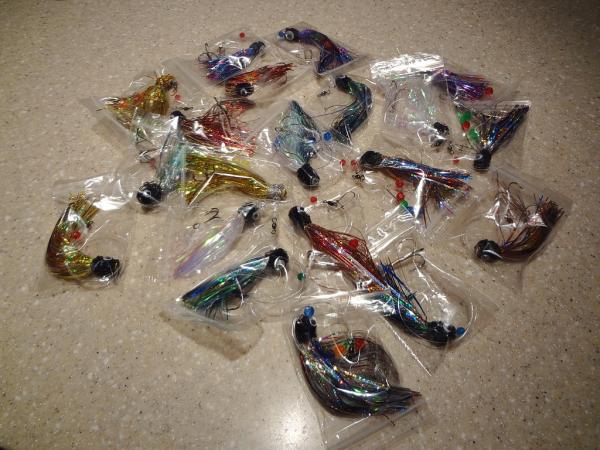 Same here.....been tying home made (experimental) trolling flies all day
 -
Sold / Closed Vintage Red Eye - Evil Flutter Spoons - Sold individually
Sk8man replied to vetting's topic in Classifieds - Buy, Sell, Trade or Rent
The cupboard is starting to look a little "bare" -
 If it were me (not knowing anything about the lake and going there) I'd try to fish the spaces near any weed beds found or to the outside edges of them. Most lakes that shallow 7 ft medium depth and 20 ft max. the deepest part on bottom (eg. 20 ft area) usually have low oxygen levels after the ice forms so the fish are scattered in the shallower parts near where plants give off oxygen and contain possible food sources. I'd be jigging with small jigs with spikes or mousies (purchased before going) or small plastic tubes on 4 lb test line (maybe fluoro as well) for bluegills and crappies etc. and if things looked decent there I'd set up a few tip ups for pike (depending on what he finds nearby for bait e.g. live shiners etc.) and if not then set up for perch with light line using whatever bait he has available. If there is a bait store anywhere near there I'd pick the locals brain about it (even if just on the phone).
 -
Any one ever use Red Eye - Evil Eye spoons?
Sk8man replied to vetting's topic in Tackle and Techniques
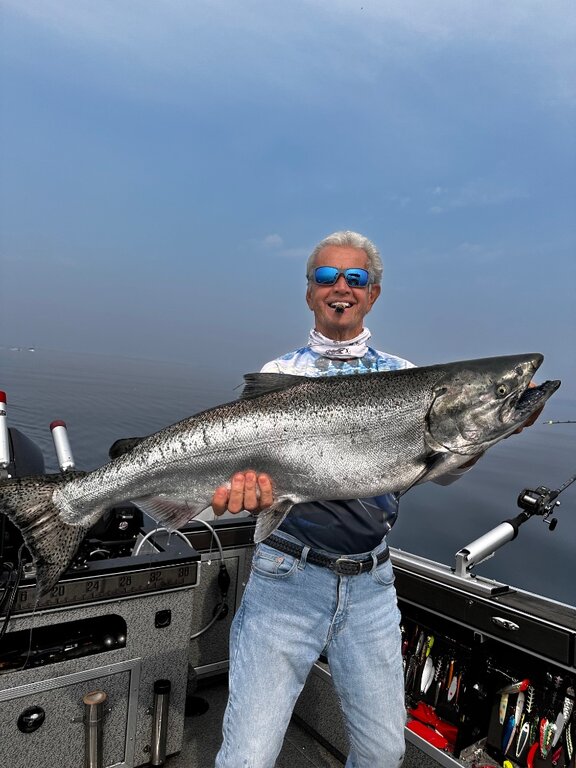 Sounds like Pearl Wobblers on the rig (made out of mother of pearl) nice rainbow lure but usually not used on Seth Green rig interesting....
 -
Best wishes for a Happy Birthday Marty! Also wishing for good health and happiness in the upcoming year!
-
Too cold for pike trolling?
Sk8man replied to pro-fish-n-c's topic in Musky, Tiger Musky & Pike (ESOX)
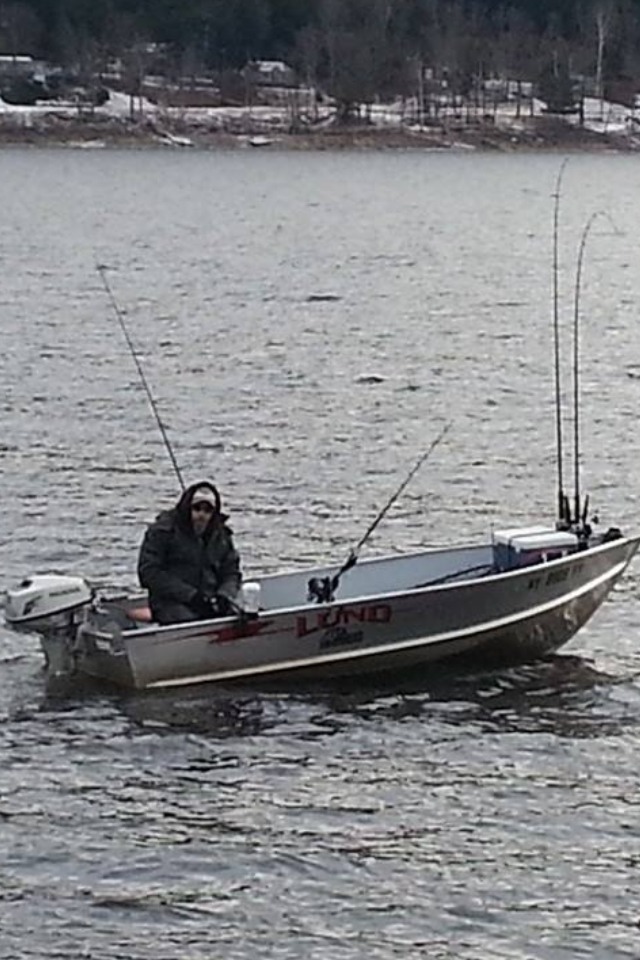 Mike....yes....right between the second pier and the arterial bridge in those sand/ weed beds is where we were....
 -
Here is some BASIC info about what fish are supposed to be there etc. http://www.dec.ny.gov/outdoor/76433.html
-
Any one ever use Red Eye - Evil Eye spoons?
Sk8man replied to vetting's topic in Tackle and Techniques
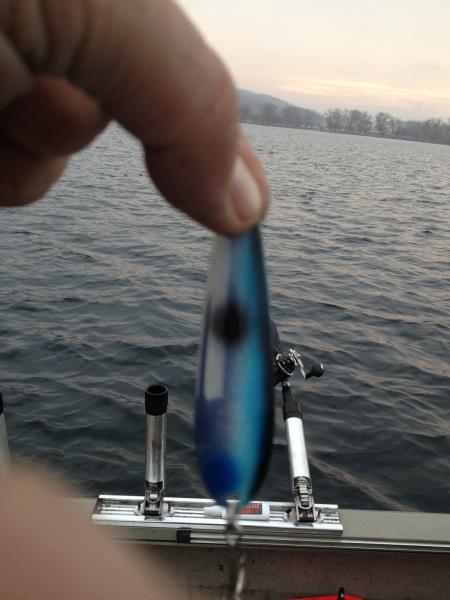
It may relate to high contrast with the light above (sky etc.) and could resemble a "shadow" outline of bait from below it as contrasted with bright colors that "attract" the fishes attention from anywhere? Also colors specifically fade or darken (depending on the original color) at depth and the black would show up (coupled with movement) at a much greater range of depths increasing the probabilities of them perceiving the object. My theory anyway -
Any one ever use Red Eye - Evil Eye spoons?
Sk8man replied to vetting's topic in Tackle and Techniques
I'm with you on that MT! -
Too cold for pike trolling?
Sk8man replied to pro-fish-n-c's topic in Musky, Tiger Musky & Pike (ESOX)
Although Seneca has only frozen over completely twice in the last hundred plus years it did so in about 1977 and we got into the pike big time at the north end. I have never seen so many BIG pike caught anywhere....there were 15 -20 pound pike lying all over the ice one Saturday....we limited out and even little kids were getting them on their tip ups.... there is nothing like a good pike at the other end of your tip up (without a wire leader and hoping the line was BETWEEN his teeth) and wondering if you'll land it or not A lot of folks dismiss eating Mr. Pike because of the bones but they are one of the best eating fishes of all. -
 Marty - I know but the $300 i paid tohave itdone didn't come out of my wallet that easy bud
 -
Nice going.....great way to spend a couple of days on the pond. Great report....makes me even more sorry I had the boat shrink wrapped this year
-
http://www.glangler.com/ You can download the reel filler calculator chart which gives the line diameters and fill levels for a lot of the line we use. Just discovered it so haven't fully checked it out but thought it might be of interest to folks here. Les
-
Any one ever use Red Eye - Evil Eye spoons?
Sk8man replied to vetting's topic in Tackle and Techniques
Me too.....I still have to talk my wife out of using them for Xmas tree ornaments because they far out number them -
 Guess he was lucky he didn't catch his bag on the water as it was
 -
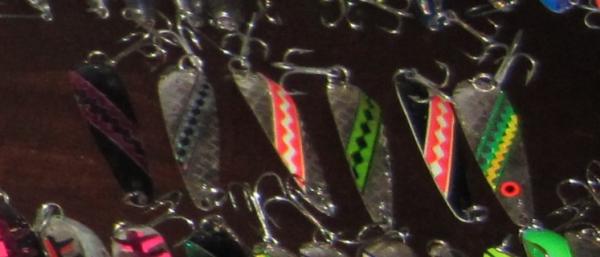 A big WOW on the full collection....you are very lucky ....good spoons and wide selection of colors. 2nd pic - Luhr Jensen #44 flutter spoons - good for lakers, and rainbows, landlocks on Finger Lakes 3rd pic - Alpena Diamonds - Good all around lure for all trout species in Fingers and Lake O (originated on Lake Michigan ....hence the name Alpena) 4th pic - Magnum Pirate Spoons - Good for salmon and trout on Lake O never used the big ones on the Fingers but the one that looks like a NK 28 (next size down) took second for me in the Brown Trout division once in the National Lake Trout Derby on Seneca Lake 5th pic - Can't remember name sorry about that ....
 -
Marty I think they are the fold up variety
-
Any one ever use Red Eye - Evil Eye spoons?
Sk8man replied to vetting's topic in Tackle and Techniques
An additional point.....over the years I have caught many many rainbows on the small evil eyes (smaller than the standard size) so if you have any of those hang on to them if you have any no matter which colors... -
Any one ever use Red Eye - Evil Eye spoons?
Sk8man replied to vetting's topic in Tackle and Techniques
Just make sure you keep all the black ones.... Ditto on Gill T's comment -
Any one ever use Red Eye - Evil Eye spoons?
Sk8man replied to vetting's topic in Tackle and Techniques
They are one of the best "go to" lures over the years when other things fail. The standards work real well in the Finger Lakes and the mags and standards work on the salmon on Lake O. They are one of the last lures I'd get rid of in my boxes. -
I think you're right Mike .
-
Good one Jack!
-
-
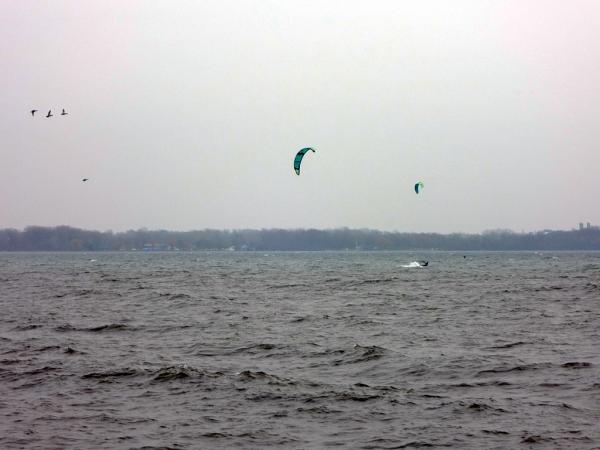
I checked out conditions at the Geneva Chamber launch this afternoon thinking about possible perch fishing with Admiral Byrd tomorrow and this is what I saw: The pics wouldn't sequence right on here but...I think you get the idea
-
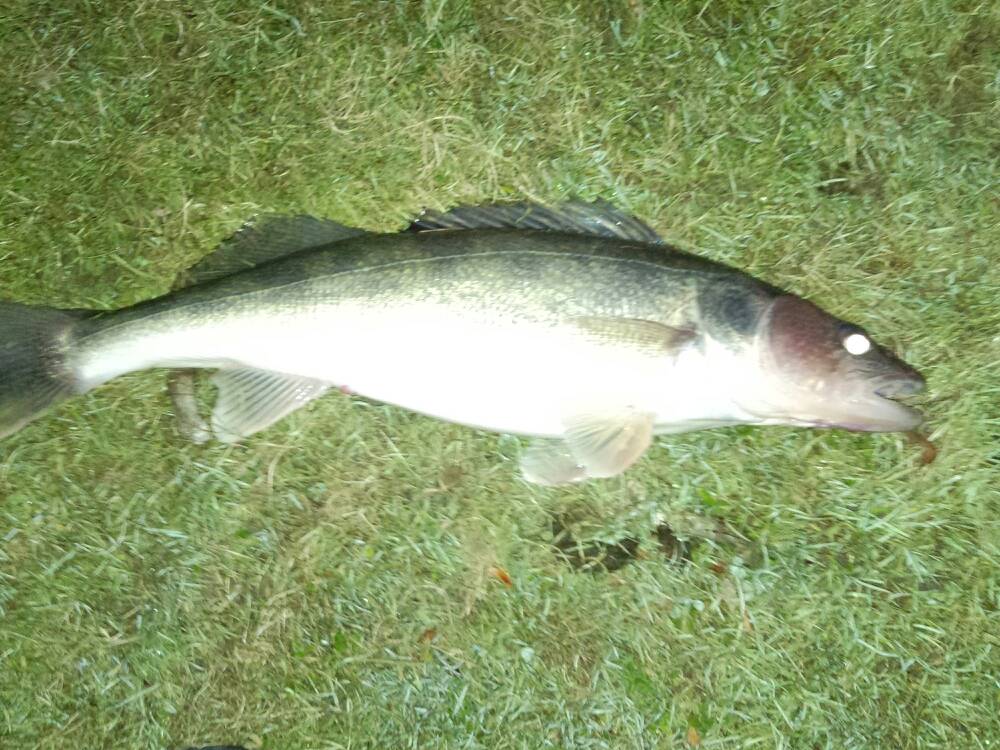 WTG Justin. Have to get them before the ice and real cold weather sets in. Hoping to go after the perch here tomorrow...maybe.