



LongLine
-
Posts
4,333 -
Joined
-
Last visited
Content Type
Profiles
Forums
Events
Gallery
Store
Everything posted by LongLine
-
DEC Atlantic salmon stocking proposal MUST READ
LongLine replied to fjrider's topic in Open Lake Discussion
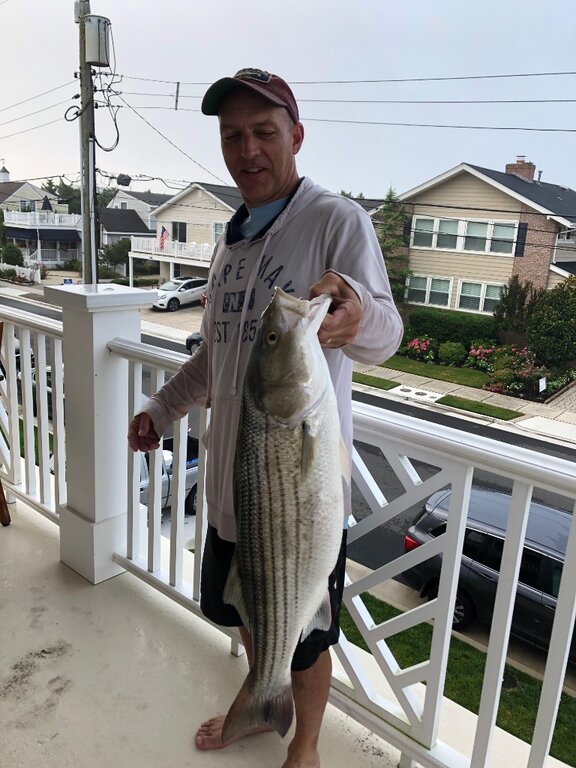 Read through your report...quite interesting. Water Authority temps much better than mid-lake buoy, however it's been my experience that temp at same depth a few miles away can be quite different. Wish there were a lot more thermometers out there. Did some looking today & found this: Surface temp from beginning of this year warmer than 30 yr average. Also somewhat same for last year. Did some more looking - at Historical % Ice coverage. www.glerl.noaa.gov/data/ice/#historical Your report states 2012, 2016, 2020 were good years and 2014, 2017 & 2018 poor years. I noticed that for the good years % ice coverage was relatively low and ice gone by early-mid March, whereas poor years had much greater %'s and ice lasted into end of 1st week in April. El Nino/La Nina. ??? I think La Nina usually gives us warmer weather. I know NOAA has said this is 2nd La Nina year in a row & are predicting it'll last into 2023.
 -
Happy kid
LongLine replied to The Ship of Fools's topic in New York Fishing Reports - Lake Ontario (South Shore)
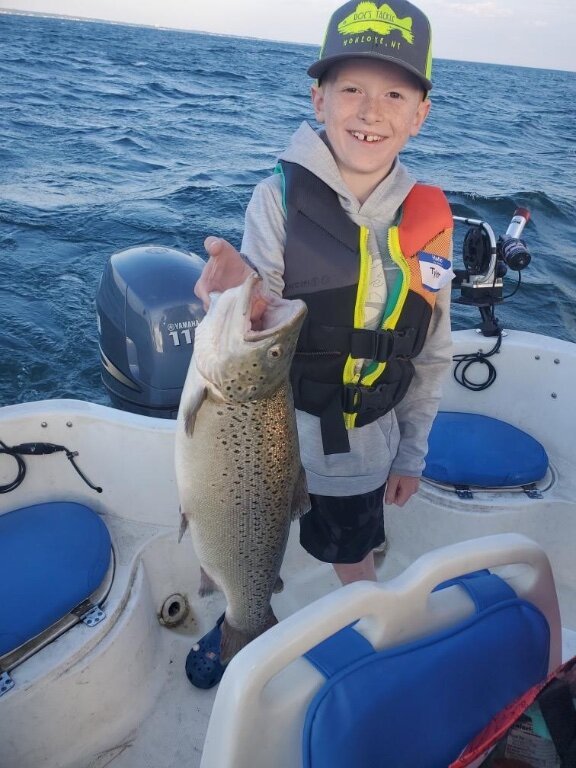 He'll remember that trip for a long time.
 -
I-Bay 7/14 Trifecta
LongLine replied to BreakingBass's topic in New York Fishing Reports - Lake Ontario (South Shore)
-
DEC Atlantic salmon stocking proposal MUST READ
LongLine replied to fjrider's topic in Open Lake Discussion
Thanx! I asked cuz i remember a few yrs ago at St of Lake meeting one of presenters suggested fleas not very good for Alewives. -
DEC Atlantic salmon stocking proposal MUST READ
LongLine replied to fjrider's topic in Open Lake Discussion
Thanx! (What are they eating? Fleas more nutritional than originally thought?) -
DEC Atlantic salmon stocking proposal MUST READ
LongLine replied to fjrider's topic in Open Lake Discussion
Was hoping he was following this. -
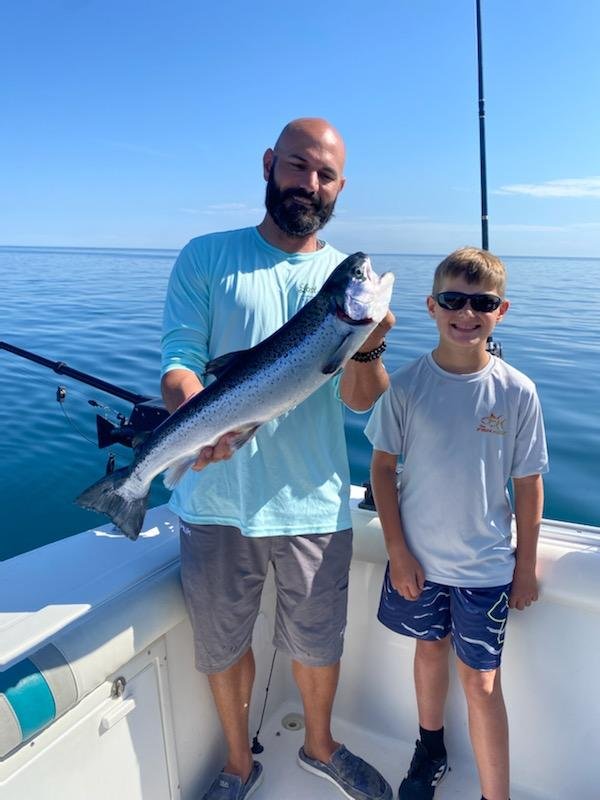 L.S.S.C. has a real good thermal history of the St. Mary's (where they stock them.) Also Superior doesn't have alewives and Huron doesn't have enough to say so.
 -
DEC Atlantic salmon stocking proposal MUST READ
LongLine replied to fjrider's topic in Open Lake Discussion
Has anyone seen this year's prey fish assessment? For alewife numbers/condition? It's not online. They didn't do one according to Annual Report in 2020. rather they looked at fish stomachs. Kind of "fishy" that this draft comes out before we can see the data for 2021. Talk is that there was an explosion in Alewife population this year & it appears Kings are being caught on smaller clean spoons this year. -
DEC Atlantic salmon stocking proposal MUST READ
LongLine replied to fjrider's topic in Open Lake Discussion
If the St. Mary's is loaded with Kings, it is only during spawning time. Superior has no Alewives & Huron has only a very few. This study says tagged Kings from Huron go to Michigan to eat. Massive tagging study reinforces link between alewife densities and Chinook salmon growth patterns | Michigan Sea Grant If the NYSDEC, USGS and/or USF&WS would say they fear the alewives were going to disappear (like they did in Huron); that would be one thing but to pursue the project because an unquantified number of guys (who may or may not be able to properly ID them) want more diversity is totally another. -
Sub troll
LongLine replied to SHOOTER544's topic in New York Fishing Reports - Lake Ontario (South Shore)
Down speed is the way to go. But you have to watch your cable angle. If the angle is too great, your lure is traveling much faster than the probe says it is. If you have to go 4.7 to get 2.1 down, I'd suggest you slow down and try zig-zaging your trolling path & see what happens to both down speed & cable angle. -
DEC Atlantic salmon stocking proposal MUST READ
LongLine replied to fjrider's topic in Open Lake Discussion
They don't play nice with Steelhead/Rainbows. -
. Fun day!
-
(and stainless washers)
-
Sub troll
LongLine replied to SHOOTER544's topic in New York Fishing Reports - Lake Ontario (South Shore)
fs - If there's no current, on a turn, the speed will increase if the probe is mounted on the outward side of the turn. It will decrease if it's on the downrigger that is on the inward side of the turn. If you travel into a current, downspeed will increase. If you travel with current, downspeed will decrease. Voodoo has a good point. Current at say 20 ft down can be different than current at 50 ft down. (speed & direction) -
White oak very durable wrt water. I used it on my homemade kicker bracket. Just make sure you attach them with stainless or brass screws. DON"T use iron or galvanized screws. (Tanin reacts with iron) Any outdoor carpet should be fine.
-
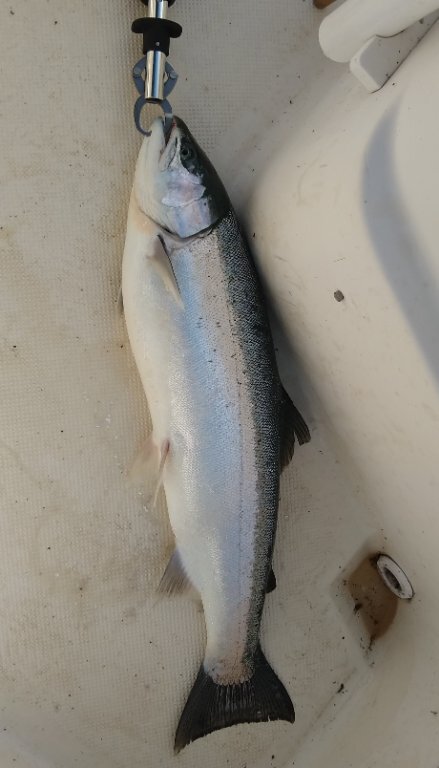 Nice fish. The southerly chop this morning moved a lot of cold water in and the fleas moved with it. I saw the same thing west of the river.
 -
Sub troll
LongLine replied to SHOOTER544's topic in New York Fishing Reports - Lake Ontario (South Shore)
Make sure you're using a heavier weight than you would normally use. The probe needs to be horizontal for good readings. If you have too much blowback in your cable, the probe tilts & the readings will be way out of whack. Depth you're running at and tightness of the wraping on the top connection can affect how it tracks. At 3.7 SOG, and 50 ft down with no current, I'd think you have a heck of an angle in your cable. Also if you're trolling with the down current, it's very possible down speed will be less than SOG. Be aware that there are times of the year when there are ranges of thermal instability on Lake O. i.e. At a constant 50 ft down, you may find stable temps from 80-150 FOW then great instability from 150-180 FOW then really cold water from 180 FOW & out. This happens when there are drastic 180 degree wind shifts. I.e. East wind followed by a decent west wind - the warm nearshore water is mixing with the colder offshore water. -
DEC Atlantic salmon stocking proposal MUST READ
LongLine replied to fjrider's topic in Open Lake Discussion
Interesting article: Evaluation of adult and offspring thiamine deficiency in salmonine species from Lake Ontario - ScienceDirect Browns don't have any problem with it. Atlantic's not mentioned. Anyone heard of any Brown natural reproduction in the lake? Article seems to suggest there may be a correlation to population & size of the alewife eaten. -
Braddocks 7-10
LongLine replied to whaler1's topic in New York Fishing Reports - Lake Ontario (South Shore)
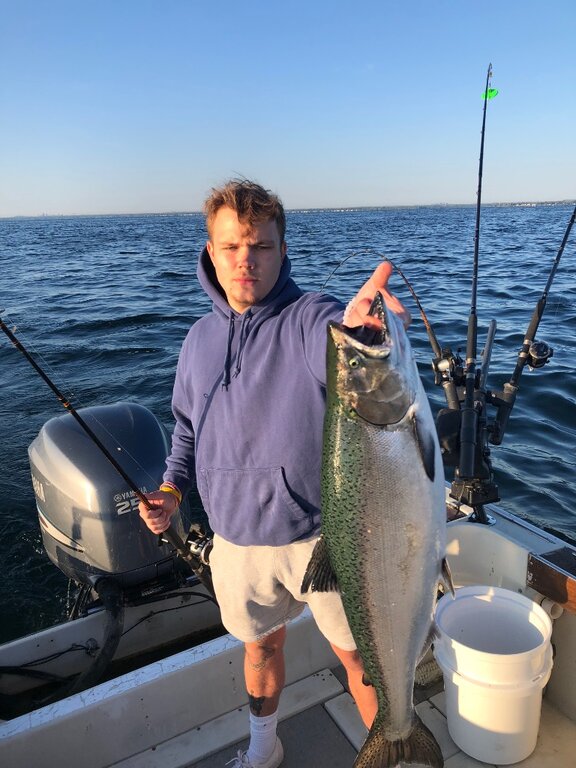 WTG!
WTG! -
DEC Atlantic salmon stocking proposal MUST READ
LongLine replied to fjrider's topic in Open Lake Discussion
There was a paper (I think 2008) that studied Thiamine in Michigan Kings. As I remember, it said that thiamine levels were much higher in young kings than older ones, except at spawning time. It said thiamine is basically concentrated in Liver & Muscle tissue. The older ones had very little in the liver. They analyzed fatty acids. Liver content must have a lot to do with survival. It also talked a little about catabolism/metabolism. I'm no biologist but here's my take. I think we all agree that the Kings are extremely energetic & have a lot of stamina. DEC did a fin clip study a few years ago that showed they went all over the Lake, with only a few being "home-bodies". Fish stocked on the east end were caught on the west end, etc. It has been said that as soon as they're stocked, they're gone. Kings have been known to be eating machines, so a logical question is: "why would they leave a school of alewife in, say Oswego, to swim to Toronto?" Alewives go from deep water to shallow water & back. They're known to go up rivers, but not for long. They're not strong swimmers. Did the Kings eat all the alewife in Oswego, then move on? I don't think so. Did the Alewives swim from Oswego to Toronto & the Kings followed them? I don't think so. I believe it's in the Kings genetic makeup to be a nomad. They stop some place, eat their fill then move on. (Except at spawn time) I believe their active lifestyle has a lot to do with Liver Thiamine content. After all, don't doctors tell humans to exercise regularly to build muscle & stay healthy? My guess is that of all the species of fish in Lake Ontario, the Kings are the "health nuts" due to their genetic nature. They get an awful lot of exercise swimming around the lake. As to Atlantics, they're known to stay around their stocking places much much longer. They'll eat alewives but they're not the "health nuts" in the lake, that Kings are. Yes, some decent size Atlantics have been caught in rivers, but the proposal says they can be thermally blocked. To my way of thinking, if Atlantics are thermally blocked in, wouldn't Alewife be thermally blocked out? Those Atlantics must be/have been eating something else which helped dilute their Thiamine issue. (But WTH, I could be full of it...) Yes, Kings & Steelhead eggs are treated, which is really good as all fish are affected by it. But realize Steelhead also travel quite a bit and can have a more varied diet. -
DEC Atlantic salmon stocking proposal MUST READ
LongLine replied to fjrider's topic in Open Lake Discussion
By "minority", I mean minority opinion...not gender, race, religion etc. Point being: I'd like things to be quantified. -
DEC Atlantic salmon stocking proposal MUST READ
LongLine replied to fjrider's topic in Open Lake Discussion
It's great to reminisce about "Natural history" and talk about extirpation but people need to recognize that Lake Ontario has changed dramatically. It doesn't get nearly the ice coverage it used to. The waters are warming faster. Thermoclines go deeper. The water is clearer (and baren) to much greater depths. Diporeia is nearly gone. Phosphorus levels are down. (perhaps way too low.) Mussels, fleas & gobies (& lord knows how many other invassives) abound. Algea grows like crazy in the embayments. Most of the Chlorophyll is below the thermocline. Natural Repro of the salmon (which took the DEC many years to admit was even happening) is "up-down-all-around". Perch & Bass populations are down. (What happened to all the Northerns we used to catch?) IS VHS under control? There's still an awful lot of commorants. Plan 2014 backfired & wiped out wetlands. I don't see the lake ever going back to what it was. There are too many stressors. Pg 4 states "stocking capacity requires (1) decrease stocking of another specie or (2) increasing the stocking cap." Given the dynamic alewive population (few yrs ago, we lost 2 year clasess of them; and this yr's boom in little ones) the 2nd alternative isn't going to get done. It also rules out any chance for another hatchery. (Seems to me it was quite a battle just to get new pumps at the SR hatchery as well as get covers for the fish runs at another hatchery.) As for Canadian success: When they greatly increased Atlantic stocking, they also greatly reduced Chinook stocking. (i.e. near zero) L.O. Annual reports say that the Trib creel surveys are conducted from Sept through May. Numbers show highest numbers of anglers in Sept & Oct when Chinooks are running, & with highest catches. Very very few salmon catches after beginning of Nov. Steelheads & Browns get high numbers after Oct. AR's also report Atlantic "desire" is anecdotal. So I guess my question is whether those winter Trib anglers would rather catch Steelheads or Atlantics? I'd like to see that question (desire) quantified. I'd also like to see quantification of summer angler CPUE of any specie on the SR and other mentioned tribs. Anecdoctal is not good enough for me as we all know the minority can make a lot of "noise." -
DEC Atlantic salmon stocking proposal MUST READ
LongLine replied to fjrider's topic in Open Lake Discussion
The project says it wants to establish a summer fishery for the tribs. It's my understanding that the Atlantic's spend a lot more time in & around the rivers, when young, than other salmon. (Please correct me if that's wrong) Is it because they like the temperatures or they're home-bodies? I gather from the project that they need a cold water habitat. The project says the amount of cold-water habitat is unknown. I think I would like a good history of temperature regimes before I undertook a project like this. I'm not sure of trib temps, but that lake has been warming up a lot faster in the last few years than it has in the past. Nearshore right now is close to 70F. (Beginning of July...which is summer.) Additionally, this time of year I used to see bait pods in 80-100 FOW. The other day I finally found them out in 200 FOW. (Either way, that's a long way to cast from a trib) Given that the Atlantic's have been dying from eating alewives, they certainly aren't nearshore, this time of year. Perhaps they ate alewives in April, but that's certainly not summer. (Do alewives spawn in the tribs?....I don't know.) I understand that some anglers have caught them in the SR. But I'm guessing they were thermally blocked into that habitat, as the project suggests and it says it may happen in Irondequoit Creek. The great majority of those anglers are out of staters who come to catch a salmon. Did the creel surveyors ask them if they prefer an Atlantic or a King? If the Atlantic's are very successful in some of the inland lakes (Fingers) why not direct those anglers to those places and promote them, where the limit is not one per day? Isn't a lot of the SR off limits to fishing now days? Another question I have is if the young Atlantic's are going to hang around the tribs, what will the bird situation do to them? They're probably easier to swallow than Bass. Is this project suggesting the Big-O Chinook fishing is going to go the way it has on the west coast? -
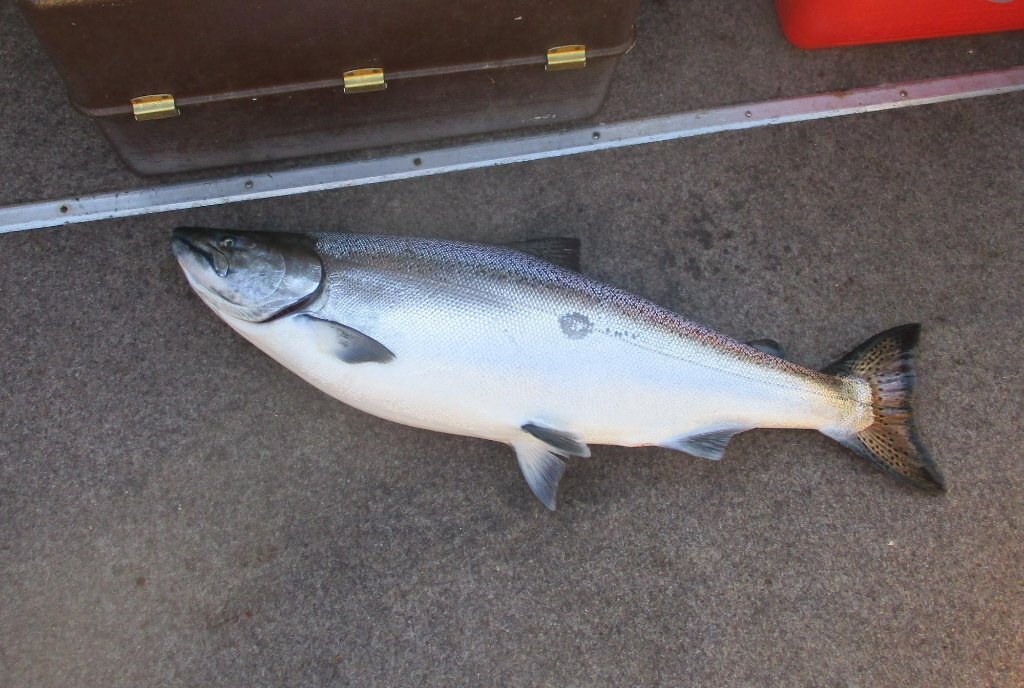 Launched solo on the river by 0600 this morning. Lake was freeeeeeking flat! Bright sun, Barge & crane working on the Summerville pier again. Headed out and to the left again. Here's were I was: (heh, heh, heh...somewhere between river & Long Pond,,,I can't see that far anymore...) Put in at 175 & went to 250FOW. Lot of flys (sp) at 210FOW, so spent most of the time at 210-225 FOW. Put one rigger at 65, other at 55 with a stacker at 45. Of all the years of my fishing Big-O...this is the 1st triple of Kings that I've ever, being solo, landed: And I was able to revive all 3 of them. YAY! Was worried about the middle one, but he finally swam away. Funny that the bigger one came on the high line & the little one on the deeper line. All on Spooks, 2.8 GPS. Retied all the lines & got them back down. One sip of coffee and this guy hits: Revived him too. He's got a lampry mark that's healed. Others were all clean. Fish were nailing bait on the surface, after I got the last one. Saw a lot of swirls & fins out of water. Fleas were definitely present. Pulled them up around 10 as a little wind came up but not enough to cool me off...was getting hot out there. C.G. was pulling their little boat out at the launch. Must have been a budget cut as they only have twin 225's on it. Sheriff has 300's & Border Patrol has 350's. (Our tax dollars at work....) USFWS just launch and was going to check their nets for invasives. Luck to all, Tom B. (LongLine)
- 2 replies
-
- 10
-

-
DEC Atlantic salmon stocking proposal MUST READ
LongLine replied to fjrider's topic in Open Lake Discussion
I believe they said that one Atlantic will replace 2.4 Chinooks. So 200k Atlantics will probably replace 480K Chinooks. (yikes!)