


rolmops
-
Posts
4,824 -
Joined
-
Last visited
Content Type
Profiles
Forums
Events
Gallery
Store
Everything posted by rolmops
-
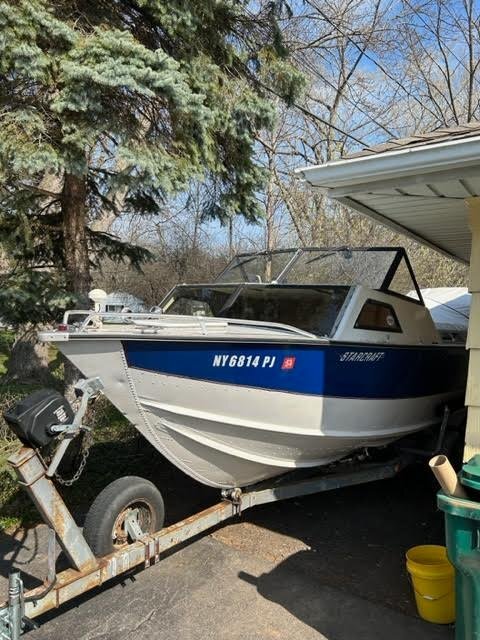 I need it gone. Give a reasonable offer. No lowballing.
 -
Most of the old boats migrate from Florida to south of Mexico where they have a lot of years as bread and butter boats for the village fishermen
-
Braddocks 5/29
rolmops replied to whaler1's topic in New York Fishing Reports - Lake Ontario (South Shore)
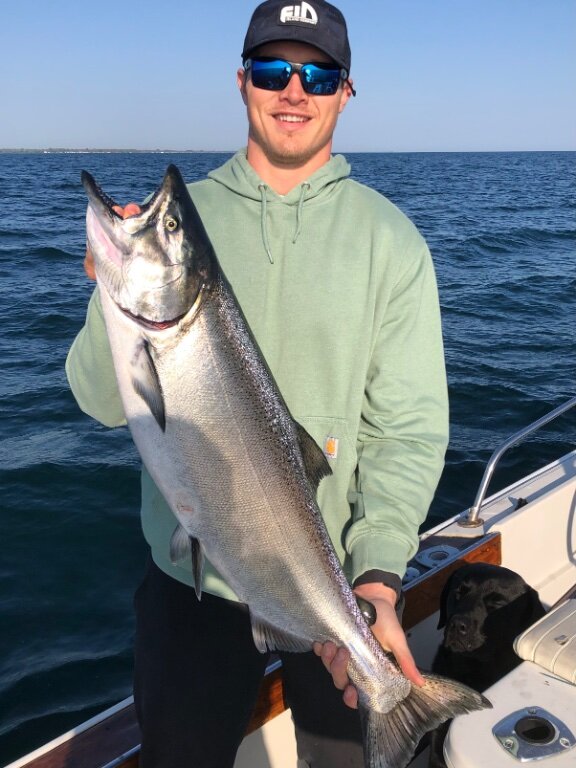 Ouch, that must have hurt. I hope all will be well. On the bright side, he probably will not give you the finger for a while.
 -
Looking for recommendations on having a Bimini top made
rolmops replied to Henry D's topic in This Old Boat
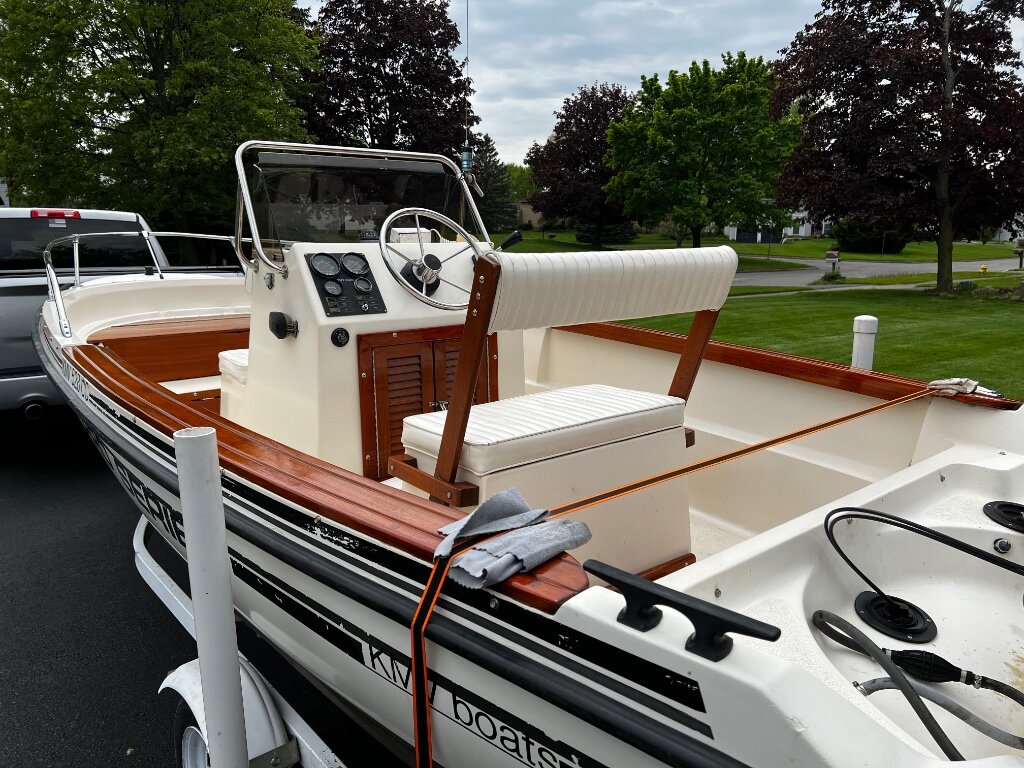 There is a lady in Fairport who does canvas work. Her name is Barbara Bournival. Her website is : www.boatcoversandcanvasbybarbara.com
 -
Price drop down to $4500. It has to get out of the driveway.
-
Why not much trash talk about the Seneca Trout Derby?
rolmops replied to Sk8man's topic in Finger Lakes Discussion
 I never really understood all the hoopla about the slimer derby
 -
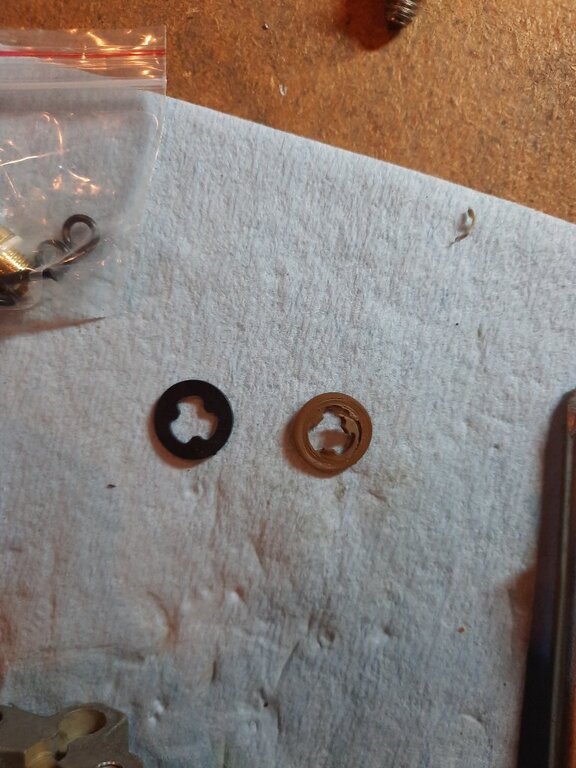 Evinrude and NGK plugs do NOT work well together. You should always use Champion plugs. I know it does not sound logical, but it just is that way. You can use either QL77JC4 or L77JC4
 -
A few things to check: do you have spark in every plug? Are you using fresh fuel? is the fuel coming through properly? I don’t know if it’s a VRO or a regular pump but make sure it’s a 40:1 mix. To me it sounds like a fuel delivery problem. I would give the carburetors a proper cleaning.
-
could it have anything to do with the scroll speed of your fishfinder?
-
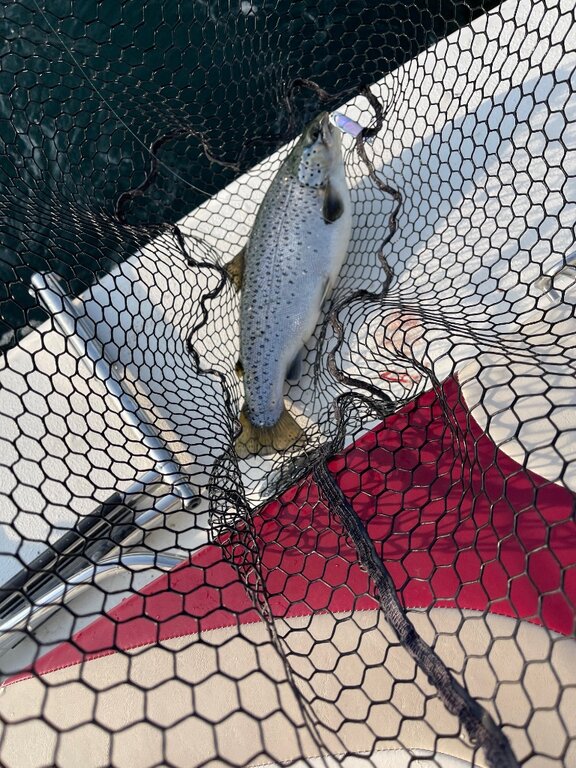 Brown trout is capable of changing its color depending on its surroundings. Out in the open lake that will be silvery, but in colored water or in streams that same trout will be darker. Sort of like a chameleon.
 -
I just passed through Costco in Rochester to buy some artisan rolls (square burger buns) and my eye fell upon the coolers. They have the big 165 liter Igloo coolers for $99. Usually they are closer to $200. These are the ones that you can put a 25 pound to 30 pound salmon into without having to bend and squeeze it. Go get them while they last.
-
Price drop new price $5000
-
Fish cleaning stations can be cheap and they can be expensive. Specially expensive to maintain. Maybe they should just have a few tables around a barrel for the guts and a water hose or two set up above a catch basin. Cheap to buy, cheap to maintain and the barrel can be picked up daily by a garbage truck or a cosmetics company ( to render the oil used in the cosmetics industry). The expensive ones include a shed, a grinder and some more fancy things. But one thick knife or pair of pliers that is dropped ruins the grinder and that is why they are so expensive and hard to maintain. Personally, I think it would be best to clean the fish on the water and bring the fish to shore with the skin on so measurements can be taken. The money that is saved this way way can be used to build proper toilets which often are absent.
-
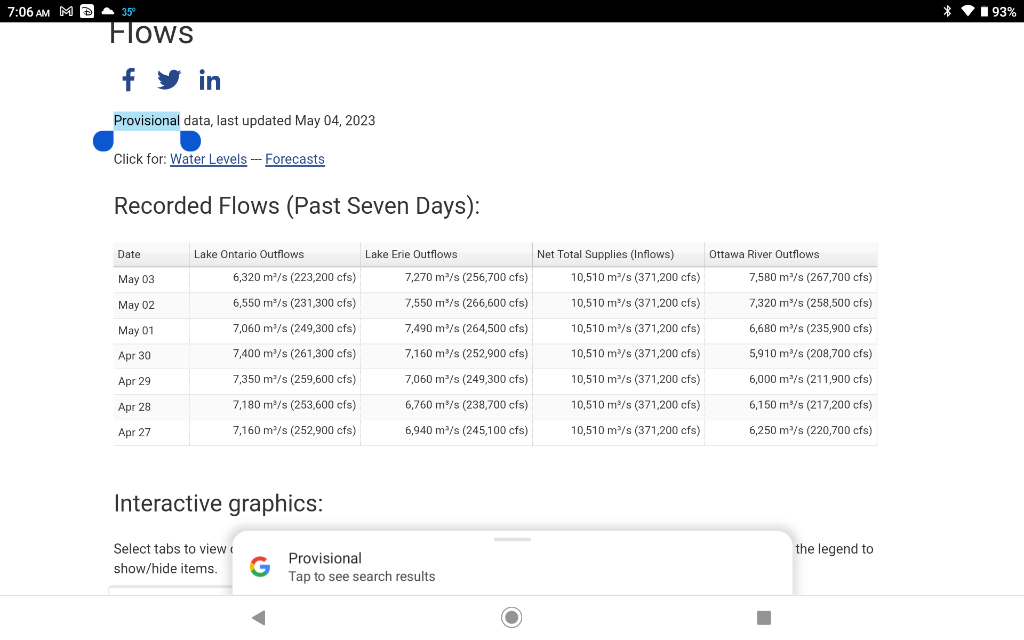 It is easy to look at this and come to conclusions, ,but if I remember well the 2017 level was a lot higher to begin with. Besides , a lot of work has been done to prevent the damage done in 2017 from happening again and at least a few large launches ,like Oswego and Irondequoit have been raised a few feet. This time around it seems that we are better prepared.
 -
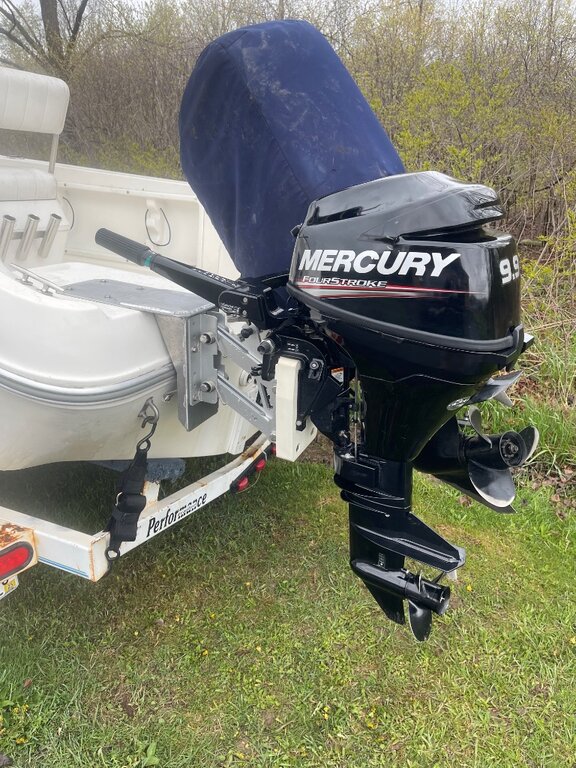 One look at the difference between the Panther and the Hoffen is probably enough to know that not all specs are as precise as they should be.
 -
The kicker I have on it is an 80some pound Tohatsu. It does take a little effort ,but not much. I'm a seventy something old guy and can do it without much effort. Looking at the picture of your installation I would put a handle bar somewhere so you can hold on and push with one hand and pull with the other.
-
I tried that one and found out that with a 9.9 kicker on it, I could not force the bracket down. I returned it and bought the panther made for 4stroke kickers up to 15 horse. The 550407AL About not traveling with the outboard on the bracket. The company is trying to protect itself from lawsuits by people who like to drive at 80 miles an hour on a bumpy dirt road and who do not like to properly fasten the kicker or just want a new one. You can safely travel with the kicker on, as long as you properly tie it down so it cannot bounce and you don't drive like a madman.
-
The factory says not to adjust those Allen bolts because they are very tricky to properly set. My advice would be to count every turn when you back the bolts out, so once you put it back together you can restore the original setting. You should figure out why the rods came apart in the first place, so you can prevent it from happening again.
-
I think that Sk8man was asking if that is a 2 stroke or a 4 stroke rating for the bracket.
-
That would be a possibility
-
ttt
-
No. At least in the Finger Lakes they will follow the food,but when they are not actively feeding you will find them on or close to the bottom;. It used to be that the lakers would go up and down together with the schools of cisco that they like to feed on.By day deep down and at night much higher up. I have caught them from the shore casting worms for bass and perch. The cowbell rigs are probably best used on or near the bottom.
-
tt
-
tt
-
Every Mercury outboard has a serial number label located on the transom bracket area of the engine. The latest serial number labels display a 2-digit number in a box at the lower right portion of the label. These digits coincide with the last two digits of the year in which the outboard was manufactured.