


TyeeTanic
-
Posts
1,560 -
Joined
-
Last visited
Content Type
Profiles
Forums
Events
Gallery
Store
Everything posted by TyeeTanic
-
Which down speed & temp system do you recommend?
TyeeTanic replied to Todd in NY's topic in Tackle and Techniques
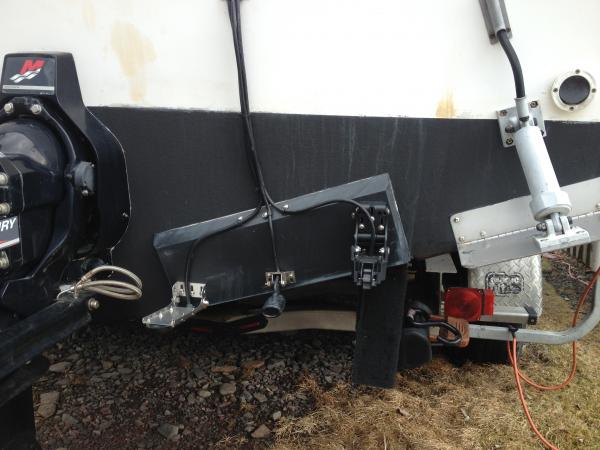 Smart troll will measure below that. Doing tests at the dock, I'm sure I got readings as low as 0.2 mph.
 -
Yeah, as I was reading I was like, weather is going to dictate when you can fish. I also like late June, early July. This is when the salmon are most activily feeding and are a good size too.
-
White with glow - normally for darker days, or down deep (90 to 100 ft or more). Chrome - brighter days, up high. Some have chrome and glow mixed - those are good ones. I use mostly chrome though (with glow if they have them), seem to get most hits.
-
Which down speed & temp system do you recommend?
TyeeTanic replied to Todd in NY's topic in Tackle and Techniques
Look at Smartroll before you decide Adk1 -
 LOL.
LOL. -
 Pap, I use Suffix, and definitely don't have that problem. Sounds like you have a bad batch. I would be giving suffix a call up and asking for a replacement. That leadcore sounds faulty.
 -
pap, are you saying you can't get the lead out? You should cut the leadcore so the core and sheath are the same length. Then slide the sheath back a few inches, and just cut off the lead. It shouldn't be that hard.
-
Hey Steve, now you know. Test is tomorrow.
-
No ways. That is against all engineering principles. The larger the weight, the better it gets. It's simple with math. When you talk drag, we think about the cross section area(circumference is obviously related to this), so it's the area of the circle that's travelling through the water. As a sphere gets bigger the area increase more slowly than the weight increases. That means you have less and less area per lb as the weight gets bigger. So basically yes the drag goes up, but not as fast as the weight does and the pull of gravity. If it was the opposite, we'd see a 1000 kg ball start floating on the water due to too much drag, which obviously isn't going to happen any time soon. So, the heavier the ball, the less the blowback. Don't believe everything you read, incuding what Cannon publishes. It's BS. There's no way you can have less blowback, unless you increase the weight or change the shape so that there's less cross sectional area (which is what a shark and torpedo weight does, and is the principle behind the pancake weights, although those don't track nicely). 10#s have stupid blowback, and at 4 mph, It would be over 100 ft behind the boat, if you were 100 ft deep, probably even worse than that.
-
16 ft angler enough for big O
TyeeTanic replied to hookedupf7's topic in Questions About Trout & Salmon Trolling?
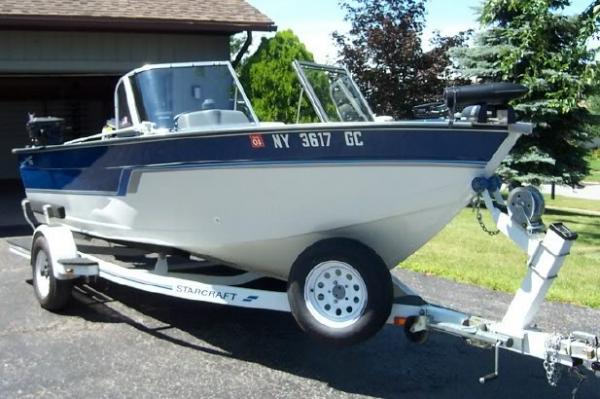 Also, make sure you have a good portable VHF. Get your radio license and test it with the coast guard. Every year there's more than one guy that's on a boat less than 20 ft and doesn't come back.
 -
16 ft angler enough for big O
TyeeTanic replied to hookedupf7's topic in Questions About Trout & Salmon Trolling?
Yeah, don't get tempted to go out when it's even remotely risky. As others have indicated, pick your days. Thing is I've seen it turn quick in Lake O, from flat mirror to 3 to 4 footers in about 45 minutes. So you want to be able to get into shore ASAP when that happens. Probably means you shouldn't go out to the blue zone. Once the waves start developing it will slow you down big time. A lot of people think, it'll take me 30 minutes to get back to shore if I motor it, but by the time you decide to leave, you're already dealing with 2 footers and that cuts your speed in half, if not less. Storm will catch up to you. Just stay close to shore, no more than a few miles out. -
15 lb sharks make a big difference. In fact you'd be suprised how much worse a 12 lb ball is. And 10 lbs, well that is just ridiculous. I wouldn't even bother. Unfortunately my rigger and gunwale can't take much more than 12 lbs, so depth is important to me so I can compensate.
-
I've measured it. Others have done the test driving their boats up to shallower water and seeing when the ball hits bottom. At 2.5 mph with a 12 lb weight, that rigger ball is 60 ft behind the boat. That lifts the ball about 20 ft. Now if you have a 16 lb weight, it makes a huge difference, and then it becomes less of an issue.
-
You are correct in saying that one can't be 100% sure if that fish is directly under the transducer. BUT! Fish are WAY less dense than the lead rigger weight. So it's much easier to lose sonar signal return from a fish. Basically when you see a fish arch, pay attention to 2 things - 1) what's the top of the arch and 2) what's the color of the arch. If the color of the arch is all blue (assuming you use a standard pallet), then the sonar signal from the fish is weak (fish is off to the sides). If you see the inside of the arch red, and at the core yellow, that is a hard return (strong signal) and means the fish is pretty close to the transducer and probably right under the boat. Of course, the top of the arch is the true depth of the fish, assuming it's directly under the transducer.
-
Your fish finder won't tell you the depth of the rigger ball. It only tells you how far it is away from the transducer. It displays that as depth, as that's the only way it can. So if the ball is back of the boat, the FF does care how far back, it just thinks it's deeper. What size rigger weight do you have. A 12 lb weight, travelling 2.5 mph downspeed, at 100 ft will probably be off depth by 20 to 30 ft (you actually need to drop the rigger to 130 ft to get 100 ft deep). So both your rigger and FF will say the same thing, but that doesn't mean you know what depth the ball is at.
-
Yeah, I guess my main concern would be what shawn wrote about. If you don't let all the lead out you have a point where it can ply back and forth and maybe weaken up. If you have 5 color, that's 150ft of line you gotta let hang between the board and rod tip. It isn't a crazy amount, but the board would be way out. You might be better of dividing 7 and 3 per say.
-
Which down speed & temp system do you recommend?
TyeeTanic replied to Todd in NY's topic in Tackle and Techniques
Haha, we can't even convince all the fishermen on this site! Good luck with your wife! Lol. -
Which down speed & temp system do you recommend?
TyeeTanic replied to Todd in NY's topic in Tackle and Techniques
You are mostly correct, except because fish aren't dense, often if they are on the side of the cone they will have a soft return (means faint signal) which shows up on your screen as normally just blue colors. When the core of the arch is a hard return (strong signal), you will start seeing red and even better yellow in the arch. That is an indication that the fish is close to being under the transducer. -
Which down speed & temp system do you recommend?
TyeeTanic replied to Todd in NY's topic in Tackle and Techniques
Exactly. So either those fish are 15 ft wide monsters or the theory is correct. Sorry guys largest girth is probably around 40". -
Which down speed & temp system do you recommend?
TyeeTanic replied to Todd in NY's topic in Tackle and Techniques
We are arguing about the need for a depth probe. Some people think they know the depth of their rigger because they can see the ball on the FF and say you don't need a depth probe. That is incorrect. -
Which down speed & temp system do you recommend?
TyeeTanic replied to Todd in NY's topic in Tackle and Techniques
Chas I hate to say but this is not correct. A fish is not dense like a lead 16 lb weight. When you detect a fish and you see the top of the fish arch it is basically at the same position as the transducer.The weight is way behind the transducer and the sonar translates the distance back as depth. Don't believe me? Then I have a question for you. Why do fish show up as arches on your fish finder? Why does that arch actually transition through like 20 ft of depth (point say starts at 80 ft comes up to 60 ft and then pack down to 80 ft)? What is the right depth of the fish (60 or 80 ft, or something in between)? The answer is the arch is created as the fish comes into the sonar cone and at first it's as far as it can be away from the transducer, then it comes under the transducer (as close as it's going to get) and then the boat moves away from the fish and it starts getting further from the transducer again until it is outside of the cone again. The FF has no way of telling the exact depth it can only tell you how FAR the fish is away from the transducer and displays that as depth on the screen. So when it first spots the fish it's far away (so shows deeper 80ft) then it is under the transducer and closer (gradually shows shallower to peak of 60ft) and then it goes away from the transducer again (gradually shows deeper until signal is lost at 80ft). Same with your ball. The FF may say it's 100 ft down but actually it's 100 ft away and behind the boat due to blowback. The ball is lifted as it swings back and is actually sitting at 70 or 80 ft deep. Fish finder incorrectly says 100 ft deep. Anyhow look up YouTube videos on it. The science is out there and it's the fact. If you don't believe me, no problem, carry on. -
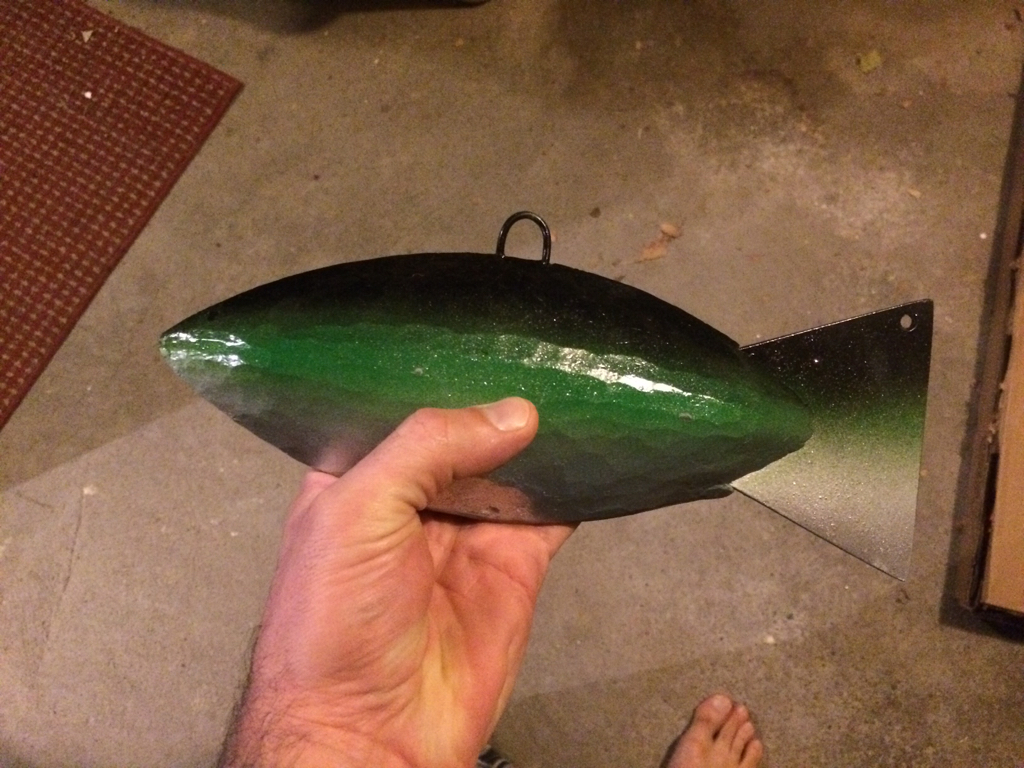 They say chrome are good for actively feeding/aggresive fish. Otherwise you want black. Most of the time a fish needs to be enticed to bite, so I think black is the safest. Having said that, you could always by chrome and then paint black if you change your mind. It isn't that hard, just use a rubber coating. Also, I agree, I don't think sharks will put much more fish in the boat. We use Torpedoes and have placed in top 10 in a few tournaments.
 -
Yes the counter will over measure lone out. As indicated above. Pull off 10 or 20 ft and measure with a tape and compare to counter.
-
Which down speed & temp system do you recommend?
TyeeTanic replied to Todd in NY's topic in Tackle and Techniques
You don't need to send a picture. If there's no blow back then the rigger line is almost vertical and the ball height will come close to the fish arch height. For salmon fishing we need to run at 2.5 mph and the blowback is considerable putting the ball 60 ft behind the boat and lifting it about 20 ft off the depth you think it is. If you don't drop the rigger weight by that depth then the ball will be above the target depth by that amount. It's a different game when you're going 2.5 mph down speed and in +100 ft of target depth. -
Which down speed & temp system do you recommend?
TyeeTanic replied to Todd in NY's topic in Tackle and Techniques
I don't fish for mud chickens. I fish salmon. And how do you know your ball is 3' from the bottom? I assume you have a probe or bounce bottom. If you have blow back the top of the fish arch WILL NOT be at the same depth as the ball on your FF if you are truly at the same depth as the fish. It's the laws of physics.The only way to have the ball level with the fish is of you have minimal blowback which can be done by reducing your speed and or increasing your ball weight. If you are using a 16 lb ball the blow back is minimal. If you travel 1.5 mph down speed the blowback is significantly less than say 2.5 mph. Also if you are bouncing bottom and the fish arch is the same level as the ball then you won't see much of a fish arch. Most of the fish arch will be below the bottom of the lake. Please post a picture of what you are saying including your speed and ball weight and everything will be easy to explain.