
mudflat
-
Posts
523 -
Joined
-
Last visited
Content Type
Profiles
Forums
Events
Gallery
Store
Everything posted by mudflat
-

Lookin for some advice with Boat Insurance
mudflat replied to Hachimo's topic in Open Lake Discussion
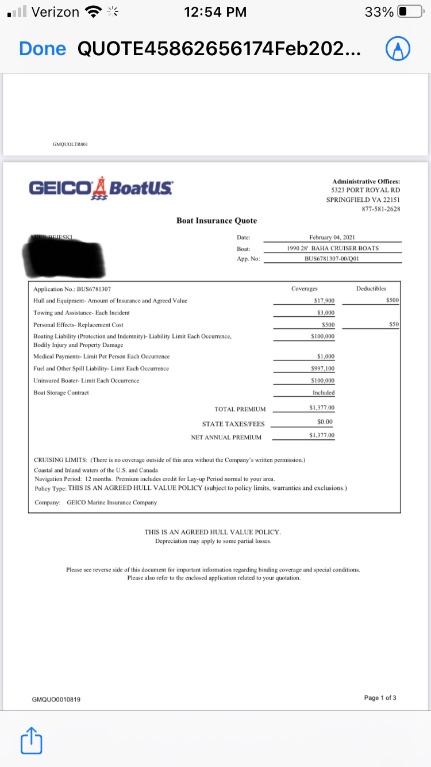 Just remember that "Agreed Value" coverage protects just your boat if something bad happens but it's "Liability" coverage that protects everything else that you own from the lawyers. Make sure you are getting the right coverage not just the lowest price.
 -
Lookin for some advice with Boat Insurance
mudflat replied to Hachimo's topic in Open Lake Discussion
You'll probably need insurance coverage to get a slip and you want it for liability coverage just in case Geico through Boat US 2001 26' PennYan $401/yr 24,000 agreed value, 2500 on trailer, 5000 personal effects, 125 deductible 500,000 liability -
https://amishoutfitters.com/catalog/index.php?main_page=product_info&products_id=130
-
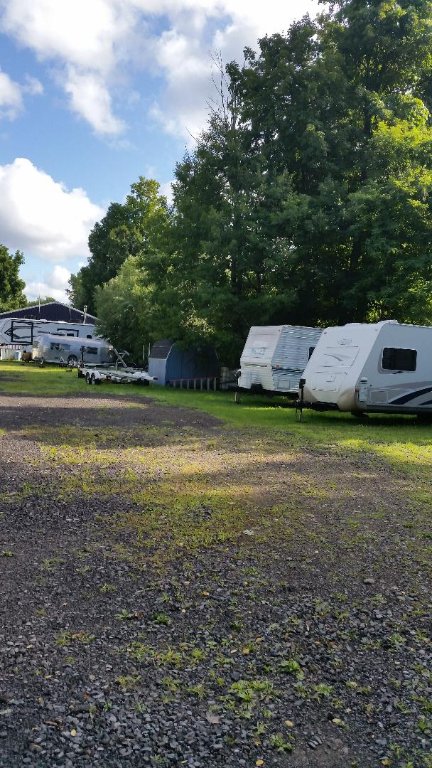 I used to dry dock at Arney's before getting a slip Another option:
 -
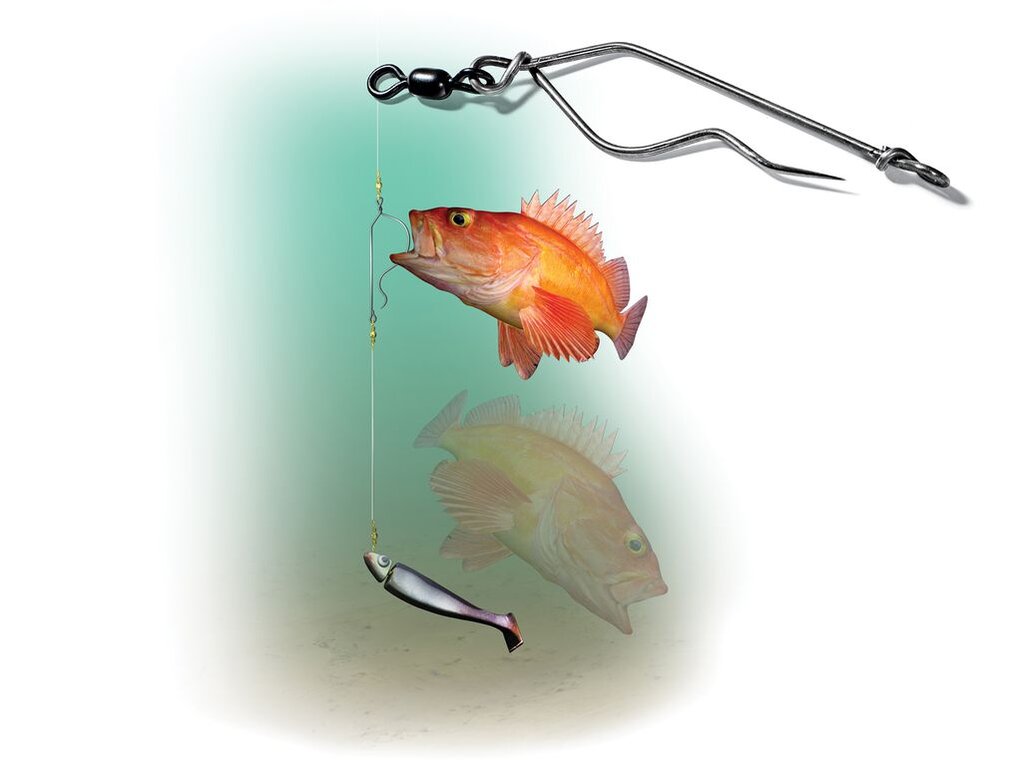 I used a seaqualizer last year on my boat and found that you have to have it all ready to deploy conveniently so that you can get the fish back in the water and downstairs as quickly as possible. When fishing deep I only use 2-3 riggers so I leave mine hooked up to my 4th rigger all the time and just snap it on the jaw and send her down . I don't know how much it helps the survival rate but it can't hurt and at least I don't have to watch any floaters behind the boat. If the fish is bleeding or in too bad of shape it still goes in my box.
 -
Hodge's Marine has them https://www.hodgesmarine.com/gar120-2020-00-garmin-120202000-wired-remote-for-tr1-gold.html
-
DEC Announces Oct. 31 Opening of Salmon River Lower Fly-Fishing Area DEC Encourages Anglers to Fish 'SMART' to Protect Resources and Other Anglers The New York State Department of Environmental Conservation (DEC) today announced that the Lower Fly-Fishing Section of the Salmon River will be open for catch-and-release fishing starting Saturday, Oct. 31, marking the success of actions taken by the Salmon River Flow Management Team to mitigate the impacts of low-water flows at the start of the salmon run. Recommendations to prevent the spread of COVID-19 remain in effect to ensure the health and safety of the public. Under a federal license, Salmon River seasonal baseflows are typically increased from 185 cubic feet/second (cfs) to 335 cfs on Sept. 1, providing that water levels in the Salmon River Reservoir are above a critical threshold. This summer, below-average precipitation resulted in low and declining water levels in the reservoir. The Executive Committee of the Salmon River Flow Management Team, comprised of natural resource agencies and Brookfield Renewable hydroelectric facility that regulates reservoir water levels, delayed the annual Sept. 1 increase in baseflow and canceled scheduled whitewater releases over the Labor Day weekend. These actions conserved reservoir water to maintain suitable flows throughout the salmon spawning run. Because significant rainfall was not forecasted, DEC recommended delaying the scheduled baseflow increase. DEC's recommendation was based on abnormally high-water temperatures coupled with low-water flow in Salmon River tributaries, including Beaverdam Brook, where migrating Chinook salmon access the DEC Salmon River Fish Hatchery for egg collections that support the State's successful stocking program. Increasing baseflows prematurely would have likely enticed the Chinook salmon already "staging" in Lake Ontario to enter the Salmon River on their spawning migration, which could have stranded and/or killed fish if temperatures remained high. These fish cannot reach DEC's hatchery without sufficient water levels in Beaverdam Brook. To increase the probability that sufficient numbers of salmon reached the hatchery to sustain the salmon stocking program, on Sept. 15, DEC did not open the Lower Fly-Fishing Section of the river to fishing. This section, situated just below the hatchery, is typically where large numbers of salmon and anglers congregate. Temporarily closing this section under the low-flow conditions allowed adequate numbers of salmon to reach the hatchery for another year of successful egg collection. To view a map of the Salmon River Lower Fly Fishing Section (PDF), go to DEC's website. Anglers are encouraged to be respectful of the resource and other anglers by using ethical angling techniques. Additional information can be found at DEC's website. DEC reminds anglers that several new Great Lakes tributary angling regulations became effective on April 1, 2020. For more information and exceptions, consult the DEC Freshwater Fishing Digest or visit DEC's Great Lakes and Tributary Regulations website. This fall, Great Lakes tributary anglers should take precautions to stop the spread of COVID-19 while enjoying the outstanding salmon and trout fishing on Lake Ontario tributaries. At popular angling destinations like the Salmon River, angler density can become high enough to make social distancing difficult. DEC is placing signage at popular locations reminding anglers to be SMART when fishing this year: Socially distance at least six feet apart; Mask - Wear one when you cannot maintain social distancing, especially in parking lots and along footpaths; Avoid sharing gear when possible; Respect your fellow anglers and the resource by providing space and practicing ethical angling; and Take out what you bring in or place trash in receptacles. For more information about how to PLAY SMART * PLAY SAFE * PLAY LOCAL, visit DEC's website. DEC's Salmon River Fish Hatchery is instrumental to maintaining healthy runs of salmon and trout and is a very popular destination for anglers, school groups, and other visitors. To help prevent the spread of the COVID-19 virus and to protect hatchery staff and effective hatchery operations, the Salmon River Hatchery and its grounds remains closed to visitors until further notice. https://www.dec.ny.gov/press/press.html
-
You will also fine sodium "bicarb" at most feed mills and farm stores
-
DEC Delivers - Information to keep you connected and informed from the NYS Department of Environmental Conservation Share or view as a web page || Update preferences or unsubscribe Freshwater Fishing & Boating News - Salmon River Edition Salmon River Egg Take DEC is closely monitoring the fall salmon run and flow conditions on the Salmon River to ensure adequate numbers of fish reach the hatchery for the annual fall egg take. With good numbers of fish that have already reached the hatchery, ample time for more to make their way up the river and rain in the forecast, DEC remains confident that the run will be strong enough to support their egg take needs. This time of year the river normally runs at 335 cubic feet per second (cfs) and is currently running at 185 cfs. Should the low water flows come into play as the egg take draws closer, DEC is poised with alternate options to ensure the continued success of the Pacific salmon program. Wild about Salmon Every fall Pacific (coho and Chinook) salmon migrate up the Salmon River to make the trip back to the hatchery where their life began, but not all these fish are hatchery fish. There’s actually a large amount of natural reproduction of Chinook salmon that takes place in the river. Wild Chinook, many of which are produced in the Salmon River, are an important component of the Lake Ontario fishery, contributing up to 70 percent of the Chinooks produced in a given year. Wild Chinook tend to spawn in the river, and most of the Chinook returning to the hatchery are of hatchery origin. The main stem of the Salmon River gets a bit warm in the summer for young salmon but Chinook hatch in May and are gone to Lake Ontario by the end of June. Successful reproduction of coho salmon (and steelhead) is largely limited to the cooler tributaries (Trout and Orwell Brooks) due to their longer river residence and requirement of year-round juvenile habitat. The Dead-Drift Drift fishing is a technique where your bait is presented just off the stream bottom. An effective rig should move slightly less than the current speed and appear unattached. Do this by adding the least amount of weight to your line that's necessary to keep the bait near the bottom without it getting hung up. You should occasionally feel the weight “ticking” along the bottom. Hits can be detected by any slight tug on the line, hesitation, or upstream movement. Popular baits while drift fishing include: salmon eggs and skein, single hook spinners and spoons, flies including glo bugs, and brightly colored streamers. For more information on fishing for Chinook and coho salmon, visit the Pacific Salmon Fishing in Lake Ontario Tributaries webpage. Fisheries Fact On average, anglers catch approximately 140,000 Pacific salmon in Lake Ontario tributaries each fall. Smoke that!
-
- 1
-

-
Buying some new downrigger reels - Tekota or Saltist
mudflat replied to Dan M's topic in Tackle Description
Both are great reels I would go with 2 Saltist 40's and spool them up with 30lb test to use with flasher/flies/meat rigs and during flea season, they'll hold almost 300 yds of Sea Flee line. I have found the line counters on the 40's are just high enough that my arm fits underneath them making them more comfortable to use than the 30's Use the Tekota's for you spoon rigs with 20-25lb line and you can leader them down for brown trout -
 For Release: Monday, September 14, 2020 DEC Announces Actions to Protect Salmon River Fish Populations Low Salmon River Water Levels Prompt Actions; New Great Lakes Regulations and Recommendations in Effect DEC Encourages Anglers to Fish 'SMART' to Protect Resources and Other Anglers The New York State Department of Environmental Conservation (DEC) today announced actions underway to mitigate the impacts of low water flows along the Salmon River during the upcoming salmon run that draws thousands of anglers each year. In addition, new angling regulations and recommendations to prevent the spread of COVID-19 remain in effect to ensure the health and safety of both natural resources and the public. "The Salmon River supports the largest fall runs of salmon and trout in New York, and is one of the state's most heavily fished waters," said Commissioner Seggos. "The actions announced today are necessary to ensure continued water flows to sustain the salmon run and fishery, and to enable spawning salmon to reach DEC's Salmon River Hatchery and support ongoing stocking efforts. Additionally, DEC wants to ensure that visiting anglers are aware of new angling regulations and recommended practices to prevent the spread of COVID-19 as they plan their trips to enjoy New York's premier angling opportunities. We encourage anglers to enjoy New York's renowned fisheries, but we ask that you please do so safely and responsibly to protect fellow anglers and local communities." This summer, below-average precipitation has resulted in low and declining water levels in the Salmon River Reservoir. The Executive Committee of the Salmon River Flow Management Team, comprised of natural resource agencies and Brookfield Renewable hydroelectric facility that regulates reservoir water levels, canceled scheduled whitewater releases over the Labor Day weekend and delayed the annual Sept. 1 increase in baseflow. These actions will conserve reservoir water to maintain suitable flows throughout the salmon spawning run. Additionally, the popular Lower Fly Fishing Section, situated just below the hatchery and typically where large numbers of salmon and anglers congregate, will not open on Sept. 15, and will remain closed until further notice. Under a federal license, Salmon River seasonal baseflows are typically increased from 185 cubic feet/second (cfs) to 335 cfs on Sept. 1, providing that water levels in the Salmon River Reservoir (SRR) are above a critical threshold. The SRR level is currently below that threshold, requiring cancelation of a scheduled white-water release over Labor Day weekend. In addition, significant rainfall is not forecasted for the near term, prompting DEC to recommend a delay in the scheduled baseflow increase. DEC's recommendation is based on abnormally high water temperatures coupled with low water flow in Salmon River tributaries, including Beaverdam Brook where migrating Chinook salmon access the DEC Salmon River Hatchery for egg collections that support the State's successful stocking program. Increasing baseflows prematurely would likely entice Chinook salmon currently "staging" in Lake Ontario to enter the Salmon River on their spawning migration, which could strand and/or kill fish if temperatures remain high. These fish cannot reach DEC's hatchery until rainfall sufficiently raises Beaverdam Brook water levels. To increase the probability that sufficient numbers of salmon reach the hatchery to sustain the salmon stocking program, DEC will close the Lower Fly Fishing Section to fishing on Sept. 15. This section (see attached map) will remain closed until DEC collects sufficient numbers of salmon eggs at the hatchery. Anglers are encouraged to experience New York's other exceptional Great Lakes tributary angling opportunities. These waters are often less crowded and offer anglers the chance to play a bigger fish in a smaller river. More information, including the I Fish NY Great Lakes Fishing Brochure, is available at DEC's website. DEC reminds anglers that several new Great Lakes tributary angling regulations became effective on April 1, 2020. The minimum size limit for rainbow trout/steelhead caught in Lake Ontario tributaries was increased from 21" to 25" (still 21" in the lake). In addition, only one brown trout can now be kept as part of a Lake Ontario tributary angler's daily creel limit of three salmon/trout in combination. For Lake Erie, fishing is no longer prohibited from Jan. 1 through March 31 on Spooner Creek and its tributaries, and North Branch Clear Creek and its tributaries from Taylor Hollow Road upstream to the outflow of Clear Lake. For more information and exceptions, please consult the DEC Freshwater Fishing Digest or visit DEC's Great Lakes and Tributary Regulations website. Anglers are also encouraged to be respectful of the resource and other anglers by using ethical angling techniques. Additional information can be found at DEC's website. This fall, Great Lakes tributary anglers should be mindful in taking precautions to stop the spread of COVID-19 while enjoying the outstanding salmon and trout fishing on Lake Erie and Lake Ontario tributaries, including the Niagara River. At popular angling destinations, especially the Salmon River in Oswego County, angler density can become high enough to make social distancing difficult. DEC is placing signage at popular locations reminding anglers to be SMART when fishing this year: Socially distance at least six feet apart; Mask - Wear one when you cannot maintain social distancing, especially in parking lots and along footpaths; Avoid sharing gear when possible; Respect your fellow anglers and the resource by providing space and practicing ethical angling; and Take out what you bring in or place trash in receptacles. For more information about how to PLAY SMART * PLAY SAFE * PLAY LOCAL, visit DEC's website. In response to increased rates of COVID-19 transmission in certain states and to protect New York's successful containment of COVID-19, the State has joined with New Jersey and Connecticut in jointly issuing a travel advisory for anyone traveling from states that have a significant degree of community-wide spread of COVID-19. For more information, go to the COVID-19 Travel Advisory website. DEC's Salmon River Fish Hatchery is instrumental to maintaining healthy runs of salmon and trout and, normally, is a very popular destination for anglers, school groups, and other visitors. To help prevent the spread of the COVID-19 virus and to protect hatchery staff and effective hatchery operations, the Salmon River Hatchery and its grounds remains closed to visitors until further notice. View the DEC Map of Closed Salmon River Lower Fly Fishing Section (PDF) View the DEC Fish SMART Sign (PDF)
 -
https://sodusproam.com/live-scoring/
-
You should be able to add it to your screen by going into "Data Overlay" Check page 28 in your manual for help
- 1 reply
-
- 1
-
-
There is one by Warren's old tackle shop but that was still closed 2 weeks ago There's a new owner opening up the tackle shop so the launch might be open now?
-
1st make sure your kicker motor is trimmed out a little so that the prop is pushing straight back. If the motor is trimmed all the way in your thrust will be slightly downward and the motor will have less control. Then adjust your sea state filter downward, I usually have mine set at 1 or 2 because I think it actually helps to let the boat wander around a little when trolling Code 1 Sea State Filter. If the Autopilot seems to be too active in rough water (the kicker motor is overactive) but works perfect in calm water, adjusting the Sea State Filter may help. Factory default sets this code at the top of its range (4) which is most active (least active is 1) . Most of the time you will want to run with this parameter at the the top of its range. To decrease the autopilots sensitivity in rough water 1) Press and release [SETUP}on the handheld, the setup LED will be lit. 2) Press the [IDLE/RES] button and light up the number 1 LED . 3) Press the down arrow button to decrease the autopilots sensitivity. Note: When the autopilot is shut off, the autopilot will return to its factory default setting unless the setting is saved See page 28, Step 5.
-
Sodus's public launch on Rte 14 is open and free You can also launch at Arney's and Sodus Bay Marina for a charge The Coast Guard launch is closed for the rest of the summer
-
I would get a 2 cylinder 4 stroke, not much performance difference between 6 and 8 hp Any 2 cylinder motor will run much smoother than a single cylinder.
-
https://www.hodgesmarine.com/stagx1400gw-standard-horizon-gx1400g-fixed-mount-vhf-wgps.html Standard Horizon has a $50 rebate going on now till 6/30 on their GX1400g model
-
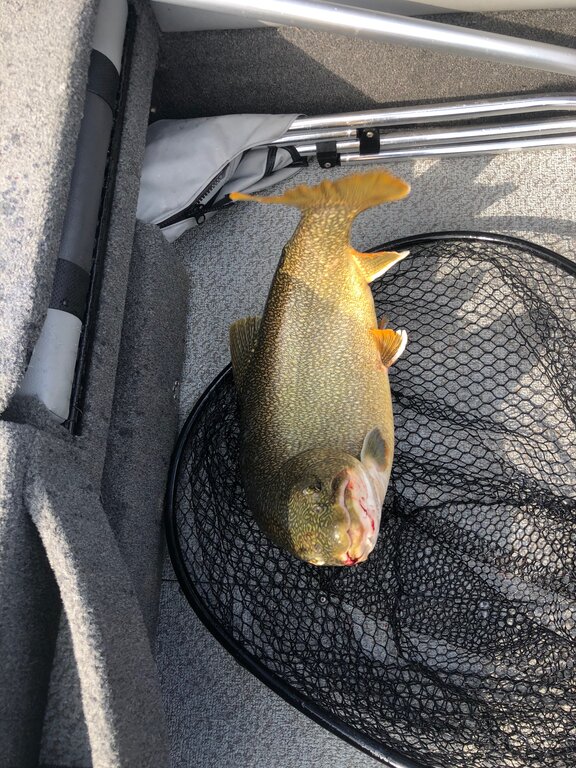 SalmonTrout-LakeOntario2012.pdf
 -
 The breaker on the rigger will protect the motor from overload but it doesn't protect the supply wire or your boat. A GFCI receptacle works on an AC circuit to protect you from any current leakage to ground. You should still have a fuse near the battery on the supply wire, probably 15 to 20A depending on what gauge wire you are using.
 -
I don't believe a TR-1 can handle a kicker and an I/O together. The pump and hydraulic cylinder are both sized for just a kicker and I don't think they will have enough power to move both the kicker and an I/O . Even if the I/O moved very easily, which mine doesn't, at times the TR-1 is very active and I'm sure you would burn out the pump in a short time trying to steer both motors. To use an EZ steer I think you would need to have hydraulic steering on your I/O and install a full size hydraulic AP.
-
Dropping two bags will definitely help settle the bow down and hold a straight course when it gets rough. You will also increase the rpm's and prop thrust which also improves your steering. I have an extra set of 24" bags you can borrow to try out on your boat. Stop by sometime when you see the cover come off my boat on Stock Farm Rd.
-
I agree with Rick I have both a B60 and a TM150 with Lowrance HDS 9's installed on my PennYan and I use the B60 98% of the time when trolling. On my small boat I'm using the Lowrance OEM 50/200 transom mount transducer and get a picture just as good as the B60.
-
DEC Delivers Press Release - Information to keep you connected and informed from the NYS Department of Environmental Conservation Share or view as a web page || Update preferences or unsubscribe DEC and State Parks Announce Boat Launch Dock Installations Underway Boat Launches Are Becoming Available Across the State to Access Great Fishing or Enjoying a Day on the Water Boaters and Anglers Encouraged to Use Boat Launches Safely and Responsibly, Recreate Locally, and Practice Social Distancing to Prevent Community Spread of COVID-19 The New York State Department of Environmental Conservation (DEC) and the Office of Parks, Recreation and Historic Preservation (State Parks) today announced that boat launch installations are ongoing across the state to ensure boaters have access to New York State's abundant recreational opportunities. Each spring, DEC and State Parks regional staff work to install docks at all sites, often before the opening day for various sportfish species. During the COVID -19 public health crisis, when boating and fishing DEC and State Parks encourage New Yorkers to recreate locally and use the hashtag #RecreateLocal, avoid busy waters, and follow the guidelines on DEC's website about fishing responsibly in New York State. Docks are being installed at boat launches across the state. Schedules for boat launch installations can change based on water levels, weather, and ice conditions. Most sites are open for public use even if the boarding dock is not installed. Boaters are encouraged to call their regional fisheries office or State Park to check the boat launch status. Restrooms at these facilities will remain closed out of an abundance of caution to prevent the community spread of COVID-19. Boat launches at DEC campgrounds remain closed at this time. Please note that the boat launch at Lake Flower in Saranac Lake is restricted due to an adjacent construction project. For more details, go to DEC Lake Flower Boat Launch announcement. A list of New York State Boat Launching Sites (PDF, 7.7 MB) contains boating access and launching areas available to the public, as well as helpful information on launching and retrieving boats and aquatic invasive species. For people with mobility issues, DEC also maintains a photo album of accessible launch and fishing sites. For information about non-DEC boat launch site operations, please contact the specific municipality or agency. Please continue to follow the CDC/New York State Department of Health guidelines for preventing the spread of colds, flu, and COVID-19: Try to keep at least six feet of distance between you and others. Avoid close contact, such as shaking hands. Wash hands often or use a hand sanitizer when soap and water are not available. Avoid surfaces that are touched often, such as rails, posts, and tie off cleats. When boating and fishing, DEC and State Parks recommend New Yorkers to recreate locally, avoid busy waters, and follow the guidelines on DEC's website about fishing responsibly in New York State. If an angler arrives at a parking lot and there are several cars, consider going to another parking lot. If an angler is fishing upstream, they should fish downstream of the other angler or consider fishing another day. Do not share a car with people not in your household while traveling to fishing or boating sites. Anglers fishing from boats should always be able to maintain at least six feet of distance between one another. For more information about the benefits of being outdoors safely and responsibly, go to DEC's website. New York's waters remain cold throughout the spring. Life jacket wear is required through May 1 on pleasure boats less than 21 feet long and dressing in layers is recommended to avoid hypothermia. Boaters should be alert at all times and follow the rules of the nautical road. Under Brianna's law, all operators of motorized vessels must take a safe boating course and earn a safe boating certificate by 2025. For information on recreational boating in New York, visit NYS Parks website. https://www.dec.ny.gov/press/press.html The New York State Department of Environmental Conservation respects your right to privacy and welcomes your feedback | Update preferences or unsubscribe | Learn more about DEC Delivers. Connect with DEC: Basil Seggos, Commissioner