


Sk8man
-
Posts
13,929 -
Joined
-
Last visited
Content Type
Profiles
Forums
Events
Gallery
Store
Everything posted by Sk8man
-
Sold / Closed Evinrude/Johnson controls $100.00 or best offer
Sk8man replied to MCF's topic in Classifieds - Buy, Sell, Trade or Rent
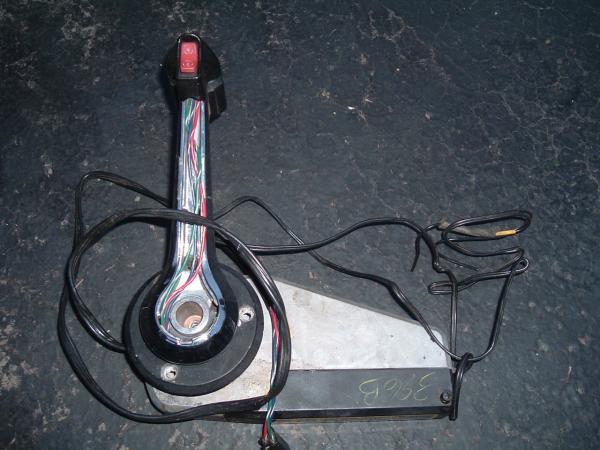 The pic is missing.
 -
 I like your optimism Jim. I too am hoping it isn't over so quickly. A lot depends on wind direction , how much water opens up and the wind speed during that warm period and when the temp goes back down. Hoping for the best.
 -
To answer the rest of your question: lead core allows you to achieve some depth without using a downrigger and it can add stealth as well as it is deployed out to a hundred yards behind the boat (10 colors is commonly a full leadcore setup but many folks have 3, 5, 7's etc. setups as well for running shallower. You can figure roughly about 5 or 6 ft. depth per 30 foot color depending on speed you can achieve bout 50-60 ft with that 10 color rig or less the faster the speed in general (and also depending on water currents and specifically what you are running at the terminus. Copper wire rigs (usually either 32 or 45 lb test braided copper wire but newer 60 lb is also possible) can be used generally on high capacity reels (as the wire takes up a lot of space and you need room for backing as well (often 300 yds of braid used). Commonly used lengths of copper are often in hundreds of ft. (e.g. 200, 300, 500, up to and including 600) which is usually the max and for good reason if you have ever reeled in two football fields of line especially with drag from resistance or with a fighting fish on the other end . A rough estimate for depth is 22 ft. per 100 ft of copper out but again it depends on boat speed water currents etc. and is at best an "approximation" unless you have a specific measuring device such as a Fish hawk TD or Smart Troll probe on the line. Again there is a stealth quality to the presentation because your lure if a long ways from the boat itself and the motor noise and turbulence etc. Wire rigs are usually 30 lb 7 strand or 19 strand stainless steel wire on a good line counter reel with smooth capable drag and the rod should be relatively stiff at least at the base and at the tip either a roller tip is used or a twilli tip so that the wire doesn't cut or wear through the guides and tip. Usually 1,000 ft of wire is used and the rig is used mainly to run dipsey diver and fly setups but can be used for other things as well (e.g. cowbells, meat rigs etc.) Other folks may want to chime in with anything I may have omitted from this very basic description.
-
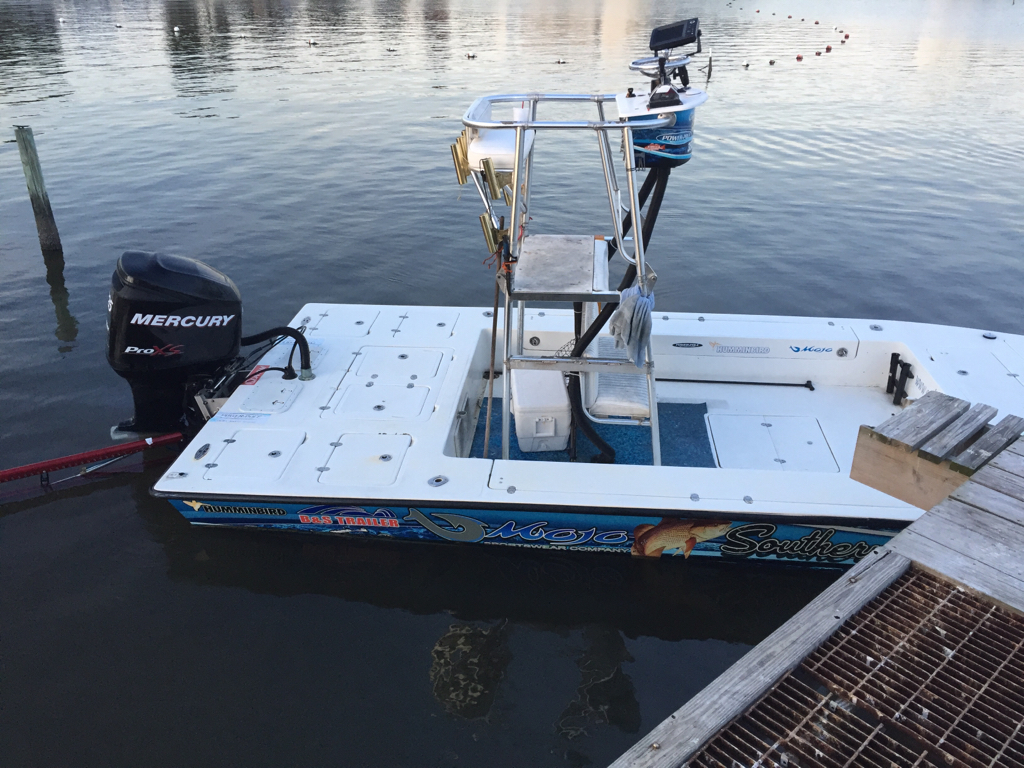 Nice pics Mike. Man I noticed that boat has a 150 .....not sure I'd want to be in it going top end Hey good luck down there bud.
 -
New line of spoons sneak peak hybrid lures
Sk8man replied to power dive's topic in Tackle and Techniques
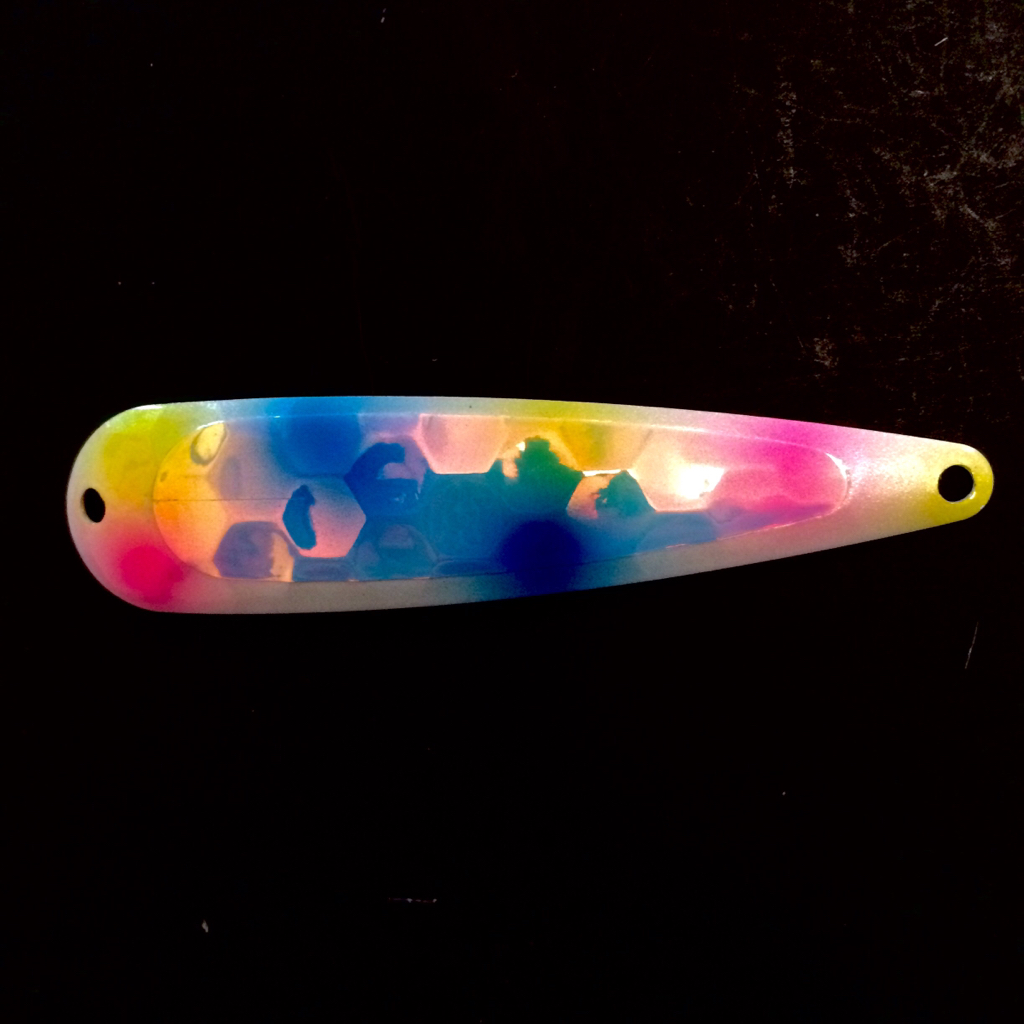 Yes Mike get on to some of those good Redfish...they are a blast. You'll be having fun regardless
 -
Nice going Brian. I saw there was a bunch out there earlier out from the ramp on the webcam. Hope the ice holds up with the projected weather coming up.
-
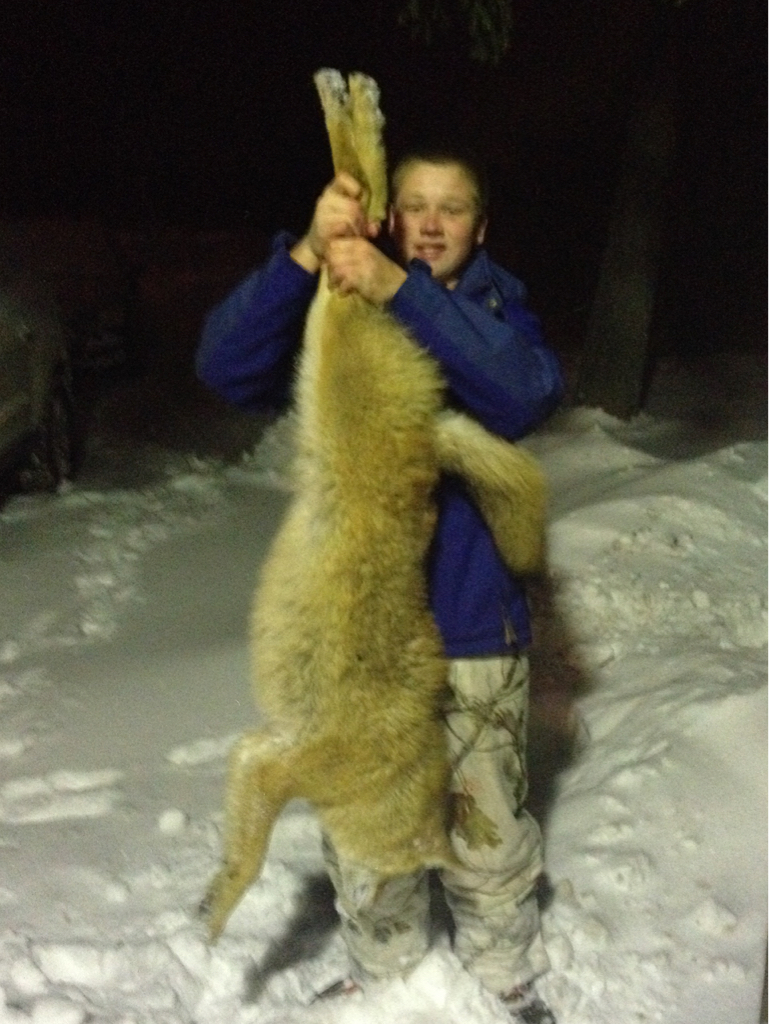 MY bet is that it is crossbreed
 -
For walleyes and Spring browns and just running spoons and sticks they are fine but with the heavier stuff I think the Black releases are the way to go.
-
Sold / Closed Victrolla type trolling boxes
Sk8man replied to eafd30's topic in Classifieds - Buy, Sell, Trade or Rent
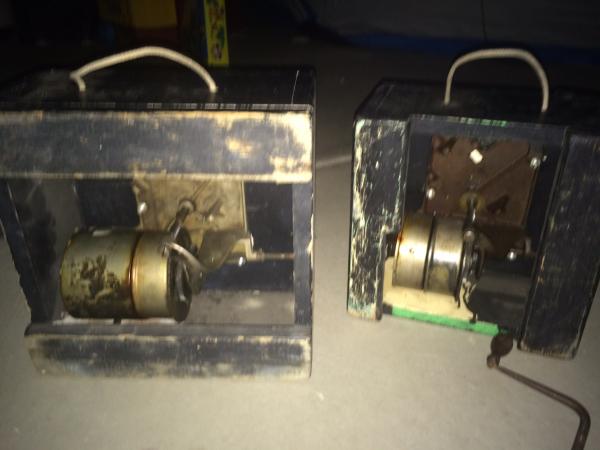 Thanks for posting.
 -
New line of spoons sneak peak hybrid lures
Sk8man replied to power dive's topic in Tackle and Techniques
Sweet looking paint jobs......looks as though you're right there with the "big boys" with them -
A 5 leader Seth Green rig can be run off BIG BOARDS depending on what you use as your main line (mine are SS wire so I don't do it) but if braid is used it can be done. The issue with inlines is that it is the amount of drag on the boards and especially if larger spoons or ones with a lot of action will sink the boards (even the TX44's). The drag weight (resistance) is substantially more than just the sinker and instead of just having one object horizontal behind you'd have 5 in the water column...very different principle than with just something at the end of one copper line. Whereas the jugs pull pretty much straight behind the boat (most of them) there is less resistance than the boards pulling all that weight to the SIDE. The bigger boards have enough pull to the outside (e.g. Otters) to pull it off.
-
Sold / Closed Victrolla type trolling boxes
Sk8man replied to eafd30's topic in Classifieds - Buy, Sell, Trade or Rent
Could you post pics? -
-
You're right John. I was thinking along the lines of the Tekota 800 reel being nearly 20 oz. lighter, and should still be able to get 500 ft of 32 lb copper on with 300 yds of 30 lb braid, great drag and very smooth with roughly similar gear ratio and retrieval rate. I haven't used either reel and the only Solterras I've ever seen were in salt water applications. I've handled the Tekota in the store and it seemed like a very smooth system and very capable for Great Lakes use. Just thought it seemed a worthy contender to mention at least for consideration.
-
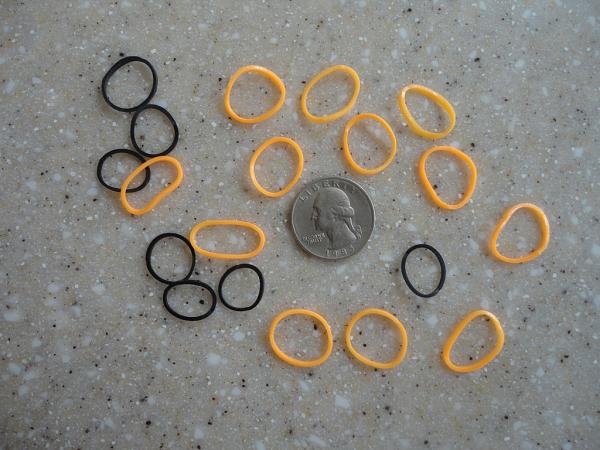 I probably don't run lead core as much as many of the guys on here (much more various wire type setups) but I've never had any problems using rubber bands directly to the lead core (27lb)....just have to do some testing to select the right strength rubber bands that allow the core to stay attached but while being weak enough to break with fish and not use the same spots over and over. The more connections you have with ANYTHING the greater the chance of failures. Normally I use the little rubber bands that girls use (hopefully no comments here from my buddies ) in their hair and mainly the fluorescent ones so I can see them fairly well from a distance.
 -
For that type of money I'd be considering the Tekota 800 LC. they seem like a better made reel and I think the gear ratio, line retrieval etc. are similar
-
Down rigger weights and color
Sk8man replied to gamekilr's topic in Questions About Trout & Salmon Trolling?
Dave really hit the nail right on the head -
Down rigger weights and color
Sk8man replied to gamekilr's topic in Questions About Trout & Salmon Trolling?
He indicated 10A's (older models) and they have a 10 lb max the newer model 10 have a heavier duty and substantially faster motor -
Down rigger weights and color
Sk8man replied to gamekilr's topic in Questions About Trout & Salmon Trolling?
The color aspect is open to personal preference like a lot of things in this sport but Lucas is right about the 10 lb limit on the 10A's to be safe with the motors. -
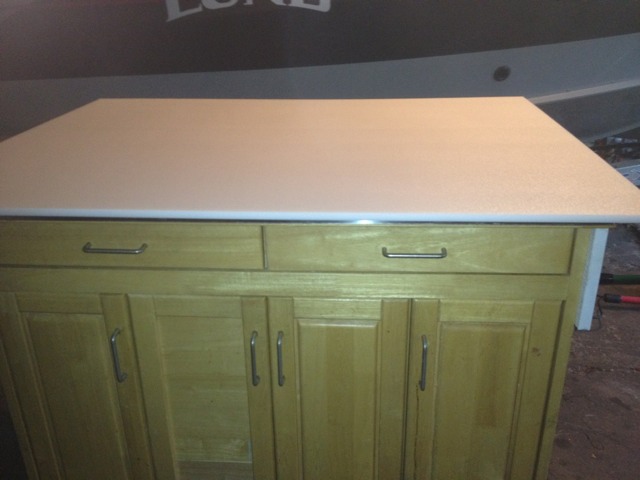 Probably a good idea to get UV stabilized and non water absorbent if plastic some of them aren't
 -
Credit Unions usually have good rates.
-
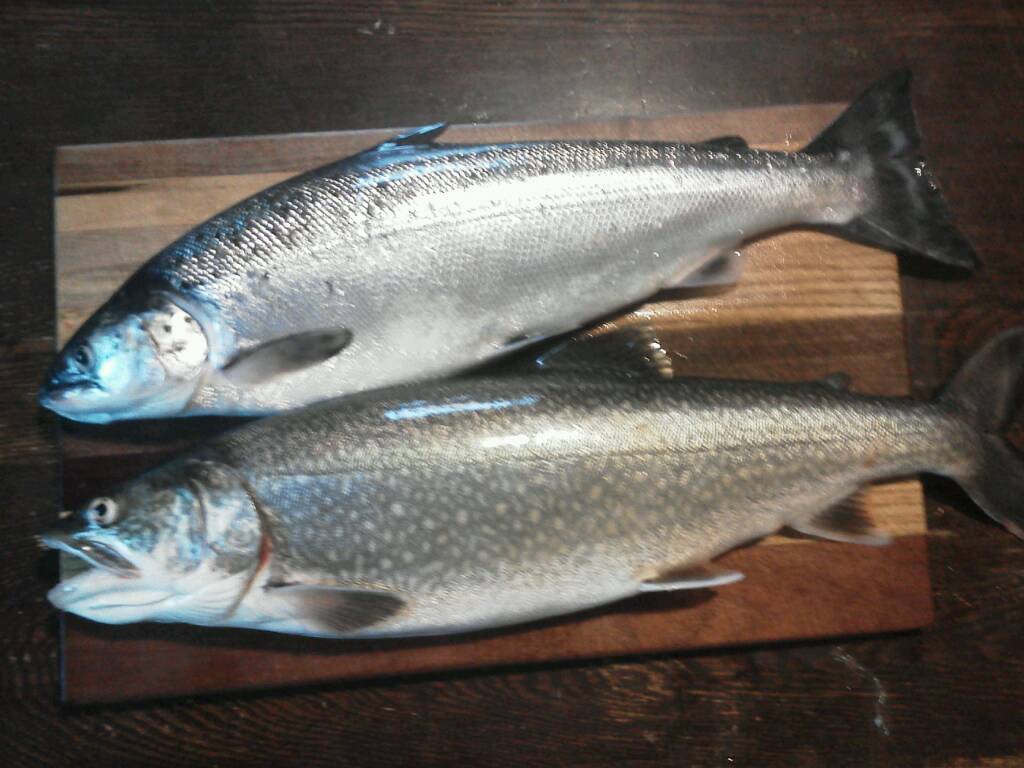 I'm surprised those other guys haven't painted a bullseye on Mikes boat by now after those successes
 -
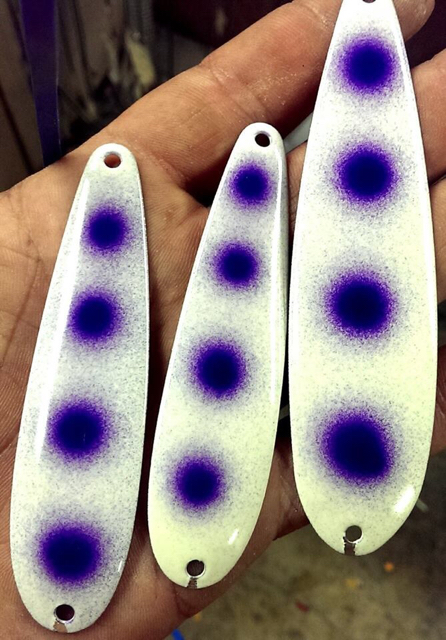 Just contact him here for an answer to your question: http://www.revolutiontrollingspoons.com/contact.html
 -
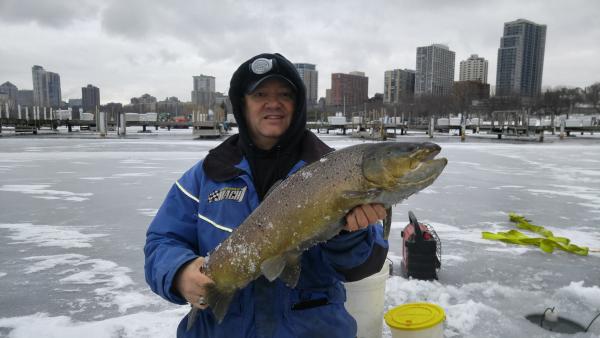 WTG John. Good thing it was spawned out or it might not have made it through the hole From the looks of that pic you sure needed the Big Buddy heater
 -
That area near Trident is very dangerous and is a place my son and I went through a few years back mainly because of the bubbler they run out front. The currents it generates travel quite some distance under the ice. Luckily these guys made it OK. My adult son and I at least got to test out our float suits which worked OK but the cold water exposure is unbelievable... it sucks the heat from your core almost immediately and numbs your extremities VERY quickly making moving difficult to impossible and it is not an experience you'll soon forget.