

Sk8man
-
Posts
13,929 -
Joined
-
Last visited
Content Type
Profiles
Forums
Events
Gallery
Store
Everything posted by Sk8man
-
 Great perspective Justin
 -
Sweet! Guess I wouldn't want to be swimming in there with a shiny bracelet or watch
-
Or run Bloodrun 30 lb Sea Flee mono The 47H holds about 275 yds or so of it.and leader down with 20 lb fluoro for kings and 12 for browns. In rthe old days I only used straight 12 lb Big Game for both before fleas.
-
 They even munch on the crabapples right off the trees out back
 -
Sold / Closed 1992 baha Reel Dilemma formerly Tall Tails
Sk8man replied to reeldilemma33's topic in Boats for Sale
 I know John but priorities call and adjustments aren't always easy but you'll get back to it in time Kids are alot more important than boats in the final analysis I spent 22 years in my little 13 footer too Good luck bud.
 -
Sold / Closed 1992 baha Reel Dilemma formerly Tall Tails
Sk8man replied to reeldilemma33's topic in Boats for Sale
Congrats John! -
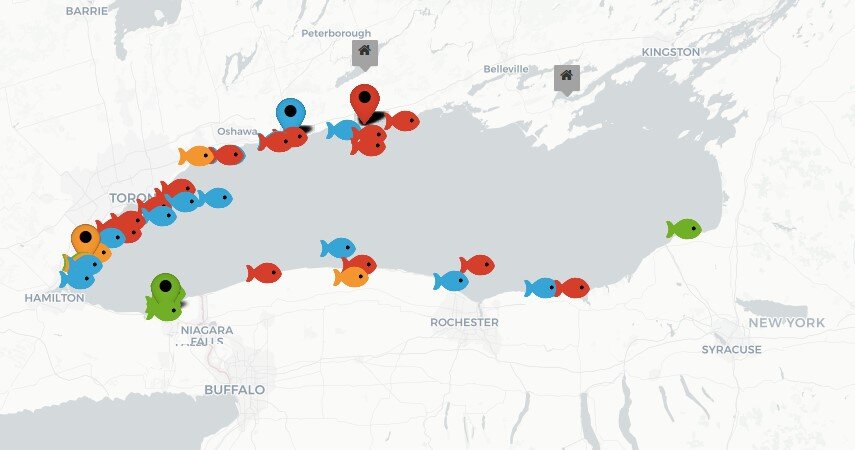 I have often wondered if some of the Atlantics in Ontario head to the Atlantic Ocean via the St Lawrence River and hence a reason for low numbers showing up in Lake O
 -
Video - Fishing With Seth Green Rigs
Sk8man replied to Pete Collin's topic in Finger Lakes Discussion
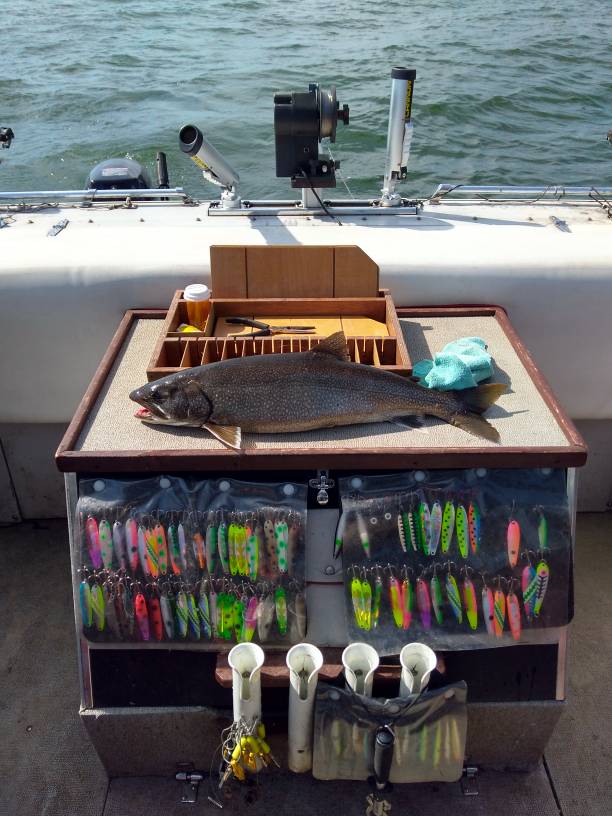 Yeah Pete is a "purist" ....but not that pure
 -
Video - Fishing With Seth Green Rigs
Sk8man replied to Pete Collin's topic in Finger Lakes Discussion
Seth Green or "thermocline" fishing is comprised of many different strategies and approaches e.g. bottom oriented vs. suspended and the setups vary greatly with each. With downrigger fishing the specific temp range can be crucial for setting lines but with rig fishing you basically "straddle" the thermocline layer such that you cover above within and below it. The thermocline itself can vary throughout the lake snaking up and down and with say a Fishhawk X4 series you can note specifics and adjust lines accordingly on downriggers to try to stay at the part of it you are interested in according to the species targeted. A Fishhawk TD can be used before you set Seth Green lines to get an estimate of temp profiles and to determine where to concentrate your lines according to species sought starting out but as you troll down the lake the thermocline layer may be quite different in parts of the lake or at shallower vs. deeper water. A Seth Green rig if set properly can pretty much straddle it continuously throughout the troll as a usual setup covers the first 100 ft or so where the entire thermocline on the Fingers usually appears encompassed within that range during most of the season when rigs are used. Fine tuning can be done to concentrate leaders within a specific range on the rig line if the rig line is set up with flexibility built in (e.g. number of bead chains and intervals etc.) so you can more precisely target a given species e.g. rainbows vs. lakers. The Seth Green approach in general is sort of like a shotgun vs. .22 -
Video - Fishing With Seth Green Rigs
Sk8man replied to Pete Collin's topic in Finger Lakes Discussion
-
Video - Fishing With Seth Green Rigs
Sk8man replied to Pete Collin's topic in Finger Lakes Discussion
I normally run 3 five leader rigs when by myself and for the past nearly 50 years I have used 4x5 one inch styrofoam blocks to set up my lure presentations ahead of time and usually have about six or seven sets comprising 30-35 lures pre-set up this way in a small duffle bag ready to change out as needed. When I get a fish on I reel up to the first leader and roll it up on a block and drop it on the deck and quickly go to the next one. It is pretty automatic and I don't even have to think about t at this point The rod is often wedged between my knee and the rod holder with the drag set to pay out as necessary or else place the rod back in the holder and do so for all leaders till I get to the fish. I gather them up and then put them back out and throw a rubber band around the empty blocks if windy otherwise just pile there on the deck in three piles of 5. I put a slot in each block to hold the wire clip -
I used one back in the mid seventies as described above and although pretty primitive it did at least supply some information despite it being a simple device. It had color bands going from green to red (not specific miles per hr). What it did allow however was being able to return to the approximate speed that a fish was caught (and coordinated with a color on the scale) which was a step up from a total "guesstimate". What I did was to carry small very thin strips of tape with me and when I caught a fish I'd put a strip on the exact place on the color bar relative to my speed (as soon as the fish hit) and then return to that place on the scale so even if I slowed the motor etc. I could return to the same speed (or close to it). Again, better than nothing but not much better I believe I gave mine away in about 1978
-
Shark Cannonballs Extreme Shark
Sk8man replied to Earl28's topic in Questions About Trout & Salmon Trolling?
I enjoy stirring the pot as much as anyone Does a heavier shark weight attract more fish than a lighter one? When you get down to it none of these things have been scientifically proven by controlled experimental approaches and most for good reason: there are too many uncontrolled variables involved; thus it is basically speculation when either side of the issue is set forth as the answer. So what do we have at the end? "Personal preference" and speculation based on our own experiences and nobody really "knows best" -
Rick's advice is well taken as the accuracy of the counter allows you to consistently return to a given depth as it is an "absolute" measure relating to the turns of the wheel. The display on the screen of a depth is more of a relative measure and doesn't allow the same level of consistency because there are many more variables affecting it's accuracy.
-
200 ft is pretty standard in usage. Usually folks commonly fish within 150 ft or so with them and for much of the year less than that. The 400 ft rolls are mainly for "curiosity seekers" in my view but it also allows someone some room for "error" if they have a kink or other misfortune requiring shortening the cable.. What would be interesting is when the battery goes dead on the rigger and you are experimenting 350 ft or so
-
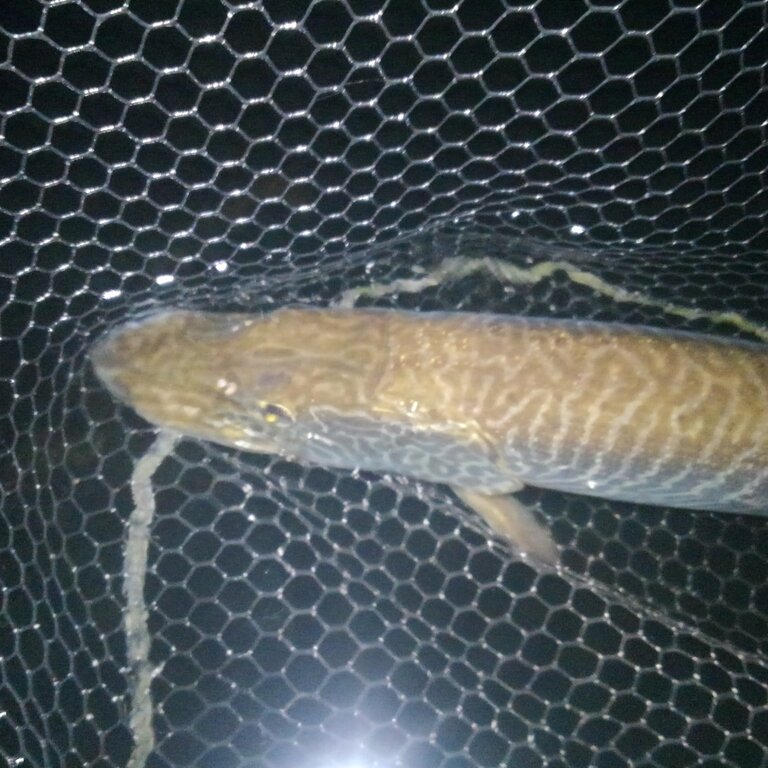 Nice going Justin Another good night activity
 -
Video - Fishing With Seth Green Rigs
Sk8man replied to Pete Collin's topic in Finger Lakes Discussion
WTG Pete. Great introduction to Seth Green rigs and entertaining video (as always). For folks interested. I have a full chapter on Seth Greens with details in the book I'm writing (almost finished) on Trout and Salmon Fishing in the Finger Lakes and Lake Ontario so that will provide some written information as well. Pete's video spurs me on to finish up. Hopefully Pete's video here will spark renewed interest in this "old school" method of fishing (my favorite as well). Thanks Pete.. -
As for the original question regarding fight: feel of the fight is more determined by the rod than reel used. I would think that you wouldn't need 22 lb drag on the Fingers more so on Lake O and for a lot less money you could have a worthy reel that would hold the wire. Your money though
-
I should think that 1,000 ft wire should fit on it OK. I have an Okuma 30 that takes it.
-
Just run the wire off 300 reels and use medium weight downrigger rods with a twilli on the tip. I have a couple setups that are about this way for the Fingers and they work fine and I adjust leader strength according to what I run from them.
-
Electric Downrigger Suggestions
Sk8man replied to NortheastHardcoreSportsman's topic in Tackle and Techniques
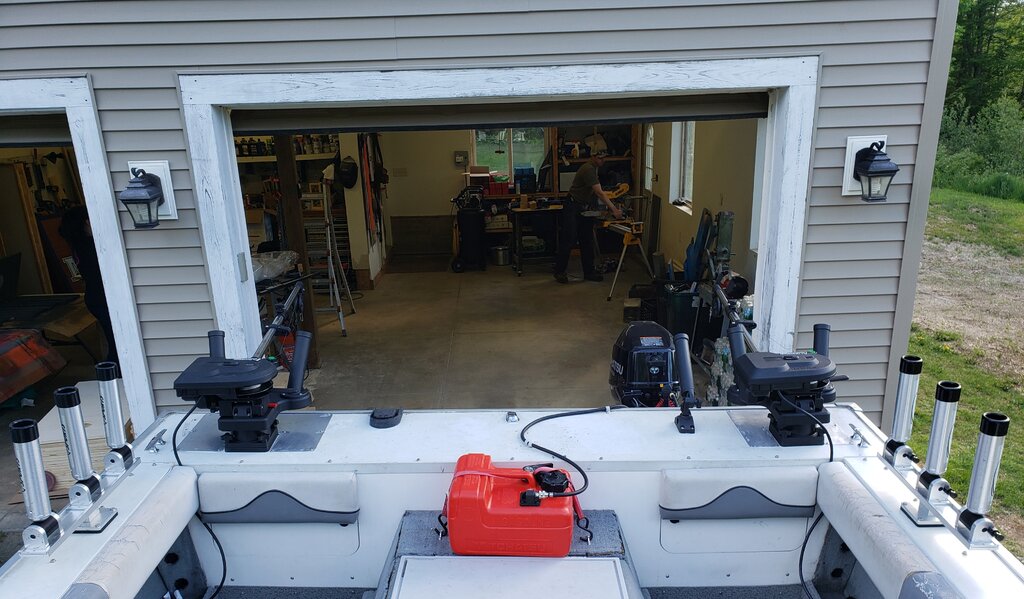 They also take some patience when coming from Cannons as the orientation of them is so radically different ( e.g. more horizontal than vertical operation). probably different when starting out with them but when used to cannons for a long time it takes some getting used to
 -
Chasing Chrome signing out
Sk8man replied to Jeremy Goodison's topic in New York Fishing Reports - Lake Ontario (South Shore)
 Brian said it exactly right x2 Jeremy
 -
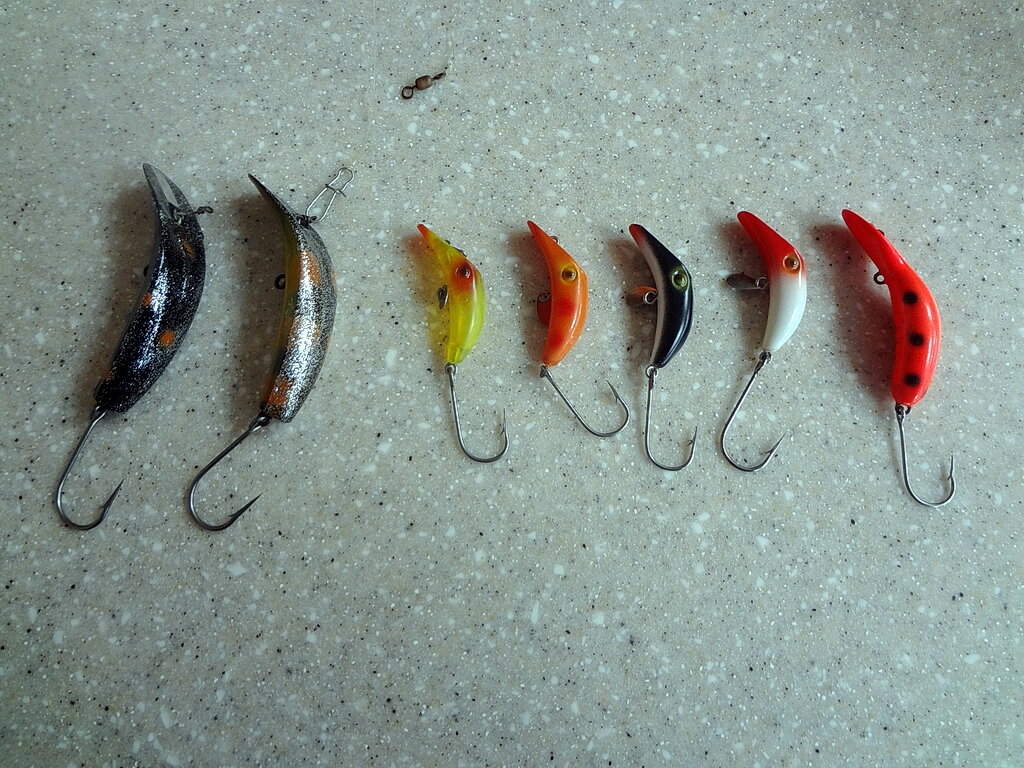 The method of "jerking" or yanking" has been around for centuries and is still frequently employed on the Finger Lakes. There are many versions of it with many different kinds of line or wire and primarily weighted "sinking" lines and wire (e.g. single strand copper, monel, leadcore, or even braid with weights). It is still one of the most productive ways to fish for Lake Trout especially as it is a bottom oriented method.. The one caution though as far as Lake Ontario is that if using it wear finger and hand protection of some sort (e.g. leather glove or perhaps the first two fingers and thumb cut from leather gloves) because of the presence of the larger fish and especially Kings which sometimes are mixed in with lakers on or near bottom. Also there is the possibility of hanging up on bottom while trolling with wire and both these activities can result in severe cuts or even loss of fingers if unprotected. In the first pic the spoon on far left is the Sutton #38, next the #71, third from left is the Williams Wabler (actual spelling) while the last one on right is a version flutter type spoon specifically for jerking wire (note the hook positioned so it doesn't snag bottom). The flutter spoons were normally run just off bottom on a three way swivel with dropper weight and leader from 2-25 ft., The Williams could be run that way off bottom or by itself with a lot of wire out on bottom. A more frequent method involves the heavier versions of the Sutton spoons changed out to a single hook - or the main method of using spoons like the Pfleuger #4 or #5 or Great Lakes #4 spoons (2nd pic) right on bottom and tied directly to the wire with a loop and haywire twist without a swivel snap (middle pic). Another popular and effective lure type (3rd pic) is the flatfish, Heddon Tadpolly, or Twin Minnow (on or without leader) run right on or near bottom and the standard treble hook switched out for a single and inverted (stronger and less likely to hang up on bottom).
 -
 Good feedback too Bill
 -
Might want to check here Vlad and speak with one of the techs https://www.boats.net/catalog/tohatsu