


Sk8man
-
Posts
13,929 -
Joined
-
Last visited
Content Type
Profiles
Forums
Events
Gallery
Store
Everything posted by Sk8man
-
You didn't mention what kind of boards you intend to use and line capacity of the reel is not the only issue when going with mono to use with inline or big boards.. Mono has considerable stretch and that is something that you don't really want using inlines even the smaller walleye boards. The advantage of braid with boards is that there is very little if any stretch to it so when the boards pull through the water they tend to have cleaner releases with fish. You do have to modify the inline boards with stainless steel back release pins though and carefully place the braid in the forward release such that the line is as far back in the release as it can go and the release tension is tightened down (carefully not to snap the plastic) to the max. If the braid is truly set in that way it will not move and create wear spots or grooves (or worse) in the plastic forward release. Some folks even wrap the braid around the release a few times but if the tension is right it should hold fine the way I described. If it moves it can see saw like a saw and cut into the plastic. I've used my walleye boards this way for several years now with no signs of wear and have had no problems whatsoever with the braid. I would suggest going with the 45DX and putting on 300 yds of braid, the 7 colors and then the Seaguar fluoro leader for most fishing this will be plenty. A main concern with having enough backing is that you let out some substantial amount of backing with the boards. Unless fishing for kings all the time the 300 yds. should be plenty. I use 25 FT leaders but that is pretty subjective too. Another potential advantage to using the larger reel is that if you decide you need more than the 7 colors it may have that capability and although the 45DX may be a little "bulkier" it is not real heavy like some of the older reels that were made primarily from metal.
-
Luke - You may want to check out the DEC bait regs regarding the use of salted minnows and other bait. the certification process applies to them as well as live bait if used outside their point of origin.
-
I think you canget some idea regarding age by looking to see if it is black and white vs. color. The Generation 1 was blackand white display while generation 2 is color.
-
It seems to be a better ice fishing lake than during the warmer months for pike and walleyes. My hunch is that the eeyes might be better fished for at night too.
-
Although it may be possible to overfish any body of water. It seems doubtful that Cayuga will suffer this fate any time soon. For one thing it is a very large body of water with a tremendous water volume which affects probabilities and trout unlike some species like perch in particular don't cluster as heavily together in tight schools staying in particular areas or localities for extended periods - they roam around more making them more "elusive". A critical factor is that there is relatively limited access to the water itself e.g. launches, parking areas etc. to support really extensive numbers of boats and fishermen at any one time as may occur in smaller popular lakes located nearer large metropolitan areas. Brian's point about releasing fish is also a major factor that plays into the situation. We fished last night and released all 7 lakers caught as an example and the other fisherman we spoke with at the launch had done the same with their fish. All the fish looked very healthy and well fed and we didn't have any with lamprey marks either suggesting the fish population itself appears very healthy.
-
leaders, crimps, snaps and such.....
Sk8man replied to bobcat's topic in Musky, Tiger Musky & Pike (ESOX)
For the past 30 years or so I have been using this little gizmo from Jann's Netcraft for many purposes relating to wire use. It is very handy and despite its price is worth the money in terms of what you get out of it in my opinion. http://www.jannsnetcraft.com/wire-forming-tools/041571000006.aspx -
It wasn't easy....I had to practice a lot
-
I lost a couple brand new sets of hammerheads with spin n glows .....doubt if they will be returned though from 150 ft of water
-
for sale : usa cannon mag 5 HS with autostop and brand new power cord 5' fixed boom
Sk8man replied to Custom Deluxe's topic in Classifieds - Buy, Sell, Trade or Rent
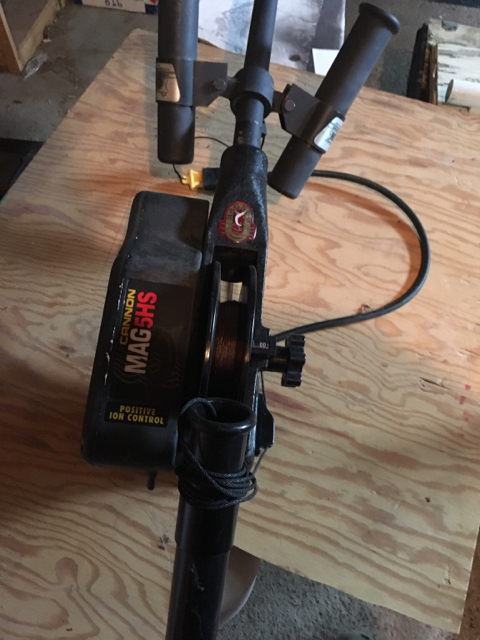 Here it is adjusted a bit
 -
Nick - Sorry to hear about your grandfather. Congrats on the fish.
-
WTG Kev you earned it bud.
-
.jpg.39fa022f22fe19dd55fdce5fcf5a56c1.jpg) Congratulations! It was a very tough derby and you guys put it together well enough to win it
Congratulations! It was a very tough derby and you guys put it together well enough to win it -
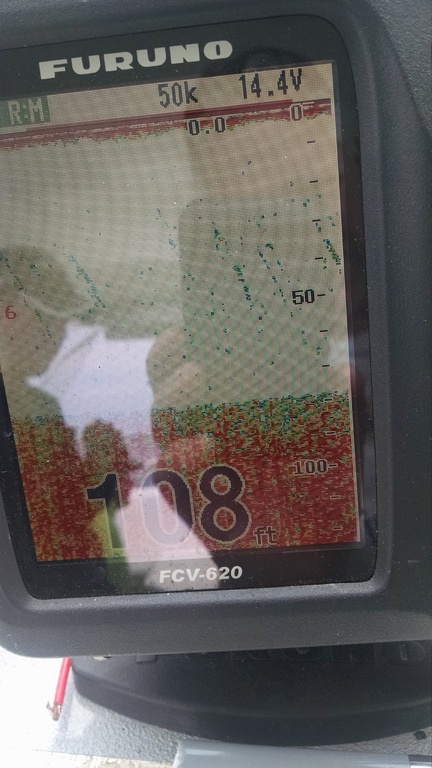 Does the unit allow you to reset it back to the factory default settings? Ifso that is where I would start.
 -
I'm familiar with good techs at the north end of the lake but not the south end maybe some of the Watkins Glen area folks could help out with that info.
-
I fully agree with you Bob I was just expanding on it for the benefit of folks perhapps unfamiliar with the situation.
-
One of the disturbing things is that many of the lampreys seen attached to the fish are not the maximum size either and that means that they escaped earlier treatments and have a considerable life span left to do damage as they are past the "vulnerable" stage exploited by treatment. Seneca's problems are complex though and not just a function of ONE factor. The lampreys are additional serious stressors to the lake and its problematic fishery but the invasives, blue algae blooms, disappearance of vital food sources (e.g. zooplankton, and phytoplankton) for the young of various species, covering of the traditional spawning beds by Zebras and Quaggas, various pollutants entering the watersheds, large fluctuations in bait availability, etc.are wreaking havoc on Seneca and also to various degrees on many of the other Finger Lakes. You put all these stressors together and you end up with what we now have going on and I don't believe the DEC or anyone else for that matter has a clue about how to deal with correcting it. This is not a criticism of the DEC either as thisis a highly complex set of problems.
-
I'd have a competent marine tech put it on the diagnostic tool and see what codes come up. The computer in it records everyhting from how the engine was broken in to how many times the alarms have gone off to thermostat temp readings etc. so you should be able to get a better idea where to start.
-
That is a great combination....old school and new school
-
.jpg.a862dae28b7acf3effad7eedd64c1b06.jpg) Thanks Billy That is a beautiful landlock Brett Congrats also for hanging in there....We scrapped yesterday because of the predicted T storms and I think my son is still regretting quitting "too soon"....starting to remind me of myself I guess.. Let's hope all those little landlocks out there make it to that size and it will be a heck of a fishery once again.
Thanks Billy That is a beautiful landlock Brett Congrats also for hanging in there....We scrapped yesterday because of the predicted T storms and I think my son is still regretting quitting "too soon"....starting to remind me of myself I guess.. Let's hope all those little landlocks out there make it to that size and it will be a heck of a fishery once again. -
Seneca Sampson national lake trout derby 2017
Sk8man replied to Tripleduece50's topic in Finger Lakes Discussion
 You deserved it Fishstix. It was a very tough derby and anyone who placed with fish deserved there prizes too. We fished as hard as we could and couldn't come up with anything big enough to enter this time Two 12 hr days of hard fishing and I'm still spent after resting up today
 -
Always good to pass on the "old school" methods.....sometimes old school i the right school
-
Seneca Sampson national lake trout derby 2017
Sk8man replied to Tripleduece50's topic in Finger Lakes Discussion
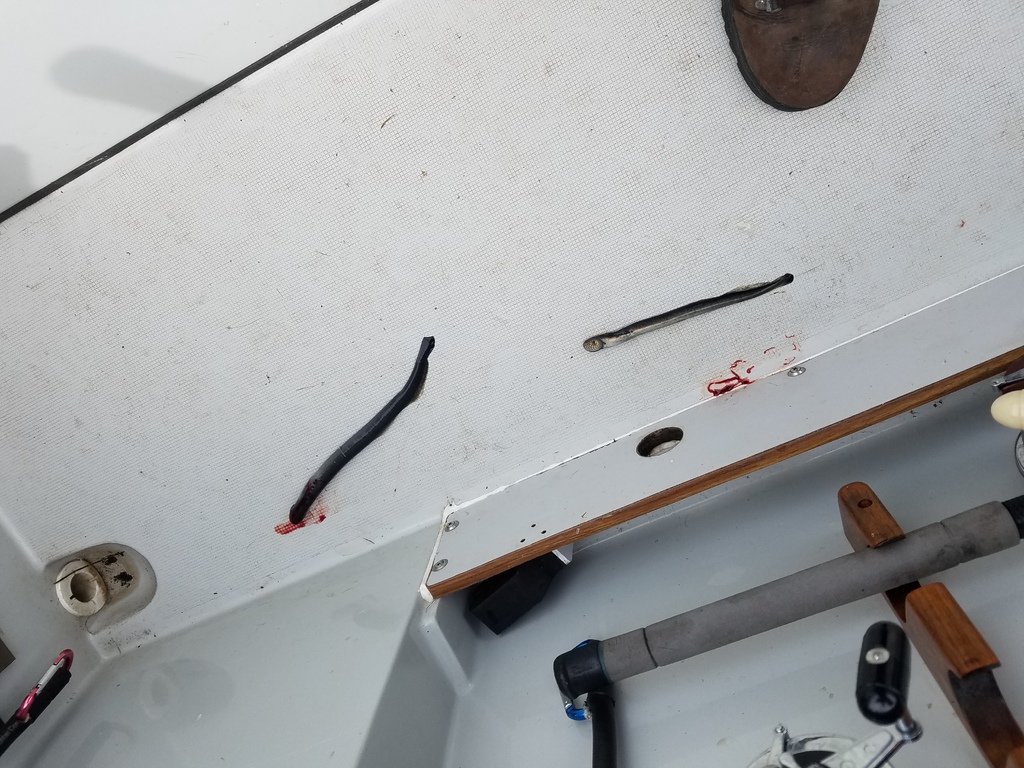
Hey Admiral I think the only improvement would have been to put the lamprey in Liney's sandwich when he wasn't looking...you know how fond of them he is -
I believe 12 lb laker took the main prize. I think the status board on the website was current at the end of the derby. https://www.laketroutderby.org/current-standings
-
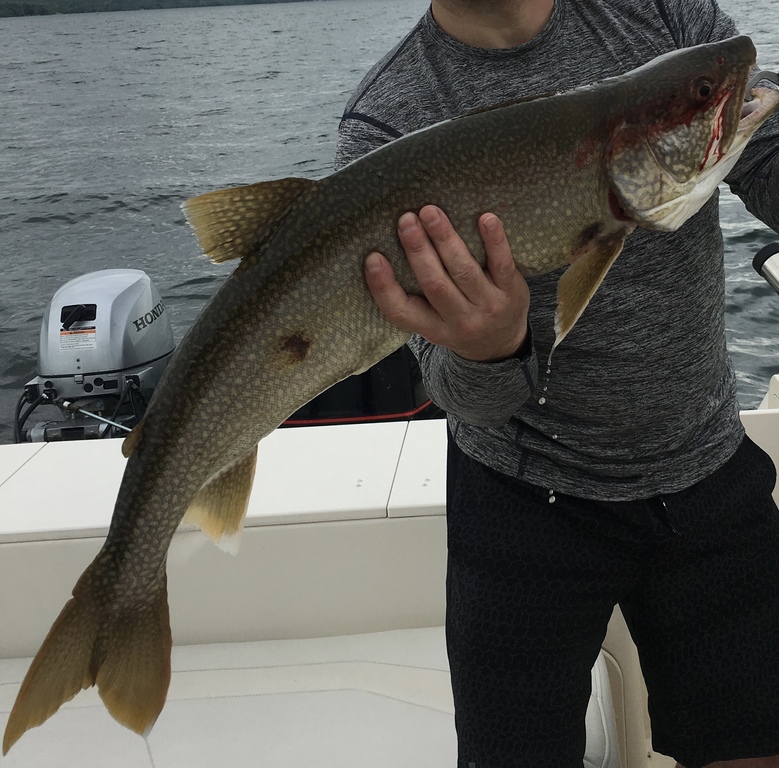 Always kill them
 -
I think you may have done better than 95 percent of the folks out there Mike in terms of numbers of fish.....good going...tough derby.