



LongLine
-
Posts
4,333 -
Joined
-
Last visited
Content Type
Profiles
Forums
Events
Gallery
Store
Everything posted by LongLine
-
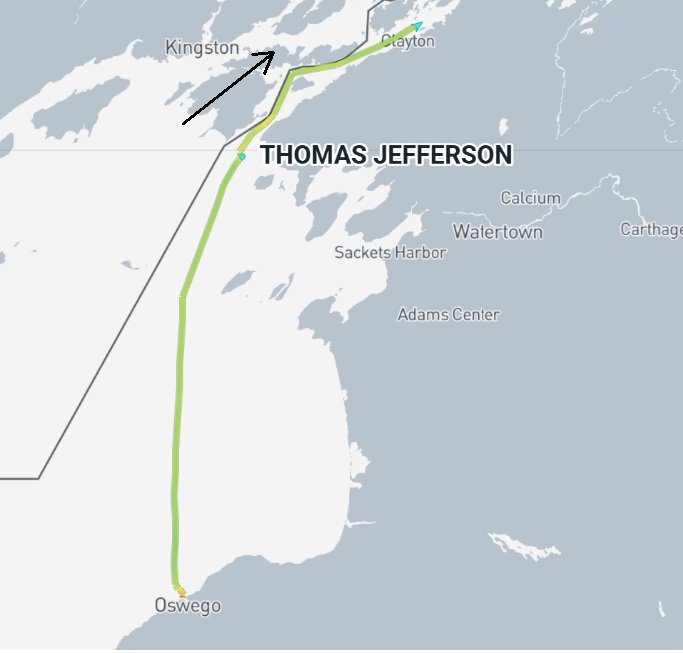 "Little cousin" making up for lost time and working hard: Jeff still can't make up his mind. (or maybe lost something up north and went back to get it?)
 -
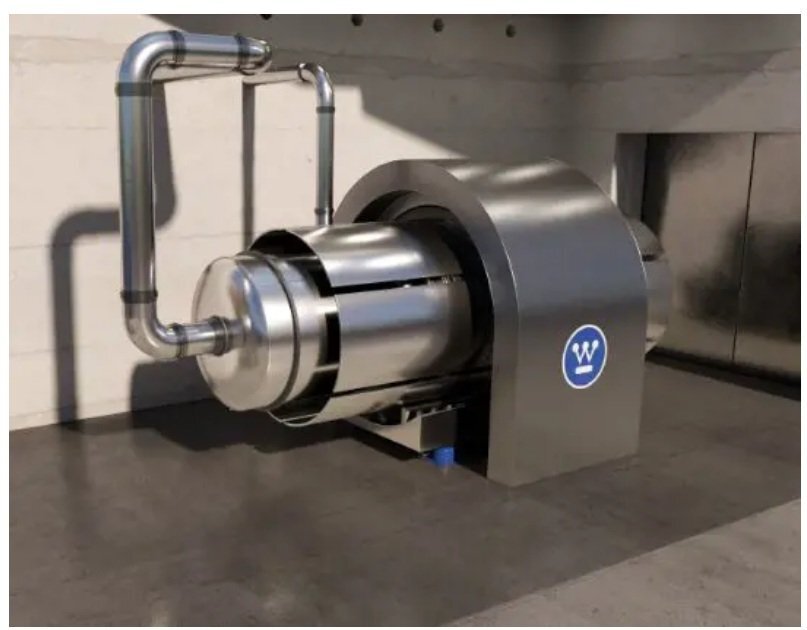 eVinci™ Microreactor | Westinghouse Nuclear Above shows a layout of facility (sales/innovation pitch?)
 -
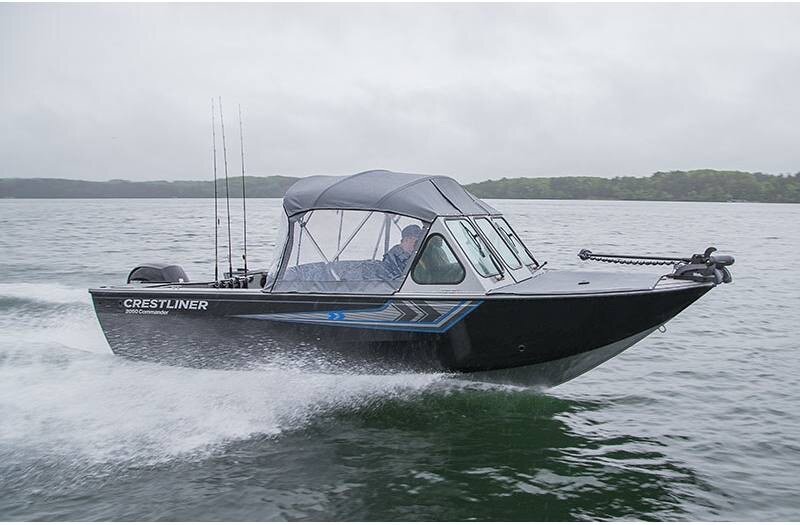 Been using an 18 ft'r for years. Only suggestion I'd make is to make sure you have plenty of depth. I.E. from floor to top of gunnel should go well (way) above your knee.
 -
 On Erie, WOW! Maybe restoration of the Detroit River is helping Erie.
 -
"Little cousin surveying or dodging ragboats?
-
Definitely run on the high end trolling speed and fish the marks.
-
Westinghouse unit fits on flatbed truck, but they claim less than 5 acres required.
-
Run them fast. Make them go wild.
-
-
Davy - AI co-pilot says it's not halted. Wondering if it's a temporary halt due to high water. (?) I can't find anything saying that it's canceled. Update from last Oct on phase 3 show bank restoration, trees, vegetation etc Logical that they'd come last. (?) Interesting project, lots of detailed drawings in the appendix: 2025-11-20-Salmon River Phase 3 - ASB Summary Report w Attachment.pdf AI summarizes the sebago: I found the original study (ESF-NOAA) between the 2 strains, if you want it, I'll post a link but be forewarned, it's really heavy-duty stuff.
-
HB- Treatment plant effluent is cleaner than septic tank leakage. Effluent may not be "clean" but definitely cleaner. Glad DEC testing it. They'd go after it for pollution issues like other polluters. More weeds? Guessing there's no herbicides in the effluent. (?) Do more weeds mean more oxygen released to the water? Effort (warm and cold water) has certainly gone down over the years. Catch rates have improved over the years due to guys getting better at it, (mainly charters) sharing methods and on-going efforts to maintain and improve the fishery. (regulations, creel limits, seasons, slot limits, etc all go to maintenance) Davy- Klamath took many years. Removing dams was major contributor however banks underwent restoration and retention/resting ponds were dug. The SR project not only removes the Trestle but is going further with 1200 ft of bank retention. (Including work done by SRRC for a long time) You're absolutely right, AS and restoration are not replacements. All plans I've seen, supplimental.
-
Where's jeff today?
-
Microreactor at Fort Drum? https://www.rochesterfirst.com/new-york-state/army-selects-fort-drum-for-microreactor-energy-project/ https://www.defenseone.com/business/2026/08/army-selects-5-companies-build-nuclear-microreactors-bases-under-new-2-billion-deal/415653/ Water? Black River? Some don't require water.
-
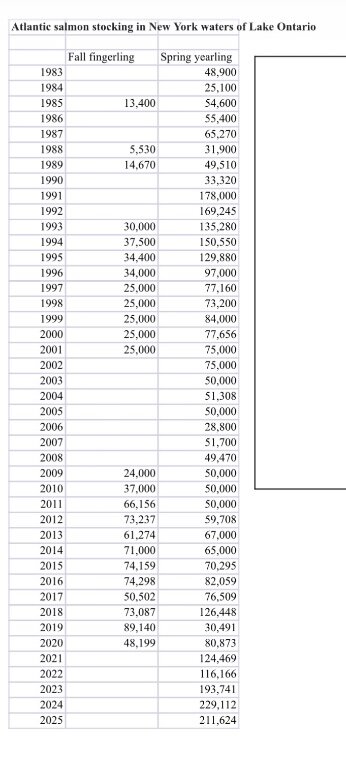
HB - Your posts on pg 1 and pg 4. My mistake...I assumed you went to that meeting on the "high pressure sewer" (pg 4) in favor, not against it. Brian - I stand corrected, there were two years (2018 & 2021) between '96 & '21 where stocking was over 100K. We obviously use different sources. i use the official Lake Ontario annual reports for actual ygl stocking numbers. Here's what the 2021 report lists: How many Kings stocked in those years to develop the King fishery we have now? Both 2021 & 2023 reports say returning AS adults to SR from 2016-2020 were held at Tunison until spawning. (And HB said his fish this year were good size? His edited post pg 3) The 195K is correct but deeper dive reveals only 52K were SEB-TT. (I.E. Thiamine treated) and they were split between the sites. Bass limit was reduced. Bass guys mad...oh well. (Someone said Bass fishing really good now.) Salmonid Sportfishing is good offshore and at headwaters in fall. What about nearshore and summer? Oh well.
-
 So if I post using the term "Big-A", you'll have to guess if I'm referring to the water or someone in DC?
 -
"Little cousin" really pounding the water off Durand:
-
Brian - That's the 1st year US has ever gone over 100K. All US previous years have been much closer to 50K with some years none. If you dig a little deeper, you'll see SR AS were released east of Pulaski (Richmond) and not at mouth like at Sandy. You also see they were SEB strain and not SEB-TT. HB2 - I agree with you - without Habitat restoration spawning there will fail. (I've said that a few times) Conditions aren't currently right for it. (Even though you claimed on pg 1 to see beds being dug by your cottage.) Indeed, why waste money when you're happy with the occasional stray. Glad to see your involvement with a sewer project which indicates some creek restoration being considered.
-
Les - nice fish! Brian - Thiamine treatment is relatively new. ALL King eggs are now treated. SR started treatment of steelhead in 2014. (which were found to require a higher dosage) Huron crashed in 2004 and LTs have eggs from there have been found to have developed some genetic resistance. (Kings doing it as high numbers of Nat repro occurring???) You expect a small number of treated AS recently stocked to have a population explosion? Get real! More efforts are required. You assume fin damage is from stock/birth defects. Same stocked in other lakes without fin damage. Maybe hatchery separates eggs such that only those with potential damage are put into lake??? (Last sentence sarcasm) HB - Your anti-AS sentiment has come through; you don't need to keep harping on it. The proclivity for negativity, exaggeration and repetition is readily observable.
-
Jefferson and "kids" moved north and exploring the area: St Lawrence 2 is a 75ft "tall ship" (2 masted "old time" sailing vessel) Kaho working off Oswego. Seth Green worked directly off Genny and now headed easerly.
-
Jefferson working the east end: "little cousin" working off I-Bay and Durand: Lake Guardian in Duluth.
-
Success with AS at Sandy requires forms of Habitat Restoration. ____________ HB - Please re read 1st sentence. AS can be compared to LT, as you just did. That they (LT) "thrive" indicates no further monitoring, experimentation nor stocking of LT is required. That won't make many guys happy. Don't know where 1868 came from. 1898 (AS extirpated) minus 1830 (sawmills) is 68 yrs. Detrimental activity: Houses (when were sewers put in?) roads? (Hamlin adopted "Sensible Salting policy) Hospital (Nearest in Brockport) Industry ?(???) More likely farm run-off, bank erosion, "mud seabed" and lack of sufficient canopy (Willows planted on SR. Lowered CND summer temps by 7 deg...wow!) Please re-read 1st sentence. Why no significant AS returns? Only 30,000 yrlngs of nearly equal quantities of 3 strains stocked at mouth. 10-14% stocking survival typical of all Lake fish stocked. (Only one strain of AS treated for Thiamine deficiency. SEB-TT) So 10,000 potentially survived stocking. Not every fish stocked gets caught, otherwise there'd be no runs in the fall. The 2023 survey interviewed 887 boat trips and reported 1812 Kings caught. Great results but there were 860,000 stocked in 2022 which means 0.2% of the stocked Kings were caught. (Doesn't include Naturals nor 2021 stocking which would drive that % way down.) What's 0.2% of the 10,000 stocking survivors? 20? (And you caught some.) _________ Speaking of Thiamine. Kings, Cohos, Steelhead, AS and LTs all have Thiamine issues. ALL Kings are treated for it at SR. Steelhead require much higher dosage. Only one strain of AS was treated. (Prior experiments didn't treat for it.) Browns don't require it. This recent paper deals with Lake Trout and Thiamine Deficiency: (less than 4 is "BAD." https://sealampreycontrol.org/pubs/fhealth/Thiamine Final report 2025.pdf Pg 6: "Similarly, in Lake Ontario, all sampled sites included eggs below the 4 nmol/g threshold, ranging from 13% in Youngstown to 63% in Hamlin (Figure 3, Table 1)." Of the 322.6K LTs stocked in 2023, 161.6K were HPW strain. HPW are from Huron (Georgian Bay) which have developed a greatly increased resistance to the thiamine issue since that lake lost its alewife population. hmmm...Habitat restoration is coming to help LT recruitment. (Why bother? they "thrive" - sarcasm)
-
"Little cousin:
-
J's run crazy. If you run them mupped, put bigger one on bottom. More frequent to run a spoon on top, at least 7 -10 ft higher.
-
AS gone in 1898, after 68 years of detrimental activity. And some detrimental activity continues still. 20 yrs is instant gratification. (In construction terms, a house can't be built in 1/3 the time it took to demolish one, although modern tools and methods have shortened build time.) "Powers" have been working on LTs for 50 years. Work continues on all species today after 58 years. The fishery is very good but no fisherman wants them to shut down hatcheries. __________ All creek and embayments are warm late spring-summer. USGS monitor says Sandy is currently 68F. What's the SR look like? Some claim the SR is primarily spring fed. It's not. It's fed from the Salmon River reservoir (Redfield) It's the hatchery that draws water from the river AND wells. The SR has had temps up to 84F. Sandy is pretty cold for at least 9 months.
-
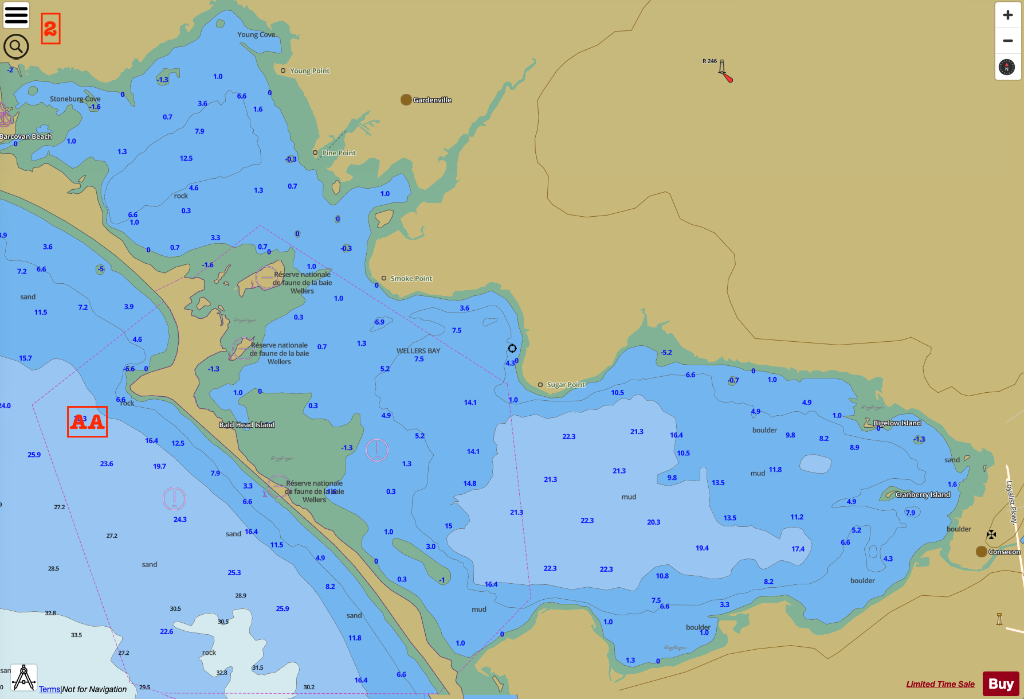 It's Weller's Bay Natural Wildlife Area, Canada. On the west side of Prince Edward Isle. Go to previous NOAA custom site. Move cursor over map 35000. Zoom in a couple times on NE section and you can get tremendous detail. Go back to tutorial on that site for directions on how to save and print.