
Sk8man
-
Posts
13,929 -
Joined
-
Last visited
Content Type
Profiles
Forums
Events
Gallery
Store
Everything posted by Sk8man
-
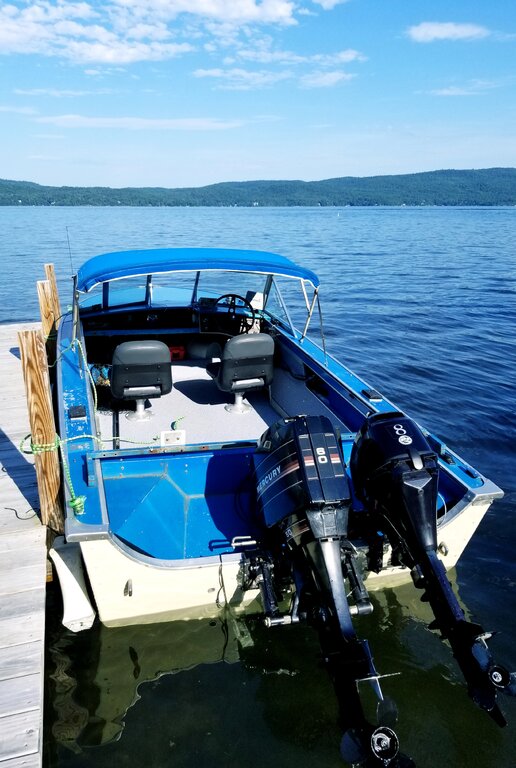 The reason I mentioned a bracket is what Andy is mentioning as it allows you to get the motor up and out of the water (i.e. not dragging which can mess it up) and because you have a greater range of motion for turning with the kicker.
 -
Given the size of your boat and weight considerations you may wish to look at a smaller kicker than a 9.9 and certainly one without trim/tilt as extra weight. Some of the Tohatsu's are lighter framed than the Merc's for example yet offer good performance. You might be able to get away with a 6 hp for that boat but an 8hp would do a great job and get you off the lake a little faster in an emergency. You could probably get out and away from any transom "obstacles" with a bracket and steering bar set-up hooked to your main motor. interestingly, I found that I could do away with the EZsteer setup when I moved from a 2 stroke to 4 stroke kicker (more torque). I just steer with my big motor unless it is pretty rough (3-6 footers). You may wish to at least experiment before actually buying and installing a steering hook-up.
-
Yes and even if they started today it will take many years before significant results really take shape given successful treatments as only the larval stage is affected by the treatment. It was a similar scenario in the 70's as far as the lampreys are concerned. Thye are a major factor in the problem but it is a complicated situation involving nutrient levels, and disruptions of the food web (e.g straining of the phytoplankton and zooplankton by Zebras and Quaggas decimating the key food elements above that young fish depend on at early stages). I don't think the previous problem on Cayuga a few years back was as complicated it was more related to lamprey levels per se. and it took awhile for the fishery to come back.
-
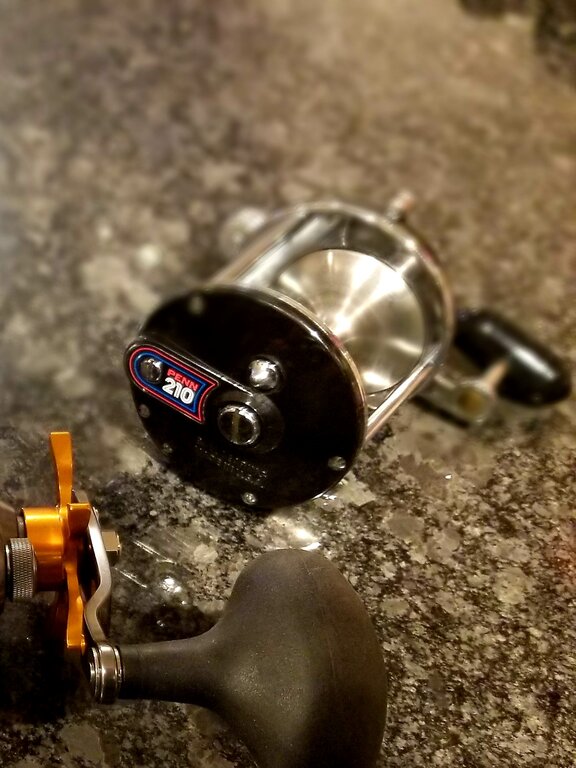
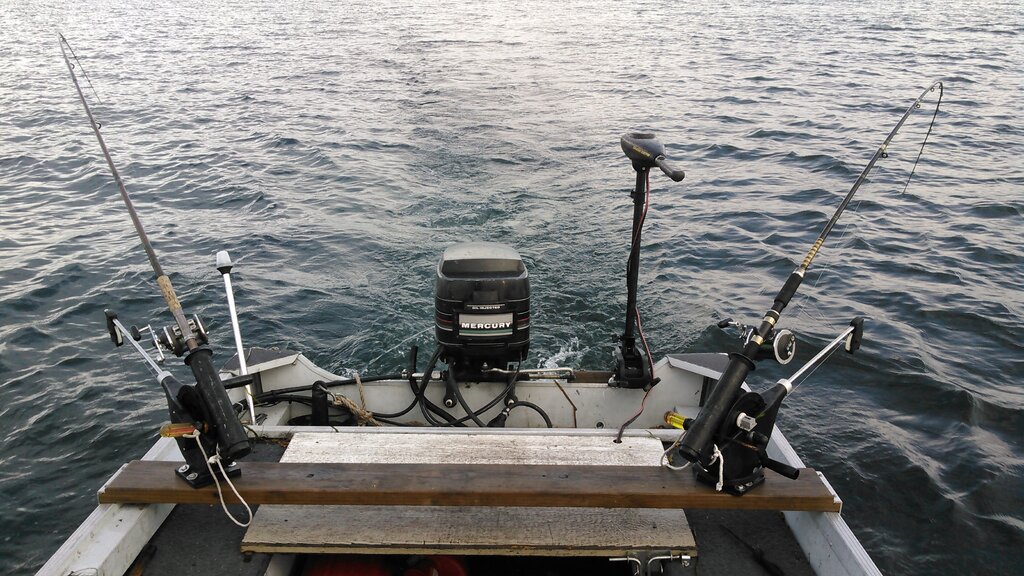 I should qualify what I meant by "slider" as it could be confused with what we use with downriggers which is totally different. These sliders are originally from the world of saltwater stillfishing and I adapt them in a number of ways to the fishing I do in fresh water. Here is a pic. Basically the weight is suspended from the large duolock snap and the yellow collar is rotated either clockwise or counter clockwise on the slotted part so it stays on your line. The weight can then slide up and down the mainline,or backing as desired and will stop at a swivel snap or if a split shot is placed on the line in a desired spot and then taken off when retrieved. If I wish to have a weight stay put somewhere on the line I use the offshore release type with the pinch pad and place it wherever I desire.
 -
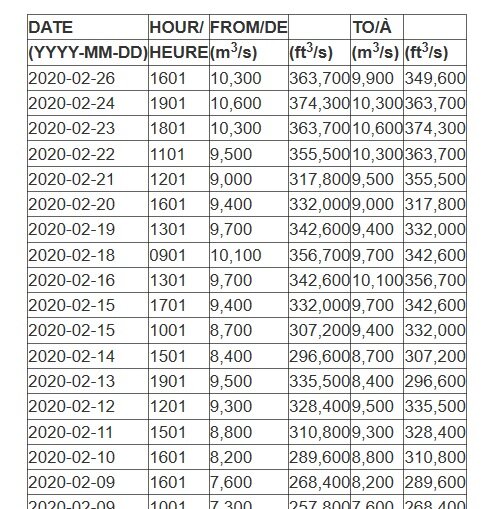 Um....if this an eye exam....I'm screwed
 -
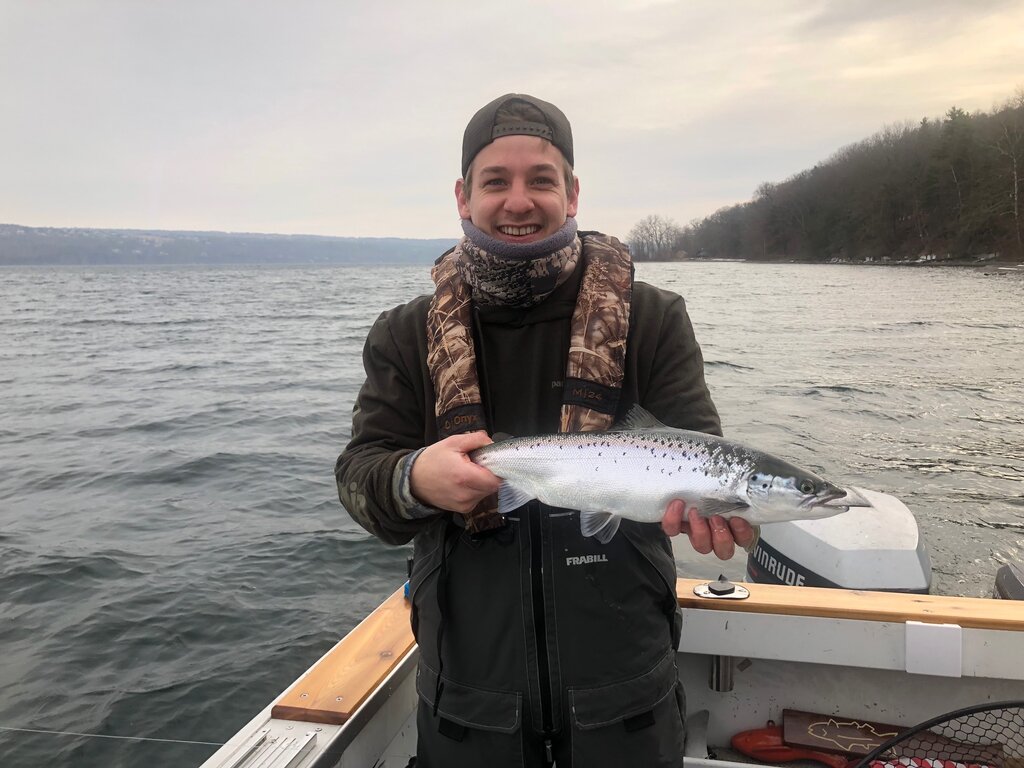 As far as the smelt as bait go.....if you have any Sutton #31 or 71's they might be just the ticket too
 -
You can do it a number of ways even having the weight on a slider going up and down the leadcore. I like the lure pulling the leadcore downward a little but depending on what I am running I do it both ways
-
I'd use the 320"s better drag system and a little more capacity. I have a couple set up for 5 and 7 colors with 200 yds of 30 lb backing. If you can find power handles for them it could help with the line take up. To get deeper just use snap weights before the leader connection; otherwise wire set-ups are better suited to the deep water stuff and bottom trolling for lakers.
-
 The bottom line here is that there isn't any one correct answer to the question.....more like "all of the above" as it is all good advice The price tag for all of the stuff mentioned (if you don't already have some of it is not insurmountable). Experiment - no one method or setup is "best" all of the time. as mentioned let the fish tell you which they prefer but by trying multiple things you'll learn a lot along the way too.
 -
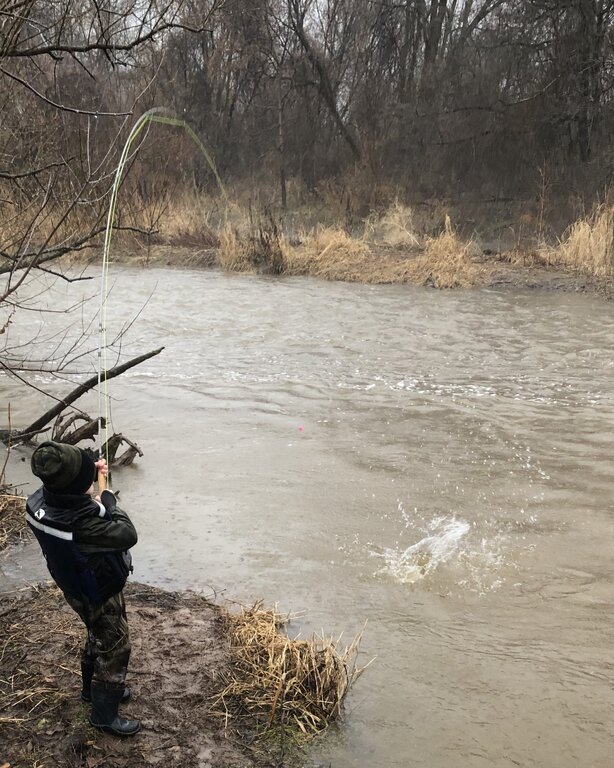 Ah sorry Horsehunter I did think you were referring to Lake O
 -
For a few years now three rods per person has been the legal limit
-
Earl - I re-read your post and I now see what you were asking about potential damage to the copper by not letting it out all the way and adjusting as needed to different lengths as desired. My hunch is that as long as the copper diameter was big enough as to not slip over the edge of the roller (and possibly catch) or the roller didn't twist such that the copper got wrapped up in it another possible concern would come with the connection of the copper to leader and the connection of copper to the backing (e.g. knots or swivel connections) going across the roller over time and wearing, but otherwise just the copper itself would probably be OK as those AFTCO rollers are pretty smooth running. Probably the most important consideration running the copper the way you are mentioning is that it will not be running at the same depth as when it is run as a dedicated set-up with the backing exposed. With a dedicated setup the copper wire is running roughly perpendicular to the water whereas with the other setup it is at an angle and depending on speed it will be losing quite a bit of depth because of that angle and water resistance against the wire as contrasted with it running perpendicular and the angle will be on the less resistant backing. You really won't have much idea where you are running depth-wise run that way but as a dedicated line it should follow the chart data somewhat (again depending on speed and wire diameter etc.).
-
-
I've been sharpening all my fillet knives on my new electric knife sharpener and mulling over the putting together of the new smoker My ice fishing stuff is already in the vehicle
-
I'm not sure about Lake George but in many of the Finger lakes where landlocks are they tend to congregate in late Fall right through now at the south ends of the lakes and can be found roaming the shallows as well as in the upper levels of deeper water and around creek mouths. At this time of the year the sawbellies go deep and are largely bottom oriented and the lakers often follow them out there in the depth near bottom but the salmon having a diverse diet and roaming "genes" seem to be all over and less predictable than lakers. I have caught them just under the ice in Keuka and rainbows and browns likewise on Canandaigua in water less than 30 ft.deep so they do roam around in shallower water in the winter time. I would be trying small say J7 Rapalas in silver and/or gold, small 2-3 inch spoons trolled at variable speeds (experimenting). The jointed Rapalas seem to tolerate higher speed and speed on turns a little better and just adding a large split shot about 3-4 ft above it can be productive and the floaters can go pretty shallow without problems A single color or two of leadcore can be productive with a red streamer run behind it on a small sized dodger too. It may pay to run lures further back than usual as it will slow them on turns which is in keeping with their metabolism now in the colder water.but don't assume that slow speed per se is totally necessary either because if they see something they view as vulnerable and are hungry they will go after it. I would definitely stay in the small to medium (at most) range for lures. I think you'll be OK with the strategy you mentioned above too. I have been told it is a somewhat fickle lake for silvers so you may have to "work" for them and cover a lot of water Don't be reluctant to try some "start and stops" intermittently along the way either.
-
X2 I'm with Rick At some point folks have to step back and realize what is best practice for the entire fishery aside from money and special interests.etc. The process of spawning itself should be respected according to species too (e.g. perch in the Fingers). We are often too short sighted in our approach and "blinded" by short term interests which in the long run can really screw us over no matter whether lake or stream is our primary concern.
-
Rob captured the essence of the decision. I have the X4D and a main reason I bought that particular model was the fact that you could have an additional display on your phone in addition to the main display. That allows my son to view the display on his phone from anywhere in the boat while I'm driving. I have found that the MAIN use however is the temp device itself and the Bluetooth functions aren't used as much as I thought as most of the time I just look at the display off and on and spend most of the time rigging stuff and deploying setups etc. I do like the down speed function of the X4D as it allows the ability to have a little better idea what your stuff is doing below surface (e.g. speed at the weight) and things like strength of the current (e.g. compared with surface speed and GPS speed on my finder) and what it might be doing to your lure action so I'm glad I got that model for my purposes at least. The Depth Raider and Moor Subtrol do a fine job of providing basic temp info etc. but sometimes the cable frays or cracks and the connection can become intermittent or unavailable. The Fishhawk probe depends on a 9 volt battery connection and probe seal integrity so it is really "six of one and half a dozen of another" I guess I have however thus far found my X4D to be flawless in performance and I know that the company has been flawless as well for any previous contact I have had with their other products in the past. Trevor Sumption the owner fully stands behind his products and I haven't heard of anyone that has reported anything different.
-
Try 32 # copper sink rate isn't that much different than 45 at that depth and can get more on the spool with 30 or 40 lb backing.
-
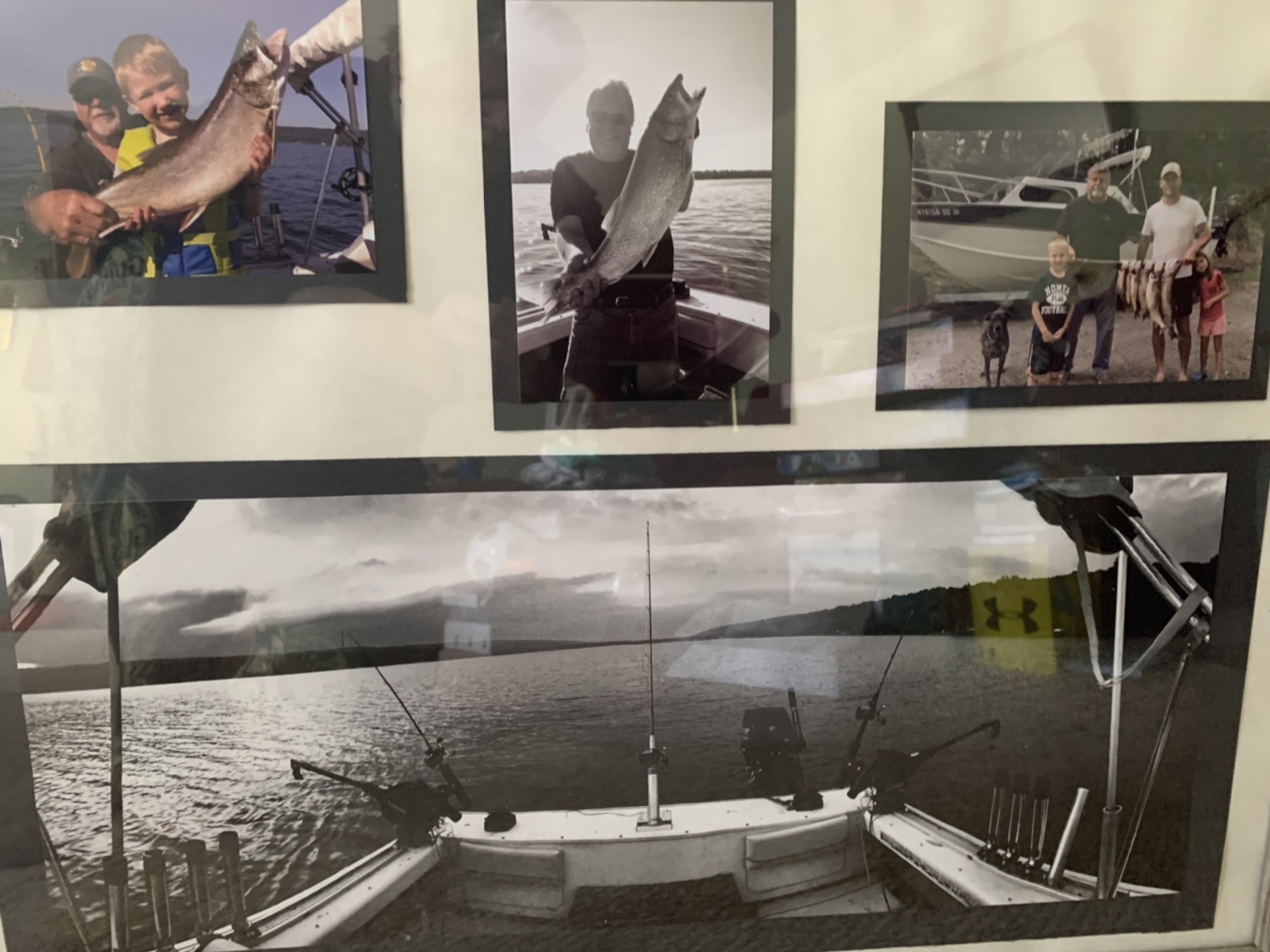 Doesn't get any better than that! Merry Christmas Tim and family.
 -
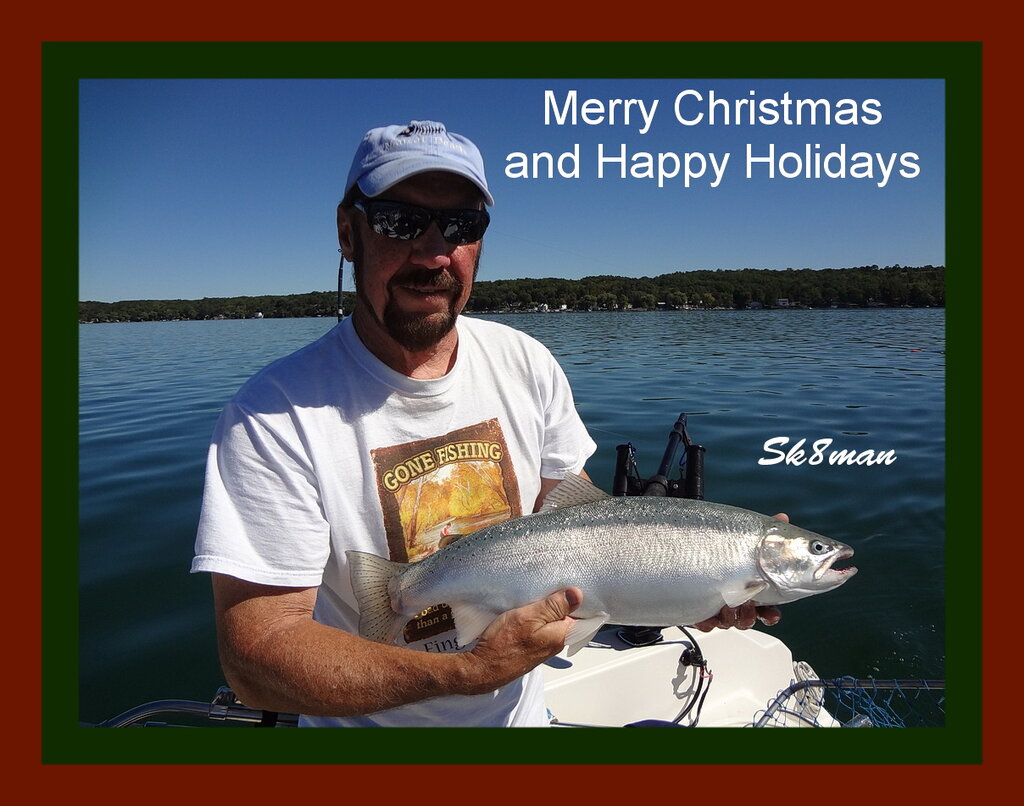
 Good one Hank Hope you have the best one ever!
 -
-
-
You don't always need huge temp differences either...sometimes just a couple degrees makes a difference with boards running right along the shoreline in just a few feet of water.
-
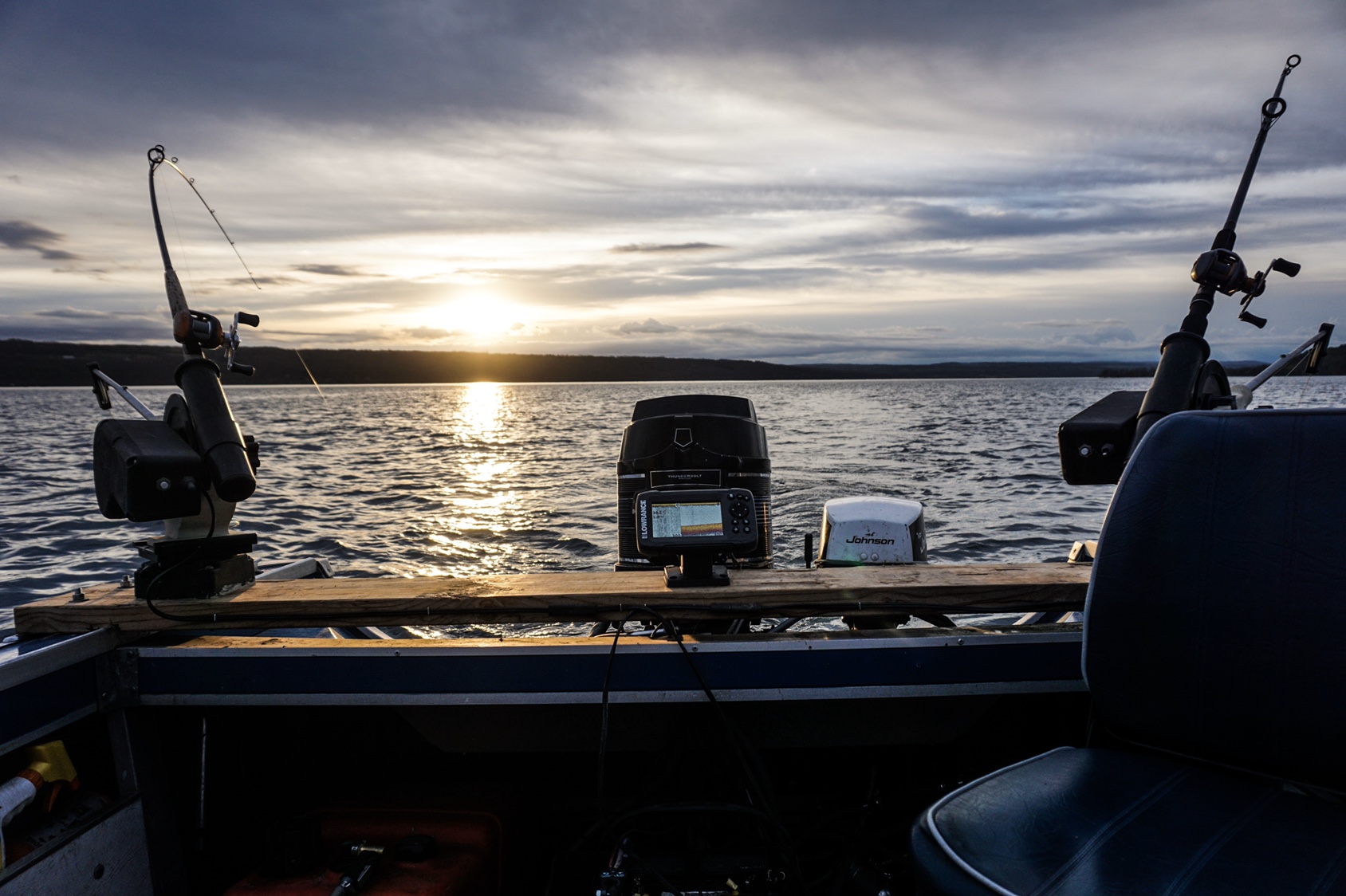 probably have to tell her there was a Wall Street journal and glass of NYS Riesling waiting for her if she grabbed the rod.
 -
If it was my wife all that would happen is one eye would open and then she'd go back to sleep