

Sk8man
-
Posts
13,929 -
Joined
-
Last visited
Content Type
Profiles
Forums
Events
Gallery
Store
Everything posted by Sk8man
-
 Merry Christmas Hank and all the LOU family. May each of you have peace, good health, and joy throughout the new year as well as good success fishing
 -
 Ditto on MCF's experience. Sore arm on the booster that is all. My wife didn't have anything but a slightly sore arm and she didn't have a reaction to the second Moderna shot either. Everyone's immune system seems different in its response.
 -
Mono for divers/flashers
Sk8man replied to HoundsNTrout's topic in Questions About Trout & Salmon Trolling?
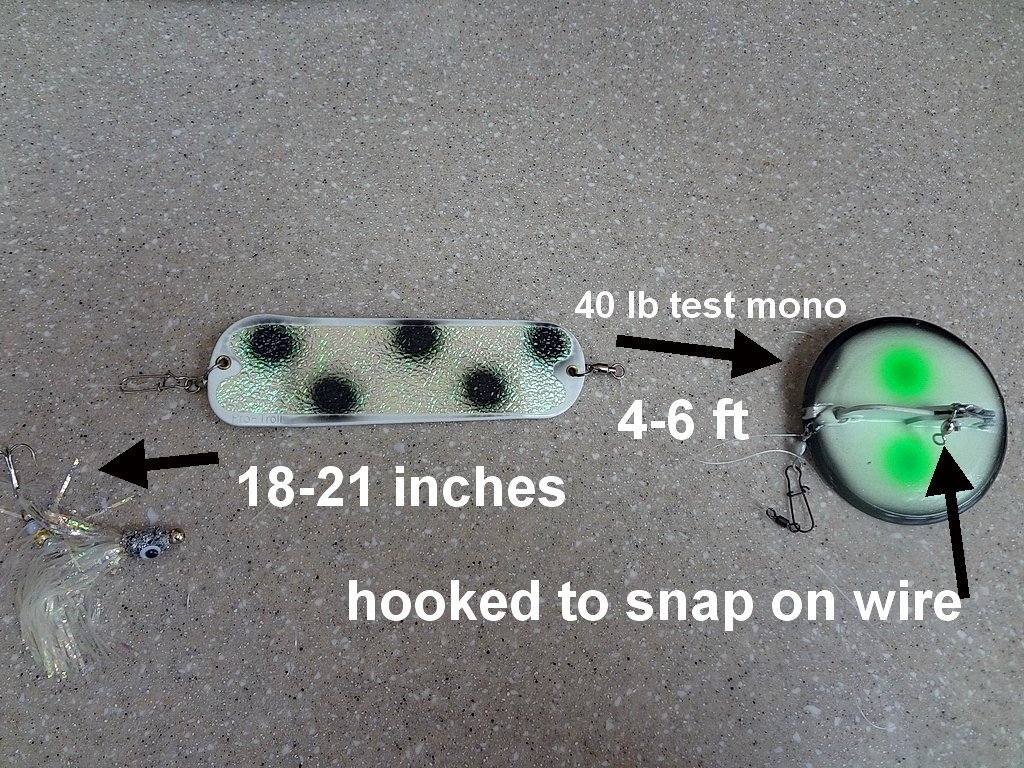 Your first question isn't as straight forward as it might seem. First of all it is difficult to tell exactly where a diver is located because there are many factors involved that you may or may not be able to figure on or figure out. The size of the diver makes a significant difference, your boat speed is a factor, the current strength under the water is another. By using a Fishhawk TD attached to your line you can get a fairly good estimate (perhaps within 5 ft or so). With wire (assuming 30 lb stranded) the achieved depth depends on the type/size of diver and the particular setting (1-3 on most). As a rule of thumb with the (now Dreamweaver) Deeper Diver (or perhaps magnums as well) I figure that on the zero to 1 setting I allow about 1.5 ft per ft wire to 1 ft. depth of diver at 2.0 mph or so (also depends on what you are using to measure boat speed), for a #2 setting 2 ft wire per ft of depth, and for a number 3 setting 3-4 ft of wire out per foot of depth.I also monitor the angle of my lines to try to compensate for current/variations in boat speed etc. These figures are based on my own experience in my own boat and which have been intermittently tested out by use of the TD and they may vary from other setups/boats so it should be considered a rough estimate. Regarding the swivels: At the end of the wire I use a large 100 lb or more test ball bearing swivel with a large duolock snap to attach everything to. Most of the time I run trolling flies behind divers or else meat rigs while running spoons from other setups. From the dipsy to the flasher or Spin Doctor I run a 4-6 ft. 40 lb test mono leader tied directly to the attractor swivel and then attach the loop of the (homemade) fly (18-21 inches long 50 lb test mono) to the rear of the attractor. If I use divers in shallow in the Spring for browns they are the small divers ( or for longer leads I use slide divers) with an 8 ft 15-20 lb test fluoro leader with a small Spro swivel three to four feet up the leader and a small Duolock snap at the lure end for spoons or for some tie directly with loop knot to a stickbait for example.
 -
Mono for divers/flashers
Sk8man replied to HoundsNTrout's topic in Questions About Trout & Salmon Trolling?
Again, different tools from the toolbox. The original concern was use of wire with divers. wire and divers is just one set of tools in the box. The depth ssituation has many solutions from the toolbox -
Mono for divers/flashers
Sk8man replied to HoundsNTrout's topic in Questions About Trout & Salmon Trolling?
It sure doesn't have to be an all or nothing situation for either type diver and they both work well when set up right. This stuff is kinda like a mechanic 's toolbox. You select the right tool for the job. The job here refers to lake conditions, type of stuff you are running, and species targeted along with the time of season - in addition to a lot other factors. It isn't a matter of one method fits all or one is wrong and the other is right. For example, uring the Spring or late Fall you may be running shallow in clearer water , or you may be targeting steelies in the upper portion of the water column out in the middle of the lake and stealth may be very desirable so using slide divers may be just the ticket to get out and away from the boat without the limitations of a standard magnum or Deeper Diver. On the other hand during the Summer when the thermocline falls deep or kings are located in the 42 degree ice water at 125 ft. the Deeper Diver will get down there with the least amount of line out with wire and you may not need a real long lead 9and maybe not fluoro as well). Again, selecting the tool designed for the particular job or circumstances can make life easier. Some folks may feel more comfortable or familiar with their own particular setup and that is fine as long as it works consistently. -
Mono for divers/flashers
Sk8man replied to HoundsNTrout's topic in Questions About Trout & Salmon Trolling?
Sherman I use both types and they both are effective at what they do best. I have had the deeper diver hitting bottom in 155 ft of water. The stealth of the longer leads with the slide divers is great in shallower applications or higher in the water column where you want to get away from the boat noise etc. but down deep they aren't the best option. -
 May not be worth getting riled up about....lot more important things to be concerned about right here in our own backyard
 -
Water depth and lure colors (Light spectrum penetration)
Sk8man replied to RupturedDuck47's topic in Finger Lakes Discussion
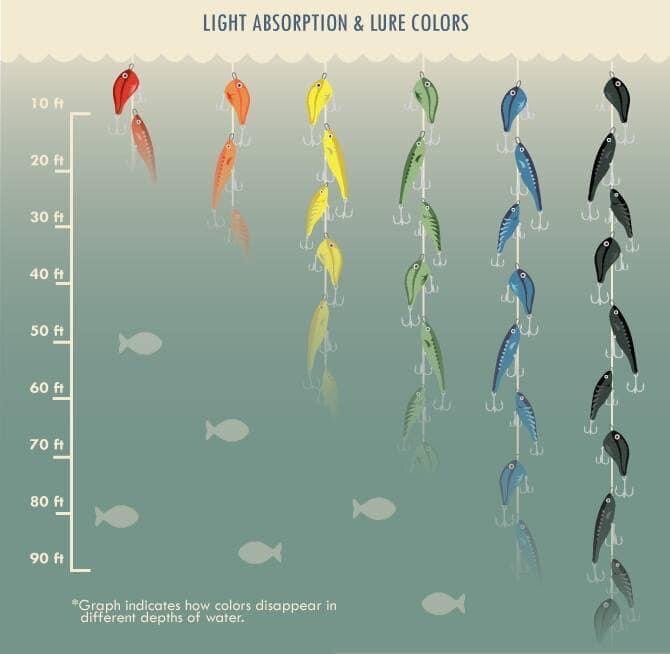 Just to underscore my point above a little further..... Light absorption measured by say a color spectrometer is one thing, but color perception is another thing, and fish color perception is another. When you do ANY experiment where conclusions are reached based on data - experimental control is an essential feature that is critical to arriving at any accurate conclusion, hypothesis or developed theory. It is very difficult to achieve in the natural environment and that is why most experiments are conducted in laboratories where conditions permit. What I'm saying is that to jump to the conclusion that the lure you put in the water will follow these charts even if the chart is developed in the lab in terms of accuracy has many problems with that jump from one thing to the other because there are too many variables involved with too few (if any) controls. Most highly developed organisms including fish and humans have a priority in terms of what stimulation their perceptual systems and brain interpret. Color perception is complex and brain involved while other more elementary aspects such as movement discrimination and object contrast (e.g. figure /ground discrimination) are thought to be more basic and rather instantaneous because they have important functions in the organism avoiding predators and disasterous circumstances. These features may be operating before the perception and interpretation of color takes place allowing the organism to protect itself by avoidance before being attacked by a predator, or to capture prey or other food before it gets away or others get it. What I am getting at here is that even in a well controlled experiment in a lab - let alone a natural setting there can be other things involved that may be responsible for a given behavior than the specific thing being looked at. Lure action and movement, and the contrast between figure and ground in my view comes way before color perception in terms of adaptiveness and it is hard to control for that and any conclusion reached may be faulty as a result. Even assuming the color chart is accurate what do you think happens on cloudy days, bright sunny days, heavy algae deposits in the water, effects of recent rain, mud being stirred up in the area, creek run-off and on and on. And then there is the introduction of fluorescent and UV lures.....way too many variables to make firm conclusions.
 -
Mono for divers/flashers
Sk8man replied to HoundsNTrout's topic in Questions About Trout & Salmon Trolling?
Slide divers are a whole different matter as they are usually run in the upper part of the water column and excel at that in terms of stealth etc. but for running deeper Deep Divers are the way to go. Slide divers don't offer much if any advantage in that regard. -
Mono for divers/flashers
Sk8man replied to HoundsNTrout's topic in Questions About Trout & Salmon Trolling?
An additional consideration regarding the dipsy leader and leader to spoon or fly; i know it may be considered blasphemy by many hard core fishermen but I use 40 lb Big game MONO rather than fluorocarbon for the dipsy leader and 50 lb test for my hand tied flies. The reason is this - mono has a bit of stretch which when using wire offers some desirable shock absorption while fluorocarbon does not and in my view may be more susceptible to failure especially at the knot. Thus with mono a snubber not necessary. I use flurocarbon leaders on all my toplines, downriggers etc. and shallow water applications where the increased stiffness of the line and reduced visibility can be of value but in the deep dipsy application where visual stealth isn't a factor and the lack of stretch isn't a plus and the lure is running deep most of the time I think mono is superior for that particular thing. I know others will have a very different view but something to think about anyway. -
 Something that can help battery life is to cut out a piece of styrofoam insulation in the shape of the base of the depth finder and place it at the bottom of it to keep it from direct contact with the ice I velcroed mine to the base of the cover. By the way, I am still on the same regular 9 amp battery that came with my Vexilar which I bought in 2005. I have charged it every single time upon return home from ice fishing and it has never gone below 40 percent charge after coming off the ice.
 -
Mono for divers/flashers
Sk8man replied to HoundsNTrout's topic in Questions About Trout & Salmon Trolling?
Cut the kinks out if not too much wire lost or replace wire: There are a number of ways to terminate the wire but the two most common are: a) tying the wire using a wire knot, and b) using a wire crimp. many folks use the first option while I use the second alternative. Although some people use shrink wrap I don't like it because you can't see what is going on beneath it (e.g. possible strand separations etc.). If using the simple wire knot everything is visible. Using the crimp method which a lot of people don't like because it is more tedious and has to be done correctly requires care but in more than 50 years of wire use (both dipsy and Seth Green rigs) I have never had a failure at the termination point. The key to it is making the termination into a unit rather than discrete parts where wiggling movement and bending can degrade the connection. This is done by CAREFULLY crimping the entire crimp sleeve so that it holds the wire without actually pinching it with too much force so that the ends of the crimp sleeve are closed as well as the mid portion (preventing wiggling of the wire against the edges of the sleeve) and attaching a high quality solid ring ball bearing swivel and then encasing the entire crimp and wire within it with CLEAR hot glue right up to the loop in the wire. This prevents any movement of the wire in the crimp sleeve and makes the connection a single unit and with the clear glue you can still see and monitor the wire condition and connection. A little more work than tying but pretty much "foolproof" -
Water depth and lure colors (Light spectrum penetration)
Sk8man replied to RupturedDuck47's topic in Finger Lakes Discussion
Many of these charts refer to HUMAN vision. The visual system of fish is very different than that of humans as they are thought to see parts of the visual spectrum (i.e. wavelengths) that we can't see so what is really going on in relationship to the chart is anyone's guess -
Mono for divers/flashers
Sk8man replied to HoundsNTrout's topic in Questions About Trout & Salmon Trolling?
Hounds you have been given some good advice from very competent fishermen here. The use of wire has a definite learning curve to it along with some important precautions and practices. First of all tension on the wire has to be maintained at all times whether in use or when stored. To start with you may need to let out a lot of wire with either a weight attached or a dipsy without anything following it to allow the wire to play out behind the boat while under tension and then carefully reel it back in so that it is evenly nested on the reel spool. This can help get you off to a better start. Usually the curly ques develop on the first few feet of the line toward the end and can result from either too little tension on the wire or result from a dipsy spinning in the water with an inferior swivel among other things. When you see the curly cues appear just cut off that few feet of wire and re-terminate with a good quality ball bearing swivel. Usually wire comes in 1,000 ft spools so if you have a kink that isn't too far up cut that section out and re-terminate. If too much wire is cut your line counter will be less accurate though but even up to 100 ft could be lost without it affecting the functionality of things (still 300 yards of wire which is the length of a football field). Always keep your wire tight on the rod and the reel and when you are letting out a dipsy. Let it out slowly by using the clicker with the drag loosened NOT by the free spool lever. Try to keep the boat straight while letting out wire so it doesn't get into other setups. If you follow this process you should have fewer mishaps or problems. Wire (or the braid specifications already mentioned) is the way to go with dipsys. The key to it is patience -
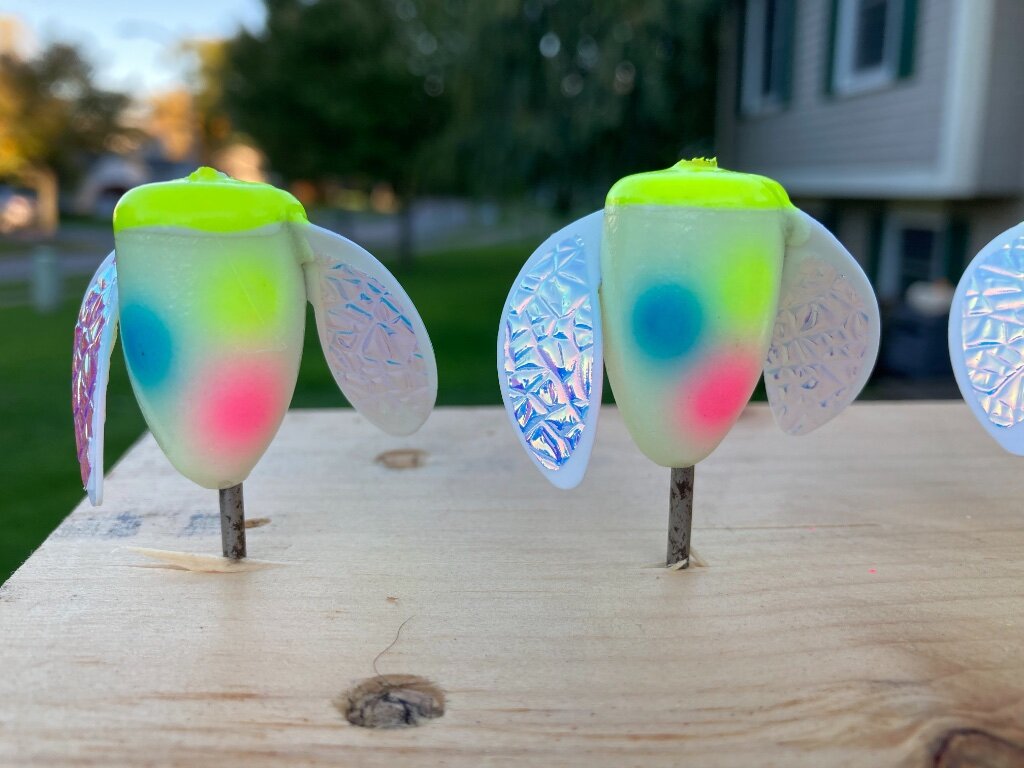 Looking good Brian
 -
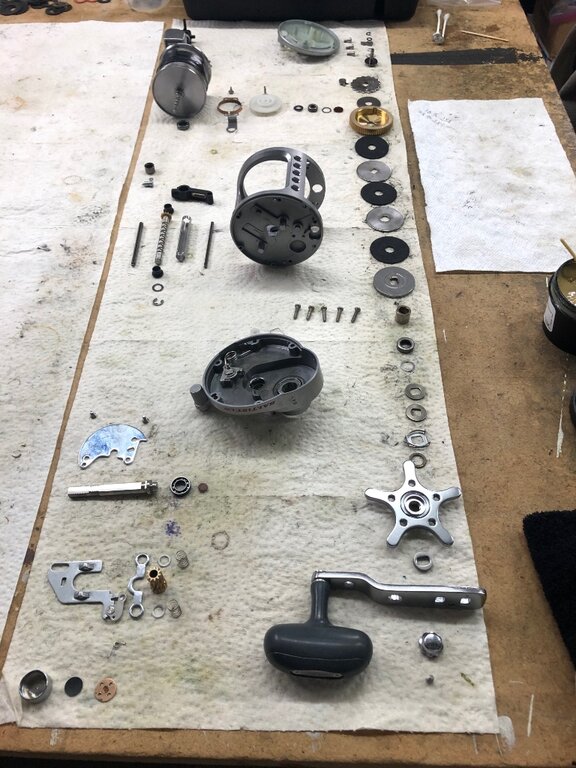 Might want to wait to see the new Saltists with the relocated line counter before deciding anything
 -
 Or in terms of their main objective nearly 50 years ago when Nixon established a relationship with them.
 -
The China problem is not new and how does it relate to electric powered vehicles etc.? They are the chief miner of Lithium and they are presently courting Afghanistaan which has huge deposits of it. Here is something I wrote about the emerging China problem more than ten years ago:
-
Man is that ever right on target. Folks can continue to keep their head in the sand and ignore the reality but we are on a definite collision course with China and have been since Nixon opened up relations with them. Their clear goal is to be number one in the world and to dominate the world and its resources and they have made substantial progress toward that end.They already own us and much of our technology. They have even reportedly announced to their population to prepare for war. We are asleep at the switch. They have been preparing for a long time for this and Taiwan will probably be "tipping point" and perhaps sooner than later. This is not the time for a totally incompetent government which we now have. Gloom and doom....yes and rightfully so.
-
This might sound counter intuitive but when the wind gets to about 10 mph from north or south on most of the Finger lakes you have white caps, and for perch fishing it is very difficult to either drift, anchor, or keep over the fish with Spot Lock on an electric trolling motor. With a wind from other directions despite it being higher velocity it may be possible to locate in a bay or protected area on the side of the lake the wind is coming from as many of the Finger Lakes such as Canadaigua have wooded steep sides which can block some of the wind velocity. You may be stuck either anchoring up with anchors in the front and back or trying to hover in place with Spot Lock though with higher gusts.
-
Sold / Closed Twin Minnow lures
Sk8man replied to Copperliner's topic in Classifieds - Buy, Sell, Trade or Rent
Very worthy activities -
Sold / Closed Twin Minnow lures
Sk8man replied to Copperliner's topic in Classifieds - Buy, Sell, Trade or Rent
The black with the white belly is by far the best one as it is thought that the action and appearance is thought to closely resemble the Slimy Sculpin (Stonecat, Tomcat etc.) which lakers love.They are deadly behind single strand copper trolled slowly near bottom. Easy paint job on those pictured -
 Which model is that one? great pics
 -
Wire and Copper "repair" ? or toss it?
Sk8man replied to HoundsNTrout's topic in Tackle and Techniques
One of the main things to consider is "confidence" in your equipment and line (whether wire or not) being a major component. The copper wire loss of 100 ft. could either be made into a 200 ft or scrapped and another new 300 ft. put on. Copper wire can be spliced but it is never as strong as the original new wire and constantly running over the guides and tip can degrade it further. A 300 ft. spool of copper isn't real expensive and what price is confidence in your equipment worth? With stranded wire (I'm assuming as you didn't say "stranded") a loss of 100 ft usually isn't critical as the 900 ft left equates to the length of three football fields which should still give you plenty of room to play large kings etc. The loss of the 100 ft may however affect the accuracy of your line counter but even that shouldn't be a major concern. -
Wanted WTB Michigan stinger scorpions
Sk8man replied to sammygee's topic in Classifieds - Buy, Sell, Trade or Rent
 Nothing like good karma Sammy