

Sk8man
-
Posts
13,929 -
Joined
-
Last visited
Content Type
Profiles
Forums
Events
Gallery
Store
Everything posted by Sk8man
-
Cannon Retro Ease Retrieve Questions
Sk8man replied to FishingSkrip27's topic in Tackle and Techniques
Yes the original ones were stiffer than paracord too and a little larger diameter but high quality paracord 's tensile strength is greater than most rope. If the length is right it should work it is just intended to get the cable back to you so the weight shouldn't be all that great. I use it for my safety lines on my Seth green rods -
I run both coppers and leadcore's with 20-30 ft fluoro leaders 20 lb test and 12 lb for Spring browns. Dipsy deeper divers with 4-5 ft leads of 30-40 lb mono to Spinnys, 6- 8 ft for flashers/flies. If I feel adventurous longer leads and handline fish but not a lot of fun for kings. For longer leads on the divers I use slide divers and often one with the added ring and one without.
-
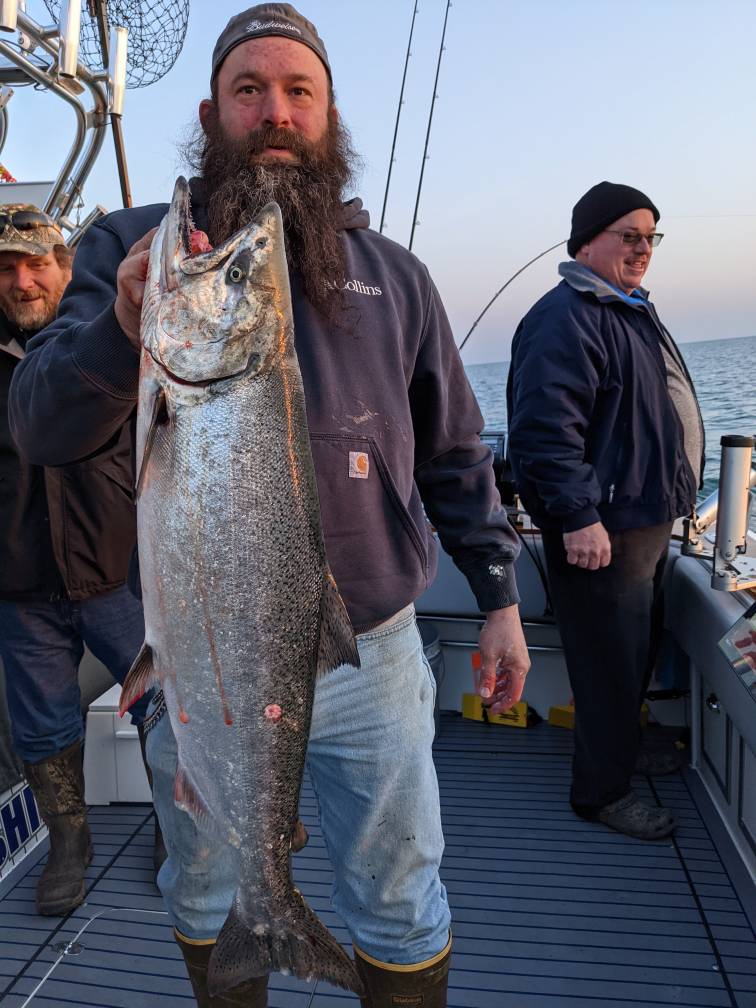 Great results and report Rick
 -
 Parker's are wonderful boats and if I weren't such a "Whaler nut" I'd be in one right now and this one looks exceptional.
 -
Sold / Closed 1974 21' Starcraft Chieftain - Good Condition New Price No Motors
Sk8man replied to jkxxx's topic in Boats for Sale
Right after the title above it says sold -
for sale : usa WTB Fish Hawk x2 Mount
Sk8man replied to bigwalleye's topic in Classifieds - Buy, Sell, Trade or Rent
RAM mount with suction cup so it can be moved about if needed -
Cannon Retro Ease Retrieve Questions
Sk8man replied to FishingSkrip27's topic in Tackle and Techniques
Good quality paracord should work fine. -
Sandy small boat` n
Sk8man replied to HB2's topic in New York Fishing Reports - Lake Ontario (South Shore)
I think you have a lot of company in that regard. Not sure what is going on out there but sure seems abnormal for this time of the season. -
I think they usually come out with a new syllabus in April may not be out yet.
-
 I appreciate the sir......but I was only a Sargent
 -
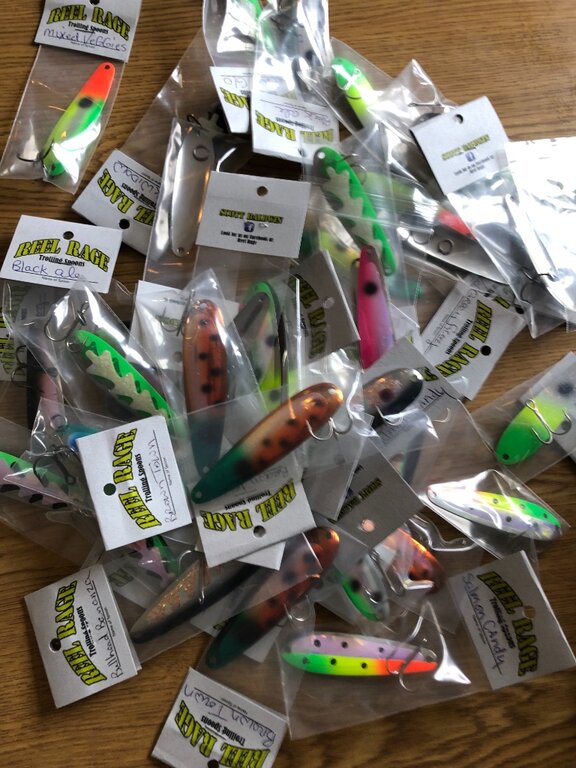
He does a beautiful paint job on them and they hold up better than a lot of others. I purchased a couple to try at the Watkins show a couple years ago and they have performed well.
-
Where are the fish??
Sk8man replied to brucehookedup's topic in New York Fishing Reports - Lake Ontario (South Shore)
 I guess I should have been more specific The one I caught was down 40 ft over 200 ft. When I used the term deep I meant as in Lake O deep 300 -700 plus
 -
.jpg.58580fac231f4f1c0cc956c3b1866aec.jpg) Sometimes "old school" can be the best school Ray Netcraft has served me well too over many years
Sometimes "old school" can be the best school Ray Netcraft has served me well too over many years -
Where are the fish??
Sk8man replied to brucehookedup's topic in New York Fishing Reports - Lake Ontario (South Shore)
And the puzzle continues..... I haven't seen anything on here that indicates that the browns are being seen in numbers near or in tribs after the rainbow eggs either. Puzzling but disturbing as well. The only time I have ever caught a brown out in the real deep water was here on Canandaigua Lake during the month of June and it was on a Seth Green rig and the fish was about 40 ft down. They are much more "home bodies" than Atlantics etc. Especially troubling is the lack of small browns being caught for awhile now. The uptick in the cormorant population in last few years taking its toll? Any relationship to the dwindling population of smelt in the shallows at this time of year (ongoing for quite a few years)? -
Where are the fish??
Sk8man replied to brucehookedup's topic in New York Fishing Reports - Lake Ontario (South Shore)
I don't have a clue about the smaller browns but I think Brian may be right about the larger ones. Even in the Finger Lakes the browns often can be found in that 30-80 ft or so right near bottom and near pods of small alewives with perch also mixed in feeding on them. The common mistake is to think they are lakers on bottom much as the case for mistaking kings near bottom for lakers in Lake O during the summer in the ice water. The browns have a pretty varied diet too so shad, fatheads emeralds etc. may be out there deeper too so they may be getting a break from the gobies. -
Every species has its proponents and detractors
-
I hear you on the bending of blades Ray. I still do use the smaller sets on riggers or the #4 hammerheads. I also have made my own smaller ones from large willow leaf and Colorado blades and downrigger wire
-
The Fed laws still apply to the airlines etc. too so folks can't get too "comfortable"
-
for sale : usa Custom painted trolling spoons
Sk8man replied to Dlott's topic in Classifieds - Buy, Sell, Trade or Rent
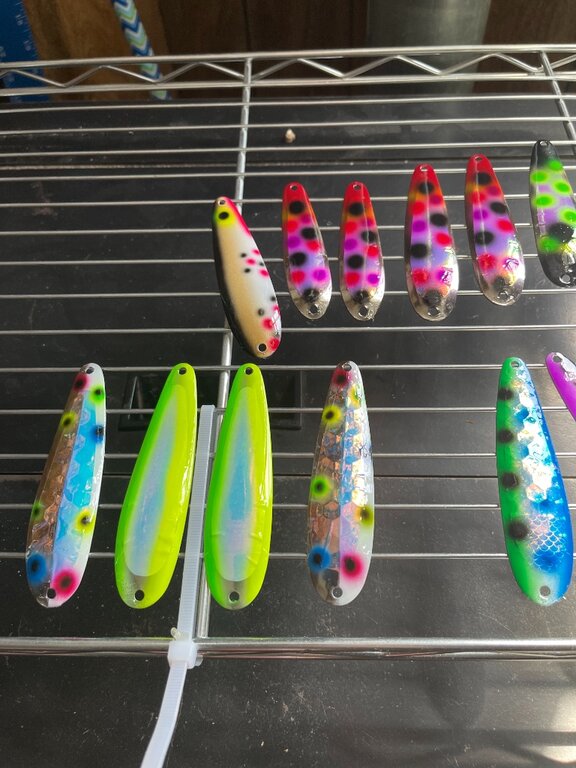 Looking good
 -
I've fished for lakers for well over 50 years on the Finger Lakes and Lake Ontario and I've owned and used about every type of cowbell setup (Millers, Luhr Jensen Dave Davis, Les Davis and 3-7 blade) run from hand, rods, victrola, A and S automatic etc. and used peanuts and Spin N Glows behind them since the 1970's. The Hammerhead cowbells with less drag in the water with Gambler rigs behind them are hands down the most effective weapon against lake trout and although the attractive color patterns may be a factor ANY of them work on lakers. I don't even bother running my heavier "old school" cowbell setups now. You can trust Brian for the best info on use of laker setups and he takes a lot of pride in his products. For folks unfamiliar with "old school" cowbells here are examples:
-
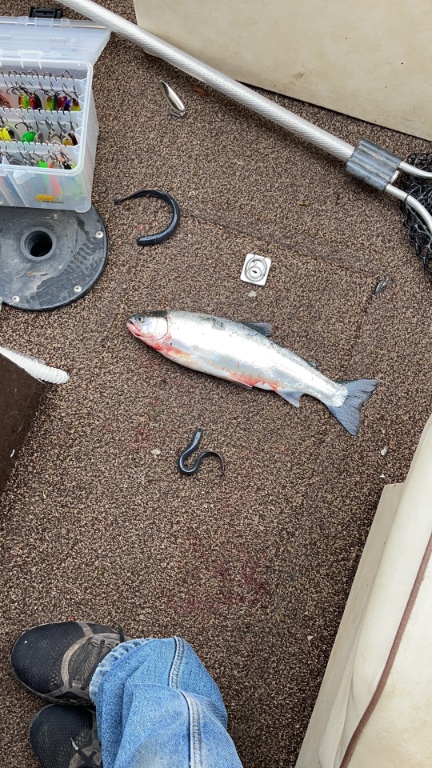 It would be nice to get a repeat in the derby
 -
Nice going Mike
-
Not sure where you are coming from but if Union Springs is t in the path : U.S. Lakeside Bait and Tackle Rt. #90 315-889-9038
-
Wanted Looking for a Cabelas 8 position pedestal rod holder in good condition
Sk8man replied to Sk8man's topic in Classifieds - Buy, Sell, Trade or Rent
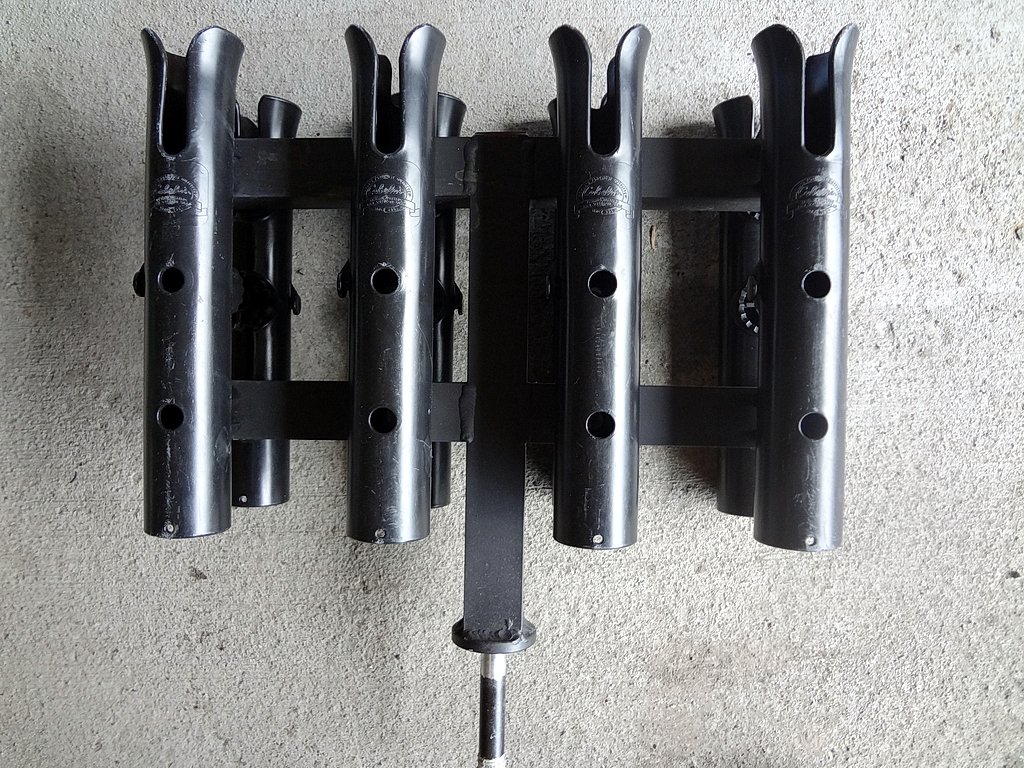 Thanks for the info and I appreciate you taking time to respond but I think the price is higher than it was brand new. For now I've cobbled up my old one
 -
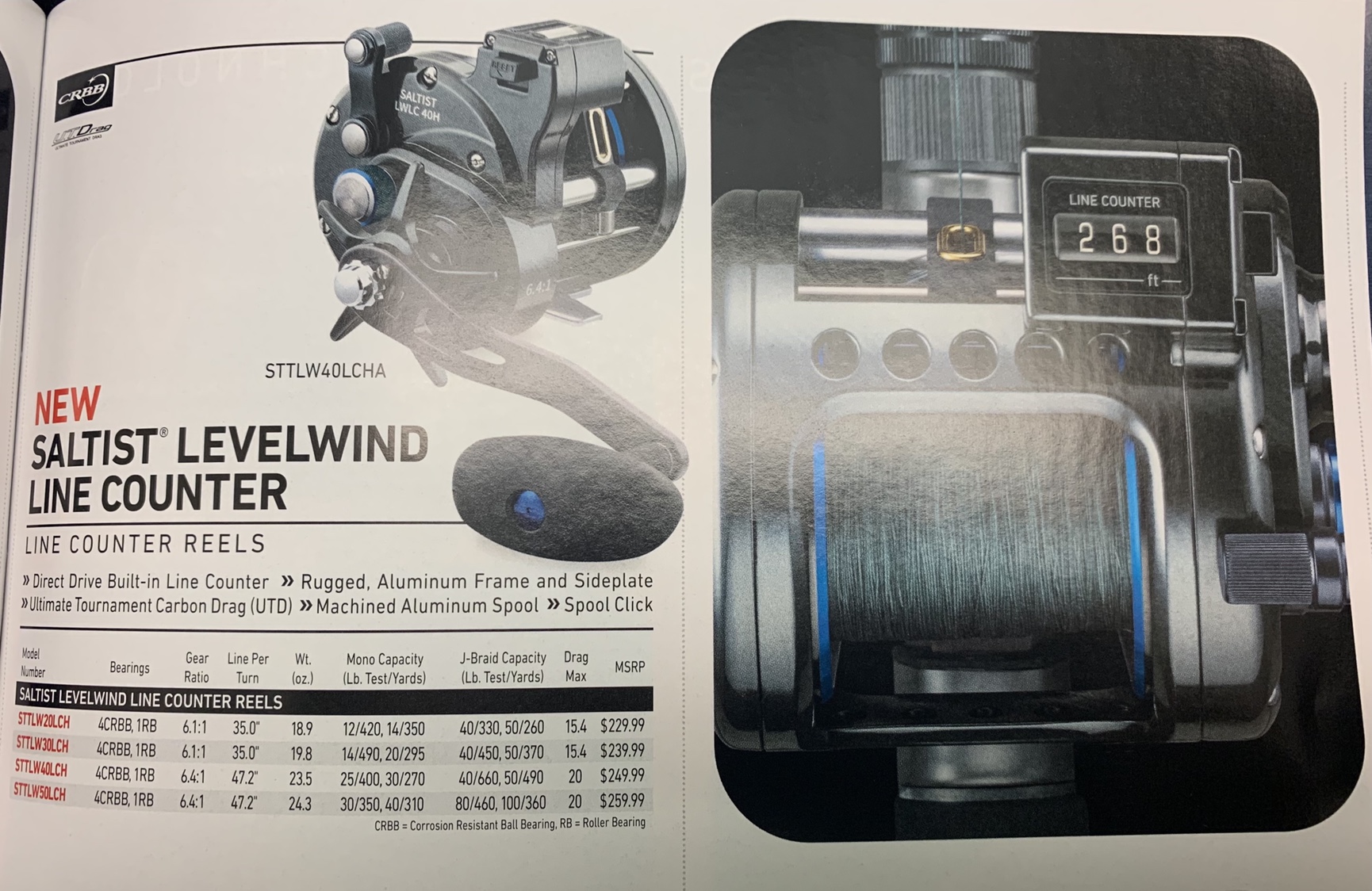 Maybe they will re-position the line counter on a new model and that would be sweet.