

Sk8man
-
Posts
13,929 -
Joined
-
Last visited
Content Type
Profiles
Forums
Events
Gallery
Store
Everything posted by Sk8man
-
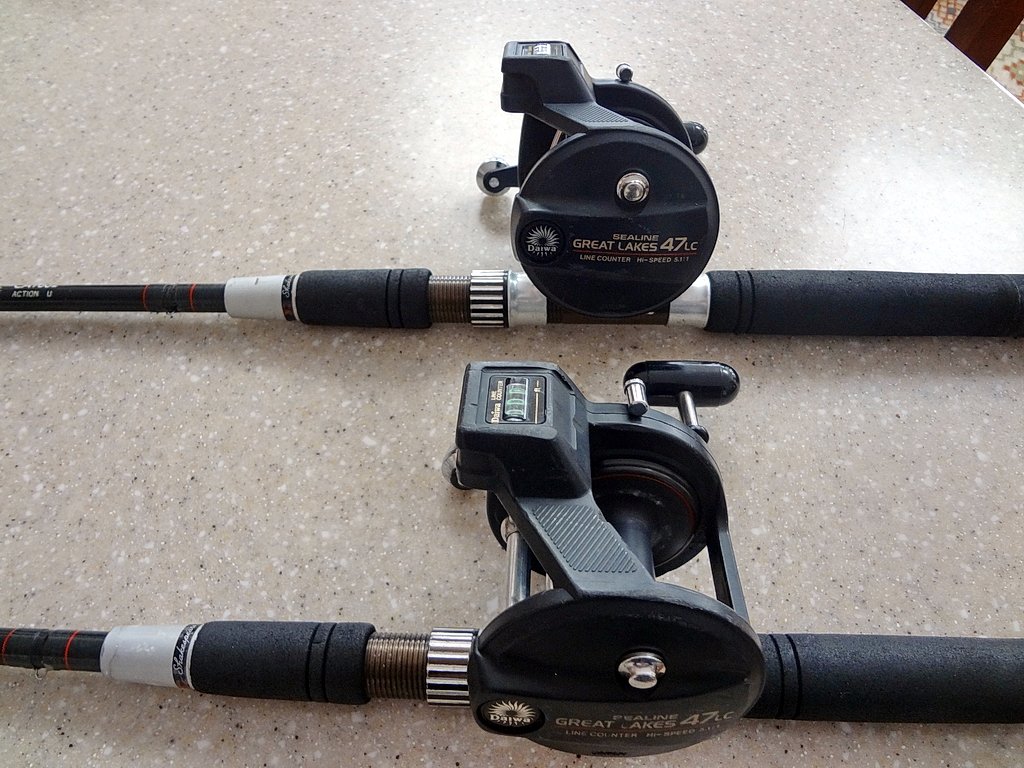
Sold / Closed 2 Diawa Great Lakes 47LC Hi-Speed 5.1 ratio reels on 8 ft Shakspeare Salmon/Steelhead rods
Sk8man replied to Sk8man's topic in Classifieds - Buy, Sell, Trade or Rent
 Thanks Johnny especially for the "young" comment was great meeting up and chatting and glad you survived the snowstorm
 -
Sold / Closed 2 Diawa Great Lakes 47LC Hi-Speed 5.1 ratio reels on 8 ft Shakspeare Salmon/Steelhead rods
Sk8man replied to Sk8man's topic in Classifieds - Buy, Sell, Trade or Rent
Lipripr no hard feelings from this end. Hope you find what you're looking for. -
 Sure better than a good day at work Kevin You guys are a dangerous pair
 -
Sold / Closed 2 Diawa Great Lakes 47LC Hi-Speed 5.1 ratio reels on 8 ft Shakspeare Salmon/Steelhead rods
Sk8man replied to Sk8man's topic in Classifieds - Buy, Sell, Trade or Rent
SOLD -
-
Sold / Closed 2 Diawa Great Lakes 47LC Hi-Speed 5.1 ratio reels on 8 ft Shakspeare Salmon/Steelhead rods
Sk8man replied to Sk8man's topic in Classifieds - Buy, Sell, Trade or Rent
Nothing illegitimate about it. You contacted first with your post but wanted me to drive over an hour way I PM'd you indicating that it was too far away. I mentioned in my initial post "meet within a reasonable distance" I didn't think going to Batavia was reasonable from my standpoint. The person buying the offering is willing to meet me at the Thruway exit here where it is much closer and convenient. I didn't really have to explain myself after your above response because the decision whether to sell or not to sell is entirely mine and I resent your questioning the legitimacy of it. -
Sold / Closed 2 Diawa Great Lakes 47LC Hi-Speed 5.1 ratio reels on 8 ft Shakspeare Salmon/Steelhead rods
Sk8man replied to Sk8man's topic in Classifieds - Buy, Sell, Trade or Rent
SOLD pending payment -
Sold / Closed 2 Diawa Great Lakes 47LC Hi-Speed 5.1 ratio reels on 8 ft Shakspeare Salmon/Steelhead rods
Sk8man replied to Sk8man's topic in Classifieds - Buy, Sell, Trade or Rent
Johnny you also have a PM -
Sold / Closed 2 Diawa Great Lakes 47LC Hi-Speed 5.1 ratio reels on 8 ft Shakspeare Salmon/Steelhead rods
Sk8man replied to Sk8man's topic in Classifieds - Buy, Sell, Trade or Rent
Lipripr you have a PM -
Sold / Closed 2 Diawa Great Lakes 47LC Hi-Speed 5.1 ratio reels on 8 ft Shakspeare Salmon/Steelhead rods
Sk8man posted a topic in Classifieds - Buy, Sell, Trade or Rent
$55 each or $100 for both I upgraded the rods and reels to new while these reels were at Tuna Tom's for new carbon fiber drags a while back so didn't put any line back on or use them after that. No line on them. Pick up in Canandaigua or meet within reasonable distance. Cash or check only no Paypal etc. No shipping. Used mainly in Finger Lakes and at the time and I wanted something heavier duty for kings. Good for Finger Lakes, Spring Browns, or Walleye fishing. Good shape with slight boat rash. -
I know it isn't the exact size etc. but you can use aquarium air line tubing too
-
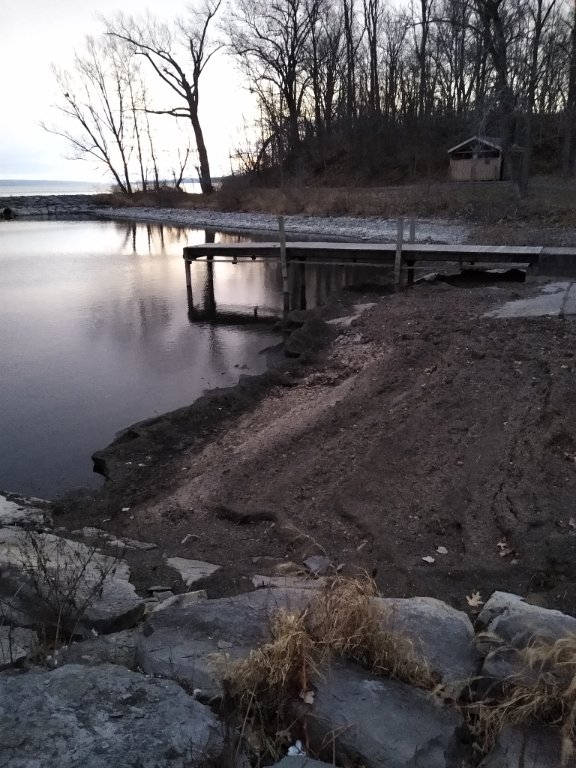 Or is it a mirage?; "water, water everywhere and not a drop to drink"
 -
Can make a big difference. I have run power handles on every reel I have that they make them for (e.g. Penns, Okumas etc.) They are worth the money to do. Other reels i have done exactly as described by Rob where they allow for it..
-
Rigging a bowrider for trolling
Sk8man replied to nrd7555's topic in Questions About Trout & Salmon Trolling?
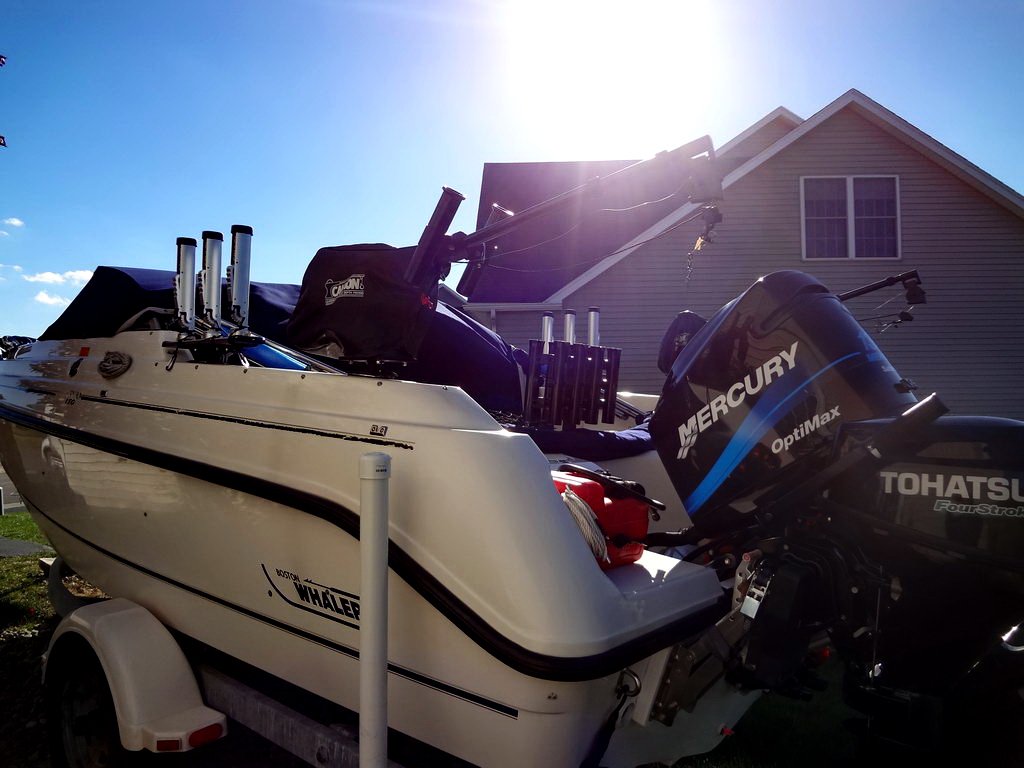 JD gave you some good input and ideas and some of it will depend on whether you have access underneath to reinforce things (e.g. aluminum plate). Given the multiple use for the boat the board on back idea may be worth serious consideration as it could be taken on and off. May be able to use the rear cleats as additional supports to help secure it (e.g. U bolts or something?). The gimbal approach also requires a very secure fastening below to prevent flexing of the fiberglass.
 -
Church walleye board keel weight
Sk8man replied to troutman10's topic in Questions About Trout & Salmon Trolling?
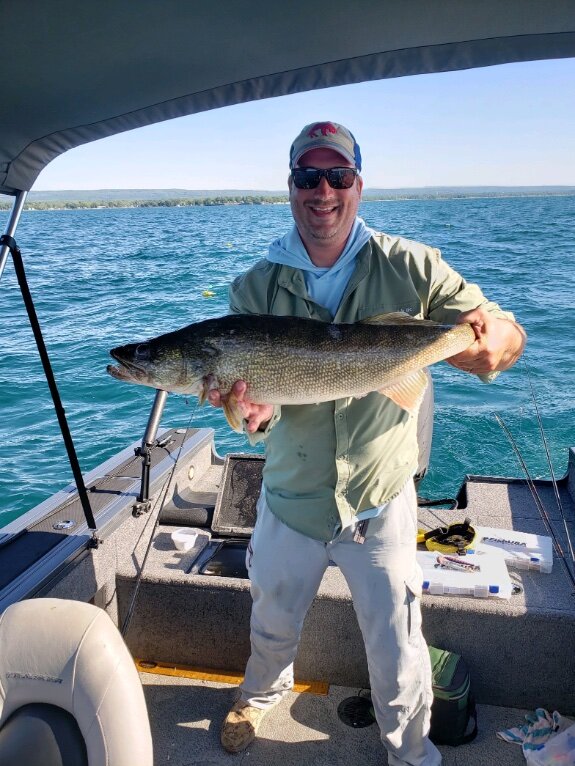 If too much weight is causing the board front end to rise up in the air the weight needs to be adjusted forward. If the front edge is digging into the waves too much it can be adjusted back a bit. For most situations I leave it dead in the middle. I can run a 300 copper or 10 color with it in this position usually but anything bigger than that I run them from ;larger boards.
 -
I think Legacy hit the nail on the head. There are trade-offs and personal preference once again rules
-
Church walleye board keel weight
Sk8man replied to troutman10's topic in Questions About Trout & Salmon Trolling?
You leave it on to balance the board. It can be adjusted or positioned fore and aft depending on how the waves are or whether you are running something with a lot of drag. -
Evil eyes new price 75.00 shipped!
Sk8man replied to Dirty Goose's topic in Classifieds - Buy, Sell, Trade or Rent
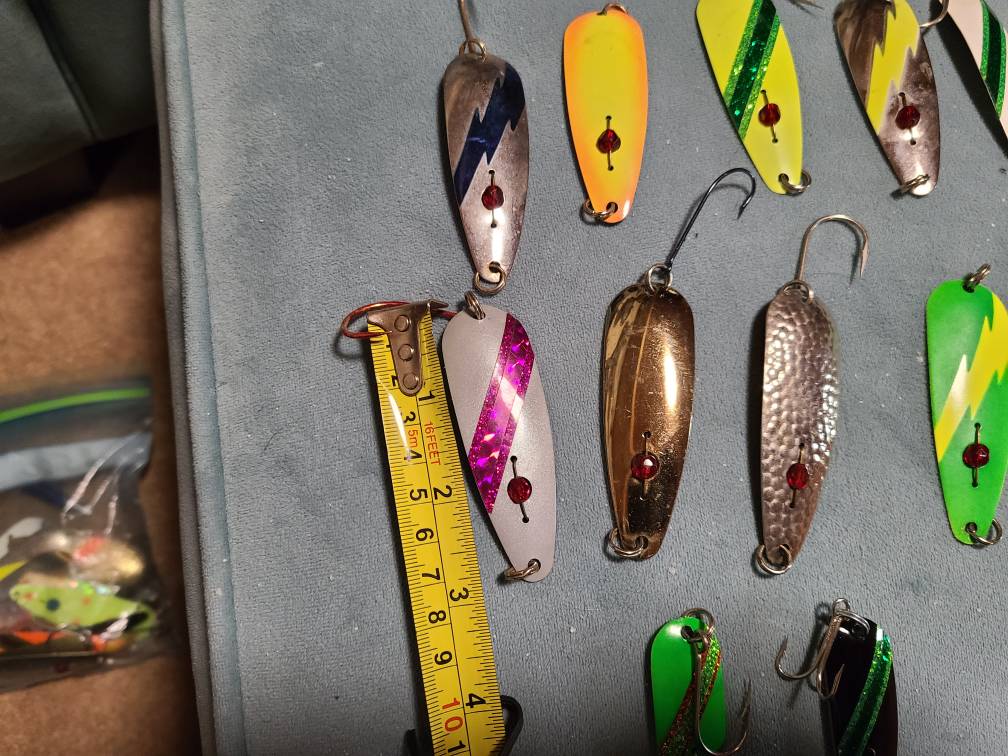 Hey good strategy I may try it
 -
Evil eyes new price 75.00 shipped!
Sk8man replied to Dirty Goose's topic in Classifieds - Buy, Sell, Trade or Rent
Going to have to build an addition to house things pretty soon John -
Evil eyes new price 75.00 shipped!
Sk8man replied to Dirty Goose's topic in Classifieds - Buy, Sell, Trade or Rent
I'm really surprised someone hasn't jumped on these. there are some real good ones in there. If I didn't already have so many I would be on them -
That is the stuff. Their Blue Label may be a little harder coated but I use the red label all the time with good results so either one is suitable for most of the fishing that we do. If you do a lot of fishing around brush piles or sunken trees they make some types that seem to hold up well in that environment or for salt water use.
-
I imagine others will chime in here but I use Seaguar and have had great luck with it. You can buy most of it in 200 yd spools (e.g. Red Label etc.) There are various versions of it that may suit other types of fishing too. I have had good luck with both Red and blue label types (the red is usually less expensive). I use 10 012 lb for the Finger Lakes and 20 lb for Lake O. Whatever you do stay away from the Berkeley Vanish it is total crap and breaks very easily. There are other good brands out there as well as the Seaguar too.
-
 Really beautiful Bill. Looks like he's ready to jump of his lap
 -
Good question although it is like comparing apples to oranges in a way (eg. they are both fruit or line) but having different characteristics so the comparison depends largely on USE. Monofilament line has some stretch to it - some brands more than others (e.g. SeaFlee has a lot while Big Game has relatively low amount). Some brands or even lines within brands are more limp while others an outer coating making them harder, stiffer, and more resistant to abrasion while being less flexible. Fluorocarbon lines in general are stiffer than most mono lines and may impart a little different action to lures as a result. They tend to be more abrasion resistant than a lot of mono lines but the various brands and specific line versions of both differ in this regard (e.g. Seguar Blue label vs. Berkeley Vanish) as well as breaking strength. One of the most touted features of the fluorocarbon lines is that is is "virtually invisible to fish" underwater. I have always been suspicious of this claim and remain so because how was this determined? I suspect that there were not many fish respondents to the question and human eyesight is radically different than that of fish. I will say however after using both types of line I believe that the number of fish strikes is greater for fluorocarbon but the reason is unclear as they operate slightly differently in the water much as does copper and leadcore. If you do a lot of winter fishing mono may be the way to go as it doesn't stiffen as much as fluorocarbon line in the extreme cold and may be a little easier to tie knots I use 50 lb Big Game mono for tying my trolling flies rather than fluorocarbon because it has more stretch which seems advantageous with wire dipsies as I have had commercial fluorocarbon flies break from the instant shock of kings hitting, but never the 50 l b mono....mainly a personal preference like most of the other issues encountered. Like a lot of fishing stuff there is a lot of marketing hype surrounding the claims rather than hard fast valid research evidence for the claims
-
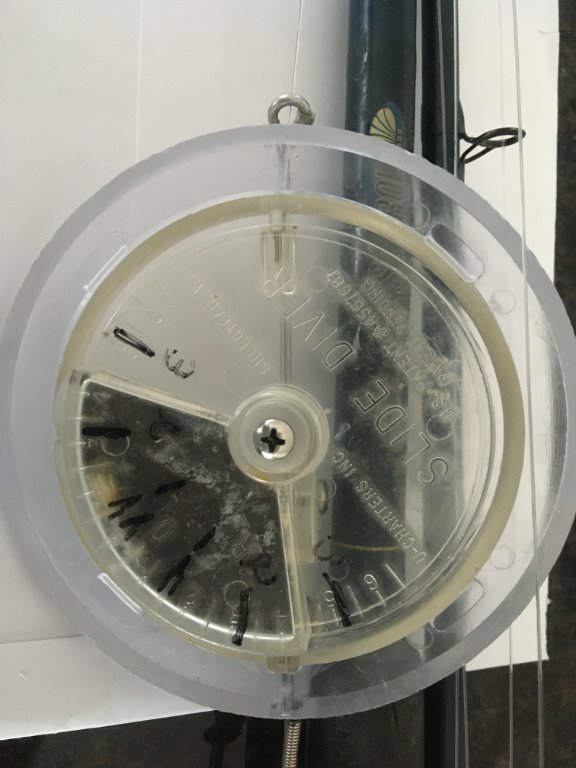 It was good on target information mr580