

TyeeTanic
-
Posts
1,560 -
Joined
-
Last visited
Content Type
Profiles
Forums
Events
Gallery
Store
Everything posted by TyeeTanic
-
 I'd call this parenting failure, and to be honest community failure. We get to nicey-nicey with the kids ... don't teach them respect, let them run around like savages ... they don't say please and thank you, hold doors open, greet people properly ... and it just ends up getting worse. That didn't happen 40 years ago ... if you didn't hold a door open for an old lady, you'd have half the neighborhood crapping you out. Anyhow, I'm sorry if I've taken this thread outside it's original scope, but I am a strong believer that all this behavior is a product of the new way to parent kids.
 -
Techniques for Staging Kings (AFTER Derby!!)
TyeeTanic replied to ErieBuck's topic in Open Lake Discussion
 LOL. Good luck!
 -
Techniques for Staging Kings (AFTER Derby!!)
TyeeTanic replied to ErieBuck's topic in Open Lake Discussion
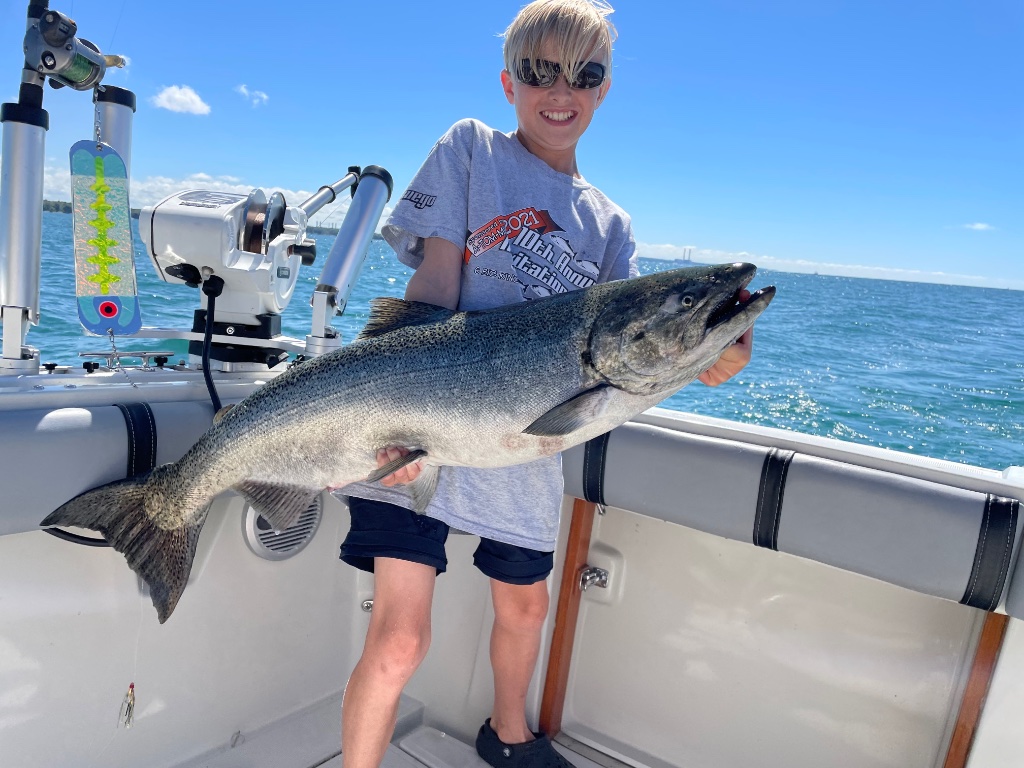
Yeah, if the kings are that deep, I don't think you want to run plugs. Flasher/fly sounds like a better bet. My 35 lb was caught in around 40 to 60 ft of water ... for sure staging close to a mouth river. However, funny thing ... it hit a Gator Spoon ... like this: -
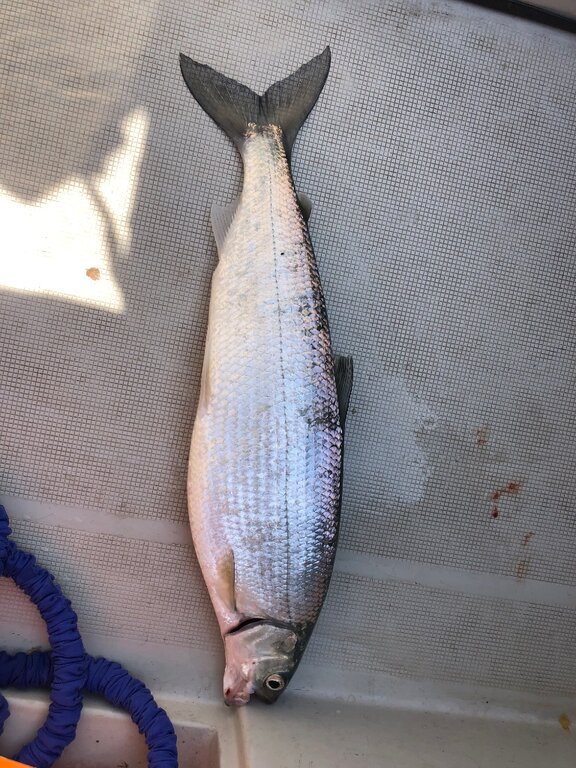 I heard cisco is a very good eating fish.
 -
Techniques for Staging Kings (AFTER Derby!!)
TyeeTanic replied to ErieBuck's topic in Open Lake Discussion
Staging kings strike out of anger, rather than feeding. They aren't feeding. Brite colors, erratic lures (like plugs) are what you want to use to trigger them. My biggest, a 35 lb staging king ... was caught when we snagged the bottom, and I was driving the boat in an inward spiral to try and retrieve as much wire line as possible (salvage the situation) ... we had an angry king hit. It was all accidental actually, but then it got me thinking ... if you see some marks, why not just have 2 or 3 rods out to avoid tangles, and do some tight circles around them?? -
Not that it's funny, but it's at least strange ... we have this enormous lake (Lake O), and people feel the need to come within 100 ft of another boat ... like WHY?? If you want traffic, get in your friggin car and join the rest of Ontario on the QEW. It's just plain stupidity ... so much water, and they got to get on your butt. Makes no sense at all.
-
Fixed cheater over flasher?
TyeeTanic replied to hookedupf7's topic in Questions About Trout & Salmon Trolling?
Exactly. We always had short leads on the stacked line ... like 8 ft. -
Fixed cheater over flasher?
TyeeTanic replied to hookedupf7's topic in Questions About Trout & Salmon Trolling?
Yeah, I wouldn't do it. You'll fix the cheater with a rubber band ... the idea is the band will snap with a fish bite, and that cheater will slide all the way down to the flasher ... which will roll your line into a tangled mess. Rather used a stacked rod, or stick with cheater line on a clean spoon line. -
Sorry..Another diver question.
TyeeTanic replied to Shakemsam's topic in Questions About Trout & Salmon Trolling?
They tangled during deployment, or after a while of being in the water tangle free? Most of the time, I've seen tangles happen during deployment ... especially when you have the inside diver in the water, and try to deploy the outside diver. As you deploy, there is very little drag on the diver to bite into the water and pull the dipsey up and to the side ... imagine, it just sinks down almost straight in the middle of the boat ... and has a deep dive angle (like throwing a rock out the back of your boat). Then when you stop spooling it out, it bites, and goes up and to the side, and STRAIGHT into the inside diver line. The trick to deploying the outside, is to pull that rod to the side, and let it out REALLY slow, to keep it up and to the side, and away from the inside diver. If that's not the issue, it could have been bad currents, or tight turns ... -
 BEAST! With my 35 lb'er ... it just sat at the bottom like a log ... it didn't run very much. I honestly thought we were snagged for the first 3 minutes.
 -
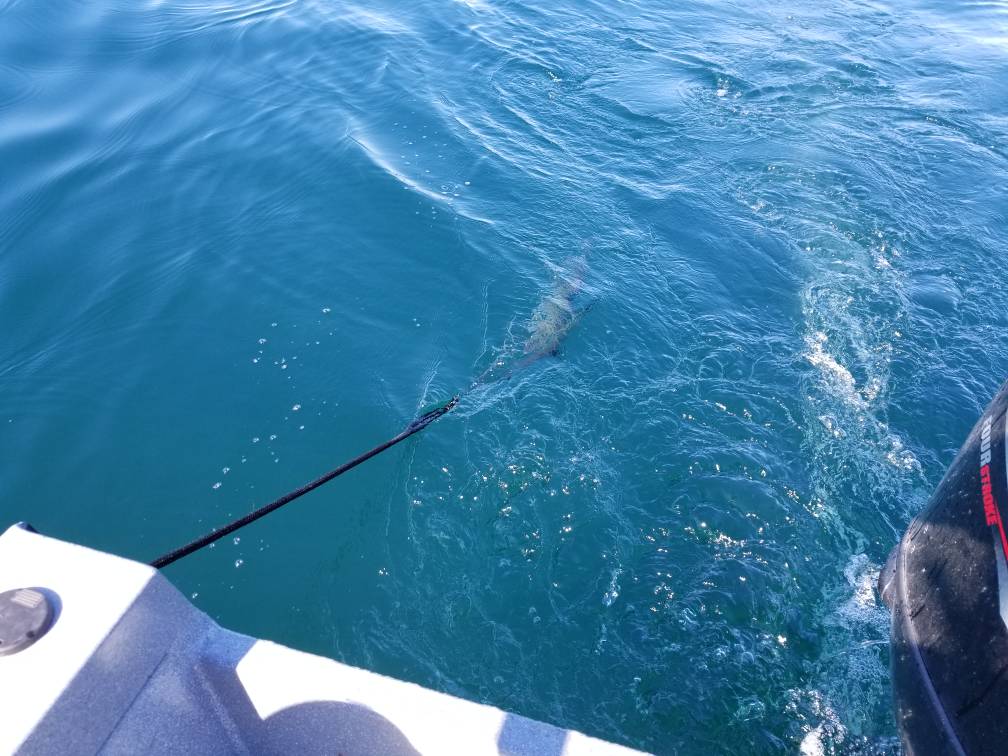 Steelhead definitely a more sensitive fish ... but on the other hand, they are often in slightly warmer water ... not sure. 10 floating away is a lot. How hot was the water on top? Maybe just a once off thing?
 -
Yes, that is an option too. To go on the backer. I did both actually. I just liked the to go on a (strong) leader ... it means that most of the time you don't need to take the diver off when reeling in a fish. I wouldn't put it on anything lighter than 20 lb though.
-
Need details on how people have hooked up their Smart Troll probes
TyeeTanic replied to chowder's topic in This Old Boat
I used the gen 1 on both rigger and diver lines ... I had no issue on the riggers ... divers sometimes got out of range ... not sure if it was just the angle and not seeing the transducer, or electrical interference which degraded the signal. They must have come a long, long way though, several years have passed since gen 1 ... and there's been a lot of use, so I'm assuming they would have made a few upgrades. -
I've used them to get my leadcore deeper. I generally connect them where the leader attaches to the main line ... don't want to risk a fatigue break on the leadcore (or copper in your case) from the pinching clips. Used OR16 clips to attach them to the leader. This way you can take them off quickly (if needed), when you reel in a fish.
-
Generally, I prefer meat rigs on the copper/weighted steel lines ... leave the spoons for the riggers, and flies on the wires.
-
Spiny fleas
TyeeTanic replied to MrKato's topic in New York Fishing Reports - Lake Ontario (South Shore)
 Agreed, 30 pound mono is what we used. Braid is useless, although I heard guys saying the 100 lb braid works ... line diameter is thick enough to make it hard for fleas to hold on ... haven't tried that myself though.
 -
Spiny fleas
TyeeTanic replied to MrKato's topic in New York Fishing Reports - Lake Ontario (South Shore)
What lb and type lines are you running? -
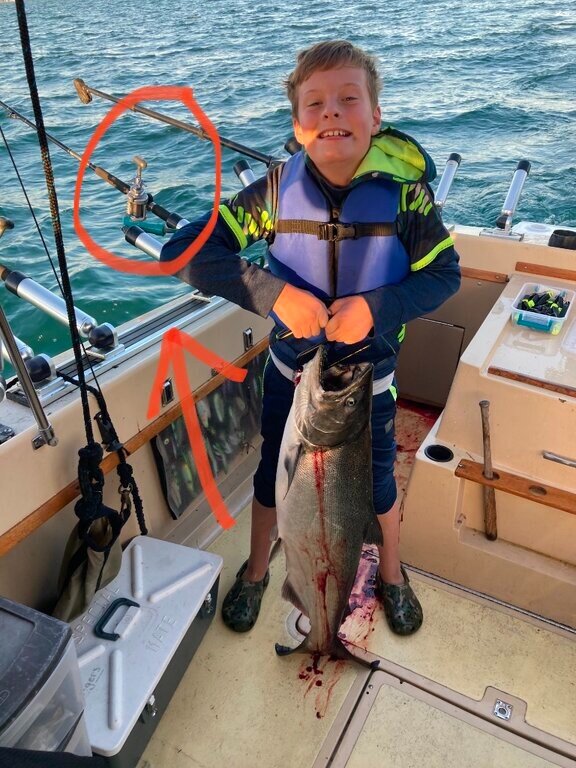 You mean you have a twillie tip at the top, with normal line guides? What are the guides made of ... are they black or a chrome metallic finish?
 -
 Dipsey divers will be your best bet. But you might want to also put a LARGE torpedo diver on a leadcore, off of a planer board to get depth and provide a different presentation.
 -
Trolling speed
TyeeTanic replied to Oxbow Custom Rods's topic in Questions About Trout & Salmon Trolling?
Oh sorry ... yeah, for sure I'd say colder = slower ... but also towards the end of the year, it's tough, but I'd generally start faster, because kings are striking out of aggression, rather than to feed, and we want more erratic presentations to trigger that bite. -
Trolling speed
TyeeTanic replied to Oxbow Custom Rods's topic in Questions About Trout & Salmon Trolling?
2 mph to 3 mph, starting point 2.5 mph. Make some turns ... check if outside or inside lines get a hit. Outside means you need to speed up, inside means you need to slow down. Will change from spot to spot, as the under water currents change. Best to have down speed. -
No problem.
-
To Glow Or Not To Glow
TyeeTanic replied to Chinook Rookie's topic in New York Fishing Reports - Lake Ontario (South Shore)
It works. Glow lasts longer when charged. -
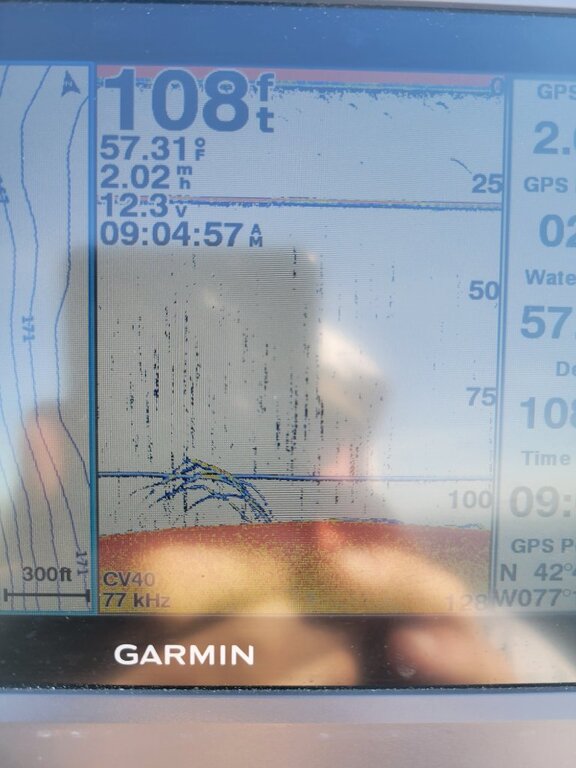 None of those fish are chasing your lures ... when they chase, you'll see those arches stretch across the entire screen. Also note ... although the screen says the fish are under your ball ... they may not be ... the sonar scans out several feet on either side of your boat (how much depends on the water depth) .... those fish could easily be 10' away from left side of your boat, and the ball could be on the right side ... separation of 15' or maybe more. Even with that separation though ... the fish seem uninterested ... so here would be the game plan. MARK THAT SPOT ... especially where you see them stacked (your 2nd photo shows 5 or 6 fish). Turn around and go through that spot at several angles .... from north to south, south to north, east to west, west to east, NE to SW, etc. Just keep figure 8'ing it through that point ... the reason to change direction ... if there are any underwater currents, your bait will be going faster or slower through that current, even if you maintain a steady 2 mph GPS. Also, think about slowing down or speeding up by 0.2 to 0.3 mph. Also, change your presentation ... colors, lure type, etc. If you have multiple rods, use different colors and lures on each rod to minimize your time to test options. Keep going through that mark throwing a bunch of variables at them, and hopefully something works. If you find something that works, change all or most of your rods over to that presentation.
 -
Ever consider a handheld VHF (obviously waterproof), with DSC? If the boat goes down ... at least you can maintain comms via the handheld.