


Sk8man
-
Posts
13,929 -
Joined
-
Last visited
Content Type
Profiles
Forums
Events
Gallery
Store
Everything posted by Sk8man
-
Lead core question
Sk8man replied to markmonkey1's topic in Questions About Trout & Salmon Trolling?
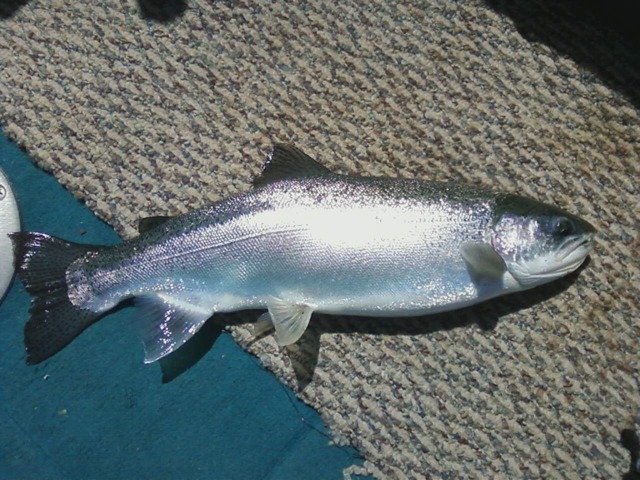 I guess a few questions might be in order: 1. Where are you fishing? 2. What are you trying to catch? 3. What lb test core and what type leader and length did you use? 4. Are you taking about the use of it right now in August? General comment: leadcore is usually primarily used in the Spring and Fall especially when the fleas aren't present or active in the water column and it usually isn't the choice for deep water fishing (although possible using weights).
 -
Seneca Seneca 7/23/2013 & 7/25, 7/26 ,7/27
Sk8man replied to ERABBIT's topic in Finger Lakes Discussion
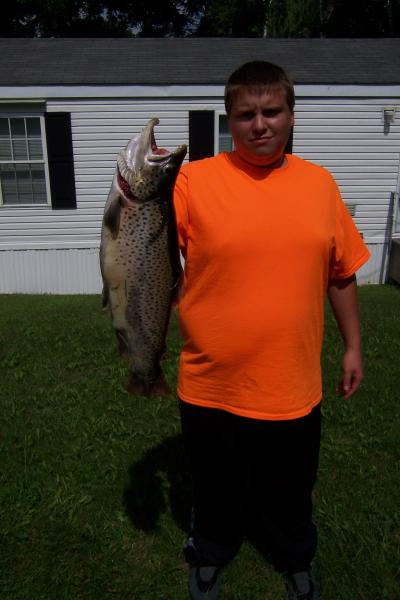 Way to go Ed! I think I'll be fishing down that way next time....Canandaigua has become a little too empty these days.
 -
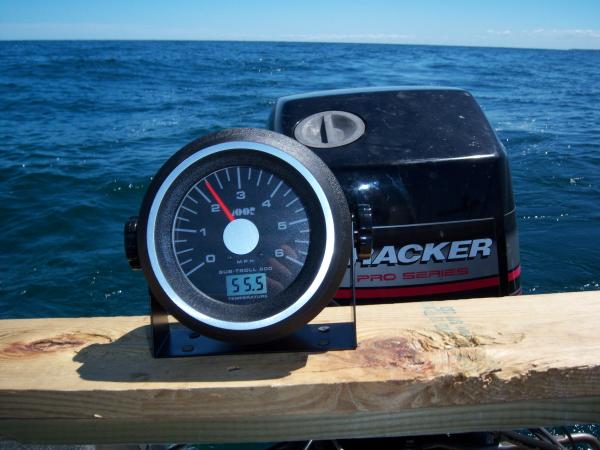 The extremely strong currents out there lately raise H with the thermocline and water column temps and combines with wind changes and the result looks like a "roller coaster" in terms of the temp profile
 -
How to training in organizing your flies by Adm Byrd
Sk8man replied to Sk8man's topic in Open Lake Discussion
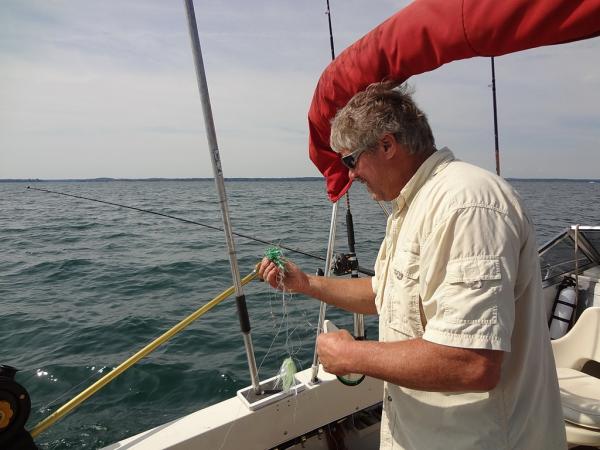 I forgot to add: "Young fishermen should not try this technique at home without adult supervision. It should be left to professionals like Bob who have practiced it many times daily.
 -
In the spirit of the latest "How To" videos posted by some of our guys... I thought the forum might be interested in today's experience at Sodus on Lake O. and hope that you may glean useful "how not to" information from it......here is my buddy and fishing guru Adm Byrd demonstrating for you what we experienced more than once today: Pic' # 1 the WTF moment: Pic #2 The moment of elation coming from identifying the problem: The second WTF moment:
-
They were pretty bad out from Sodus Point day as well. They seemed to like the 30 lb 7 strand much better than my Blood Run 30 lb See Flea mono though...
-
-
:smile: Ed
-
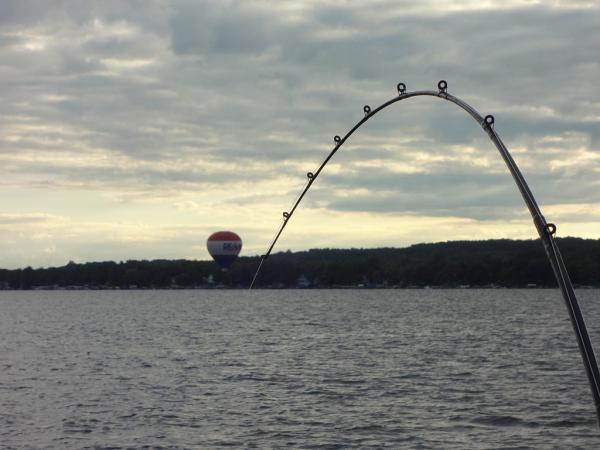
Well, I'm convinced that the lake is dead RIP.....I went out at 615 AM and trolled until 11:30 AM - caught 2 small rainbows both on downriggers at 50 ft over 110 or so. Also had 2 hits one on Spin Doc wire rig and one on downrigger... both were gone before could leave my seat. I decided to test out an Idea I've had for awhile to get my wire rig away from the boat (back especially and to the side as well). I used a home made release that I used to use years ago for stackers to attach it to the 30 lb 7 strand with a yellow balloon at the other end of the release . in a way that wouldn't damage or kink the line. Unfortunately I didn't get anything on the rig to fully test it out but it worked very well to get the wire out of the way of my downriggers etc. Here' what it looked like: After that I figured I'd do it up big time so here is what that looked like:
-
Ditto on Tim and Jekyll. I've also had them hit dodger/squid 4ft. from the ball but down deep. I think that when that close and down deep they see it as one unit rather than discrete objects
-
Which hooks are the sharpest and best way to keep them sharp
Sk8man replied to mcny's topic in Tackle and Techniques
I've done it a number of ways over the years but I think the best result is with a fine grade file. You file the point by filing from the barb toward the point on three sides of the hook. I then test it by feel.... on my thumb or finger very carefully and gently and it is right when it just catches your skin. Diamond chip sharpeners also do a good job but I prefer the first method over them. I use Mustad Stainless steel triple x or 5x Siwash salmon hooks as they sharpen the best and are sharpest usually from the factory. -
#8 or #10 SPRO power swivels are best (50 lb test) and very tiny. If your reel is a Penn or one without an "insert" on the level wind just widen it a little bit with something like a screwdriver or pliers carefully.
-
Trench and Lanes
Sk8man replied to Beyond Upstate's topic in New York Fishing Reports - Lake Ontario (South Shore)
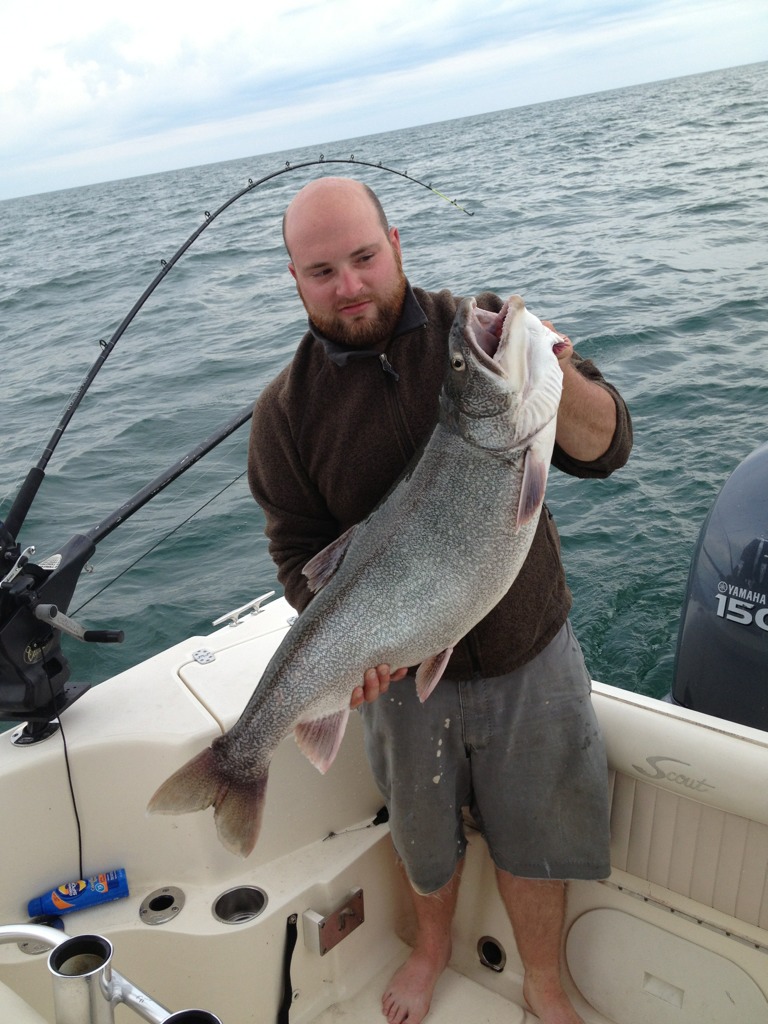 Nice laker...man those Lake O lakers are looking healthy....
 -
how fast for lakers?
Sk8man replied to Home wrecker's topic in Questions About Trout & Salmon Trolling?
I guess I should also mention that I seldom fish specifically for lakers on Lake O I was referring to the Finger Lakes primarily....and I only have a little over 50 years of trolling experience I guess I was trying to give an example of why people should experiment and do their "homework" for their specific situation rather than relying on just data "estimates". The already mentioned speeds noted by my friend APB are very good starting points but sometimes going up as well as down can get big results...that was my point. Lakers can be fairly quick in the water when they need to be too...just spook one in the shallows sometime . -
Nick R's Rigged Sandy Creek Shootout
Sk8man replied to NickR's topic in New York Fishing Reports - Lake Ontario (South Shore)
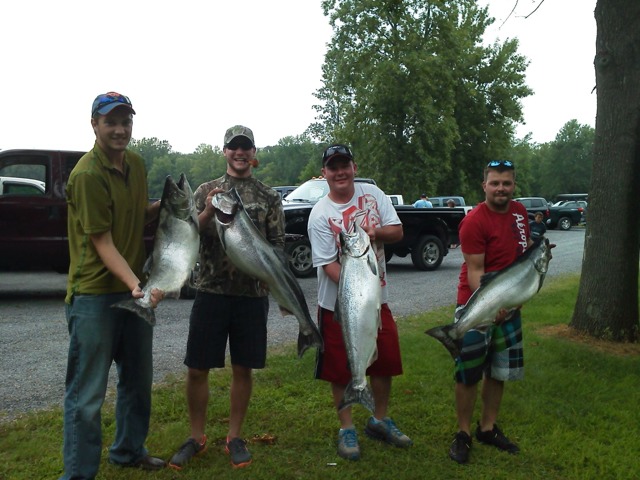 Good thing you didn't get ole Mr.Johnson tangled in the wire
 -
Rick - To make you feel better about pricing on the roller rods I was at a tackle shop in Cape Cod last week and the cheapest roller rod was $279....They had a rod/reel combo set up with wire for $999 My own roller rods looked a lot better to me after that
-
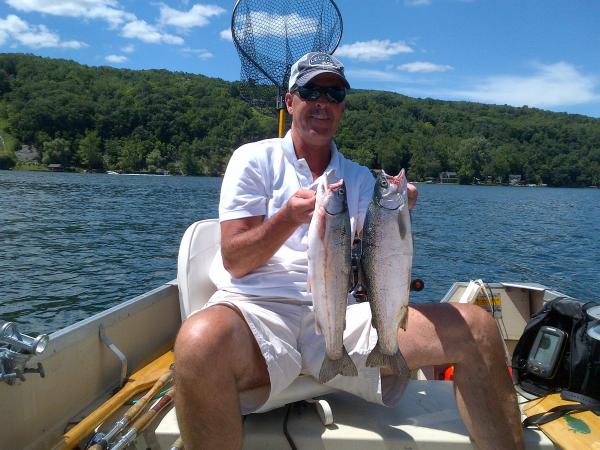 Good going Jim and good report .....gives me some incentive...thinking of giving it a try in the AM but launching at the north end. Hope all the fleas aren't at this end Les
 -
how fast for lakers?
Sk8man replied to Home wrecker's topic in Questions About Trout & Salmon Trolling?
I guess my advice would be to experiment with your own boat without any preconceived idea because boat speed is RELATIVE despite folks reliance on GPS and Fish Hawks etc. For example two measures of 2.5 mph on separate boats on separate lakes may actually have substantially different meaning and even on the same boat at different depths because of the way currents run despite what the measurement at the ball is for the one line. The reported mph readings from different boats may be "starting points" from which to experiment with your own boat (at best). One of my buddies refreshed this in my mind last week when were were fishing for rainbows.....he was trolling from 3.0-3.8 (surface speed) in his boat and we were connecting with them and I even had a Spin Doc out on wire and had one really slam it. I haven't trolled over 3 mph in about 20 plus years in my boats. He does it all the time and does very well including lakers. If I had been asked a couple weeks ago my response would have been much more along the lines of the reported values here. I guess what you can take away from this is this: fish are opportunists ...they often try to get something for the least amount of effort but not always. Sometimes they will be speed demons when they really want something...so if the slower speeds aren't working don't be afraid to run it up past what you are normally comfortable with. Much like the water temp scenario....the fish will often go out of their temp range (comfort zone) to get something they want....kinda like humans eh? P.S. I've caught plenty of fish (mostly lakers and browns) on cowbells with peanuts behind them at 2.6 to 2.8 mph (surface speed). With that said... most lake trout come at the slower speeds but some of the bigger ones often come at a higher speed. -
Might want to try spraying the section with some black Plasti Dip (comes in spray can and one that you dip things in) Maybe do a couple light coats....might hold up for a while at least. You can find itin the paint section at Lowes at about $6 per can.
-
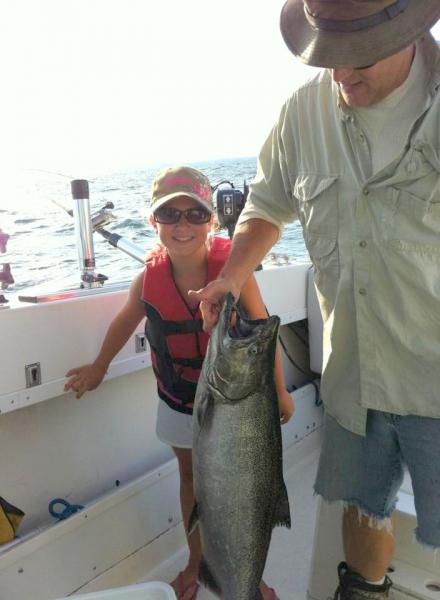 Way to go!!! Nothing like "quality time" spent with your kids....they grow up way too fast so savor the moments....
 -
I have the 50 lb on one of my rigs...the fleas also seem to like 50 lb It is sitting in my garage until this Fall
-
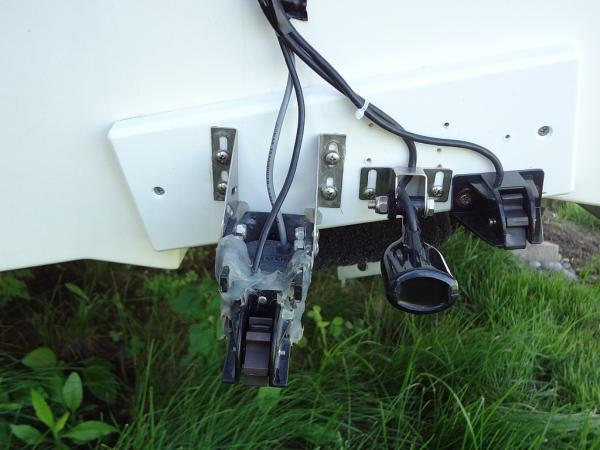 I know this is a little off target but it applies to placement of transducers etc. and may offer ideas to others. When I bought my current boat new 12 years ago I had a piece of plastic material (Cabela's I think) installed with 2 stainless screws to the transom in a general location where I intended to place my transducer (s) on the opposite side of where my kicker is mounted (i.e. away from turbulence). The piece is long enough to allow placement experimentation as well as installation of multiple transducers as over the years you replace depth finders with different brackets etc. This allows the careful drilling of holes but doesn't affect the transom in any manner so no matter what I decide to do there will always be only two holes in the transom (screws totally sealed on installation). I have never had any problems with any of the installations using this. Here is a pic of it:
 -
Flasher always with fly?
Sk8man replied to onion's topic in Questions About Trout & Salmon Trolling?
Usually run behind a Spin Doc, flasher, dodger, or small jet diver but in the old days larger streamer flies were trolled by themselves back aways off fly rods (sometimes with a few small splitshot ahead of it) primarily for rainbows. -
As Shinintimes put it the answers to your questions aren't "short and sweet" or simple for that matter. Aside from the very good things that have already been mentioned it should be understood that the so-called "ideal " temperatures given for a species are not to be taken as fundamental absolutes. Most fish will go out of their preferred temperature ranges for a variety of reasons. They are at best indicators of possible places in the water column where fish may be found. Baitfish also have preferred ranges of temperature and many times in the summer the range intersects the bottom which is why you often see them hanging there and many times with fish nearby and sometimes out of their supposed temperature range...you notice I keep saying "range" and it is because most fish can tolerate a number of temperature values but they also may not readily be found in some others and they may be found at different temps at different times of the year. For example browns are quite temperature sensitive especially in the Spring and Fall and they may locate within the warmest temp range they can find at that time of the year (eg. near power plants or other sources of warmer water where the water may be a couple degrees higher than the surrounding water)). They are also known to be able to adapt to much warmer water (even 75 degree water temporarily) than either rainbows and steelhead or especially lakers. During the summer months they are usually found hanging near bait and near drop-offs and just above bottom near active stream mouths and the temp at the bottom there may be quite a bit colder than the reported temp preference for them. Water temperature is an important variable in the trout and salmon life cycle but it is far from the only thing that places them at a given depth or place in the water column. Marking bait and fish in close proximity to it may be as important ( or perhaps even more so sometimes). Knowing the particular general habits of the target species may be more helpful than electronics. Consider trying out a heavier weight (e.g. 12 lb.) for your downriggers and perhaps check the adjustment of the angle of your transducer (if it is a transom located type (not a thru-hull), and perhaps play with it a bit to see if you can spot your downrigger balls in the water column. It is an important factor in the use of your fish finder to know where your lures are running. The suggested printed angle values for transducers are usually considered as the "optimal" placement as related to marking depth at speed but they often will tolerate some movement or adjustment and still track range and downriggers OK. If you can accurately mark your weights the "blowback" issues can be minimized regardless of the line counter readings of the reel or downrigger. Use the depth finder to make the adjustments when you can. There may be times (for example on turns and at higher than normal speeds when the weights will be outside the cone anyway.
-
portable fish finder for pier fishing
Sk8man replied to oneluvunknown's topic in Tackle and Techniques
Pier fishing is a whole different bag than boat fishing or stream fishing for that matter. You are limited tremendously by the stationary nature of it which means that the probabilities of being in the "kill zone" are much more limited. Even if you had a fish finder that would spot potential target fish because of the shallow nature of the environment you have no idea whether they are bass carp or salmon for starters. When you are out in a few hundred feet of water and the large marks are suspended and streaking toward your trolled lures you have a better idea that they might be salmon but it is still not fool proof. Near shore and onshore fishing is usually a hit and miss proposition at best. When the fish are in and you happen to be there (or better yet you calculate to be there based on actual previous observations) you may luck out but more often than not if you aren't there nearly every day during the"critical period" you will miss a large part of the action...it is the nature of the beast. At that time of the year salmon respond differently than in the summer when they are actively feeding heavily too and many of the hits are out of aggression rather than from a feeding response so you brighten up the colors etc. to "provoke" them into striking rather than "enticing" them for a feeding response. What I am getting at is that it is the approach to the fishing situation that will put you on fish not the electronic "gizmos". By closely monitoring the site every chance that you get and trying different lures, presentations, closely studying the structure and specific depth profile around the pier and putting your time in at the pier will offer more rewards than depending on the electronics hype. The actual teaching of the fishing tactics and spending the time may prove more valuable to your relationship with your step son too than the fishing results. We often seem to believe that instant results are the only thing that matters (the American way :<) but the more important things tend to be the spending of time doing something together (i.e. quality time)....based on experience with my own three kids.